
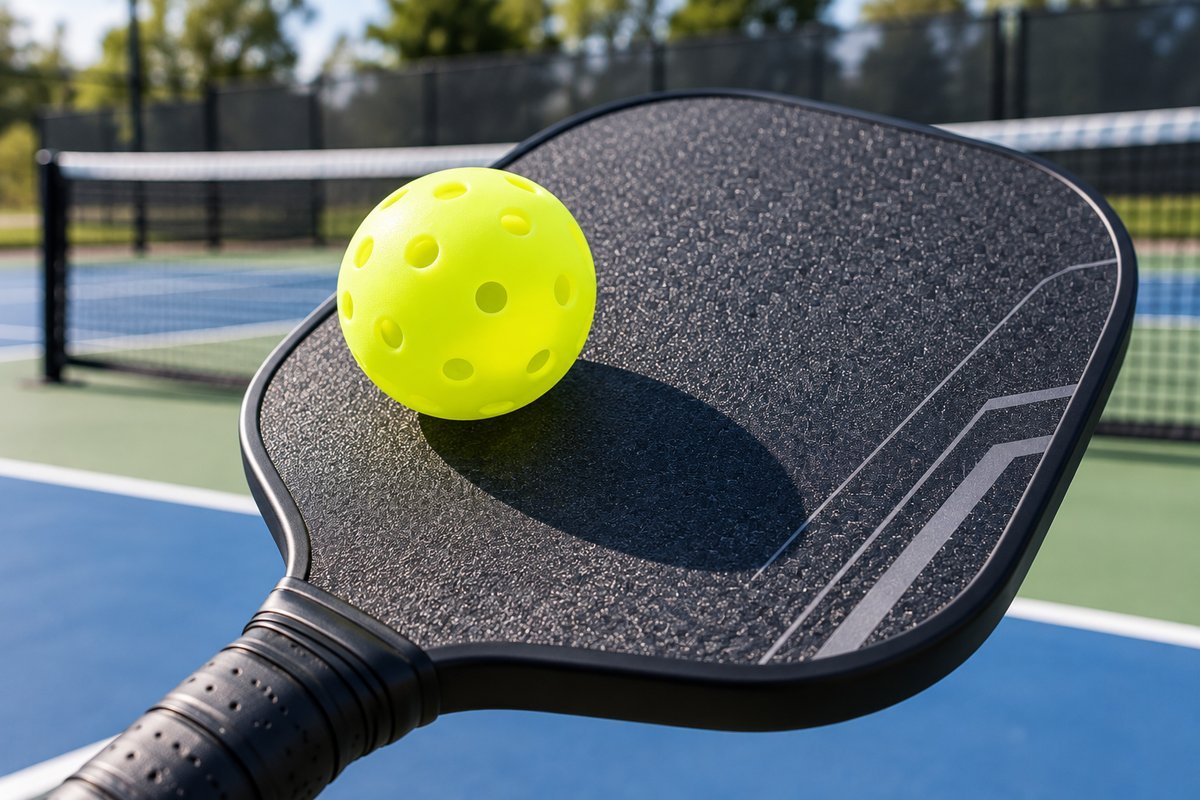
Every paddle listing promises spin and control in the same breath, as if the two always come together. They do not. A paddle built to grab the ball and rip topspin is usually not the same paddle that feels planted and predictable on a dink (a soft shot that drops just over the net into the kitchen) at the kitchen line. Understanding why is more useful than any single "best" list.
PaddleBrief is a participant in the Amazon Services LLC Associates Program, an affiliate advertising program designed to provide a means for sites to earn advertising fees by advertising and linking to Amazon.com. As an Amazon Associate, we earn from qualifying purchases.
This guide explains what drives spin and what drives control. We haven't tested every paddle on the market, so the picks near the end are chosen from published specs, not ranked by our own testing. Most of this guide is the framework we would want a friend to have before shopping: the five specs that change spin and control, how they trade off against each other, and where paddle marketing gets ahead of what a paddle can do.
Table of Contents
Spin and control are not the same skill
Spin comes from how much the ball's surface grips the paddle face at contact, twisting the ball as it leaves. Control comes from how predictably the paddle responds when you are not swinging hard, on dinks, resets, and blocked volleys (a shot hit before the ball bounces). A paddle can be excellent at one and merely average at the other, because they are driven by different parts of the paddle's design.
For most players, the right paddle is a compromise rather than a paddle that maxes out both. Knowing which specs pull toward spin, which pull toward control, and which affect both is what makes that compromise a deliberate choice instead of a guess.
Surface texture and grit drive spin
Spin mostly comes from surface friction, not paddle weight or core material. A rougher, grittier paddle face grabs the ball longer during contact, which imparts rotation. That texture is also the first thing to wear down. A paddle that spun well out of the box can lose a meaningful amount of that spin after months of regular play as the surface polishes smooth. Regular cleaning slows that wear but doesn't reverse it once the texture has worn down, which our paddle cleaning guide covers in more detail.
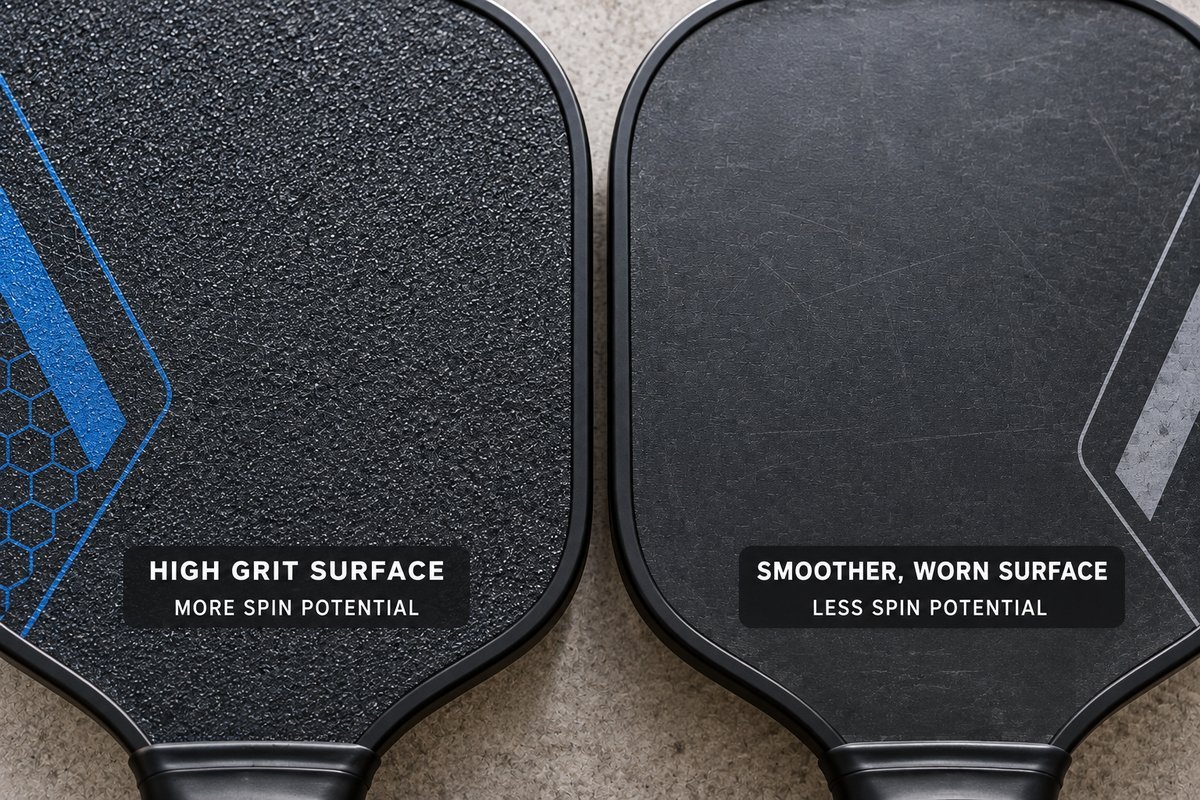
Surface texture is also the specification USA Pickleball regulates most directly. Paddle faces are tested against a defined roughness standard, and a face that exceeds it is not tournament legal regardless of how well it otherwise plays. Check USA Pickleball's official equipment standards before assuming a paddle marketed as "maximum spin" is approved for sanctioned play.
Face material sets the ceiling
Surface texture determines how much spin a face can generate on a given swing, but the face material determines how much of that spin potential is available and how it holds up over time. Carbon fiber faces generally offer a higher spin ceiling than fiberglass because the material can hold a finer, more durable texture. Fiberglass faces are more forgiving and tend to feel softer, which helps control on soft shots, at some cost to maximum spin. We go into the mechanics of that tradeoff in our carbon fiber vs. fiberglass breakdown.
Core thickness shapes control more than spin
Core thickness affects control more than spin, but it still matters. A thicker core, typically 16mm, dampens vibration and gives a softer, more muted feel on contact, which many players find easier to control on resets and dinks. A thinner core, typically 14mm, transmits more feedback and tends to feel livelier and slightly more powerful, at some cost to that soft, controlled feel. Neither is objectively better. It depends on whether a player wants more feedback or more forgiveness. Our 14mm vs. 16mm core breakdown covers this in full.
Swingweight is the control spec nobody markets
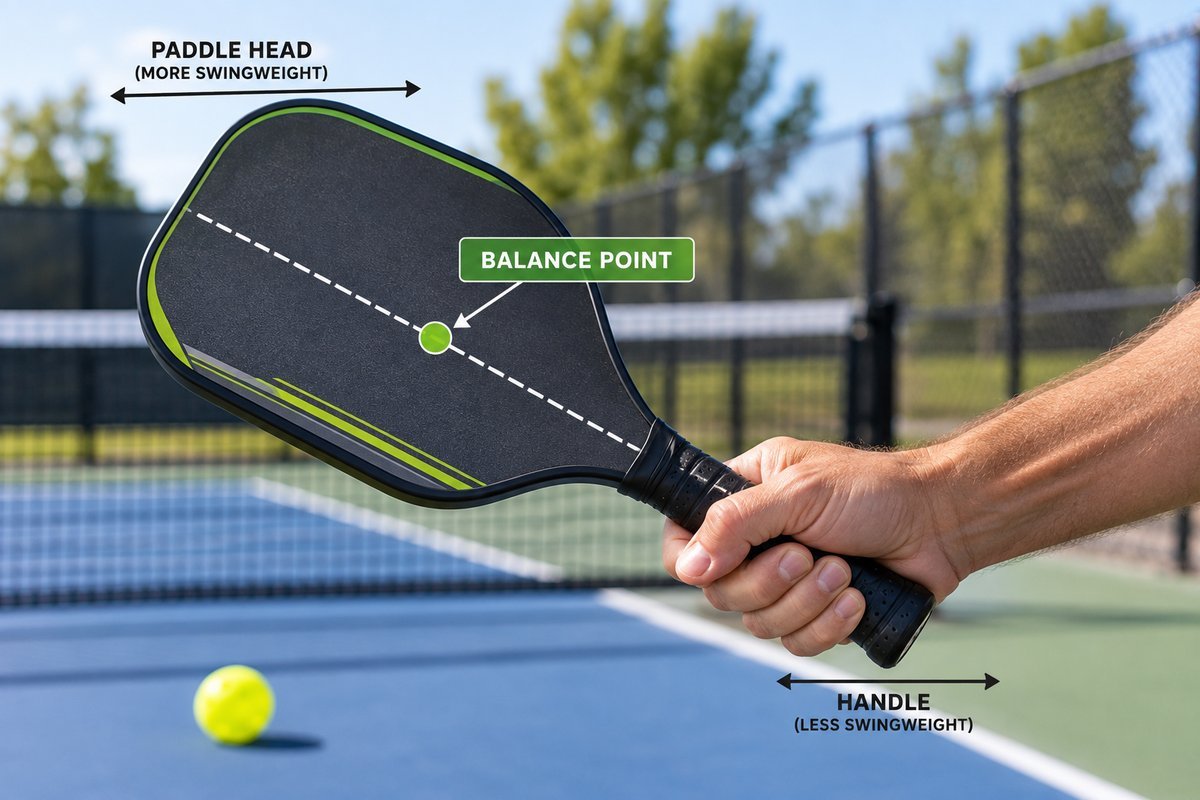
Swingweight measures how heavy a paddle feels in motion, not how heavy it is sitting on a scale, and it is rarely printed on the box the way static weight is. A higher swingweight makes a paddle more stable through contact, which helps drive through the ball on power shots and resist getting pushed around on fast exchanges at the net. It also makes the paddle slower to bring back into position, which can cost control on quick reflex volleys.
Static weight and swingweight don't always move together. You can build a light paddle by distributing weight toward the head to raise swingweight, or toward the handle to lower it. A strip of pickleball lead tape near the top of the edge guard is one way to raise it yourself. If a listing only publishes static weight, that is a real gap in what it tells you about how the paddle will feel in a fast exchange.
Paddle shape changes the sweet spot, not just the reach
Elongated paddles trade a wider sweet spot for extra reach and paddle length, which affects control on off-center contact more than it affects spin directly. A standard shape generally offers a more forgiving, centered sweet spot, which shows up as more consistent control on mishits. Our elongated vs. standard paddle comparison covers the tradeoffs in full, including the USA Pickleball length and width limits that cap how far either direction can go.
What is marketing versus what is measurable?
Spin rate numbers on a listing (revolutions per minute, or RPM, "spin scores," and similar) come from each brand or reviewer's own test setup, with no standardized public method behind most of them. That doesn't make them meaningless, but it does make them hard to compare across sources that test differently. Treat a spin number as a relative claim within one tester's own list, not as an absolute figure that transfers to how the paddle will feel in a real rally.
What is checkable on a listing: face material stated plainly, core thickness in millimeters, static weight range, and whether the paddle appears on USA Pickleball's own approved equipment list if sanctioned play is a possibility. A listing heavy on adjectives and light on those four is probably hiding something.
Common mistakes chasing spin and control
A few mistakes show up again and again. The most common is a newer player buying the highest spin-rated paddle available before they have the technique to use that spin consistently. A paddle cannot generate spin on its own, and beginners often get more consistent play from a more forgiving, control-oriented setup first.
The second is ignoring grip condition while chasing paddle specs. A worn overgrip (a thin wrap that goes over the paddle handle) changes how solidly the paddle sits in the hand on off-center contact, which affects perceived control more than most people expect. Our overgrip guide covers how often that is worth replacing. The third is assuming a paddle's spin will stay constant over time. Surface texture wears, and the signs that a paddle has reached the end of its useful spin life are covered in our guide to how long a pickleball paddle lasts.
Paddles That Fit These Specs
We have not tested these paddles. We chose them because their listings, checked on October 10, 2026, state the face material and core thickness, and most also give a weight. They lean in different directions on the spin and control tradeoff. If you play tournaments, search the exact model on the USA Pickleball approved paddle list, and note that paddles submitted for approval on or after October 1, 2026 must also pass USA Pickleball's new spin rate test, with a limit of 2,100 RPM. Paddles approved earlier are held to the standard in effect when they were certified.
1. Selkirk LUXX Control: control first, with a textured carbon face
The Selkirk LUXX Control combines a thick 19mm X7 honeycomb core (a core made of small six-sided cells) with a Florek carbon fiber face with what Selkirk calls its InfiniGrit surface, which it says improves spin and durability. The thick core is the control side of the tradeoff, and the textured carbon face is the spin side. The listing defaults to the elongated Invikta shape, so pick a standard shape if a wider sweet spot matters more to you than reach.
2. Vatic Pro Prism 16mm: a raw carbon face with a softer feel
The Vatic Pro Prism 16mm has a raw T700 carbon fiber face (T700 is a widely used grade of carbon fiber) over a 16mm polymer honeycomb core, with foam-injected walls. Vatic says the Prism trades some raw power for control and a softer feel compared with its original series. The listing gives the weight as 8 ounces and says the paddle is USA Pickleball approved.
3. JOOLA Ben Johns Hyperion: two surface options
The JOOLA Ben Johns Hyperion is sold with either a raw carbon surface or JOOLA's Carbon Abrasion Surface, a sandblasted carbon texture, and uses a 16mm polymer core that JOOLA says reduces vibration and adds control. The listing gives the weight as 8.3 ounces. It is an elongated paddle (a longer, narrower paddle shape), so it gives up some sweet spot width for reach, as covered in the shape section above.
4. Six Zero Double Black Diamond Control: a choice of core thickness
The Six Zero Double Black Diamond Control has a raw carbon face and comes with either a 14mm or a 16mm honeycomb core. The listing describes the 14mm version as quicker at the net and the 16mm version as softer and more controlled. That makes it a direct way to choose your side of the core thickness tradeoff. It is a newer listing with less buyer feedback than the other picks.
5. Franklin Signature Series Pro: spin from a fiberglass face
The Franklin Signature Series Pro uses a fiberglass face with Franklin's MaxGrit textured surface over a 13mm polypropylene core. Its listing publishes a swingweight figure, the spec this guide says is rarely printed, and a twistweight (how well the paddle resists twisting on off-center hits) figure too. It suits a player who wants a softer fiberglass feel and some added grip on the ball.
Here is how the five compare on their listed specs:
| Paddle | Face | Core | Listed weight | Leans toward |
|---|---|---|---|---|
| Selkirk LUXX Control | Florek carbon fiber (InfiniGrit) | 19mm X7 honeycomb | Not listed | Control |
| Vatic Pro Prism 16mm | Raw T700 carbon | 16mm polymer honeycomb | 8 oz | Control and spin |
| JOOLA Ben Johns Hyperion | Raw carbon or Carbon Abrasion Surface | 16mm polymer | 8.3 oz | Spin and reach |
| Six Zero Double Black Diamond Control | Raw carbon | 14mm or 16mm honeycomb | Not listed | Your choice of core |
| Franklin Signature Series Pro | Fiberglass (MaxGrit) | 13mm polypropylene | 7.5 to 8 oz | Softer feel |
If you are newer to the game, our beginner paddle guide explains why a forgiving paddle matters more than spin at first. For an upgrade path, see our intermediate paddle guide. For lower-cost options, see our budget paddle guide, and for a sore arm, see our tennis elbow paddle guide. Our guide to pickleball paddle brands covers how to judge any maker.
What matters more for pickleball, spin or control?
It depends on skill level and playing style. Newer players usually benefit more from control, since consistent contact matters more than added rotation. More advanced players who can already place the ball reliably tend to get more value from added spin.
Does a heavier pickleball paddle give more spin or more control?
Neither directly. Static weight mostly affects power and fatigue during long sessions. Swingweight, which measures how heavy the paddle feels in motion, affects control more by making the paddle more stable or more maneuverable.
Do carbon fiber paddles spin more than fiberglass?
Generally yes. Carbon fiber can hold a finer, longer-lasting surface texture than fiberglass, which raises the spin ceiling. Fiberglass faces tend to feel softer and more forgiving, which some players prefer for control over the added spin.
Is there a legal limit on how much spin a pickleball paddle can generate?
Yes. USA Pickleball tests paddle face roughness against a defined standard. Since October 1, 2026, paddles submitted for approval must also pass a spin rate test with a limit of 2,100 RPM. Paddles approved earlier are held to the standard in effect when they were certified. Check the official approved equipment list before buying for tournament or league play.
Which paddle to buy
No single paddle wins at both. The right choice is a deliberate tradeoff across five specs: surface texture and face material for spin, core thickness and shape for control, and swingweight touching both. Read past the marketing language to those specs, decide which side of the tradeoff matters more to your game, and choosing a paddle gets a lot easier.