
How long a pickleball paddle lasts is one of those questions with no single answer, because two people can buy the exact same paddle and get wildly different results. One person plays three times a week in Arizona heat, and the paddle feels dead in eight months. Another plays once a week in a climate-controlled gym and the same paddle still hits fine three years later. Construction, frequency, and care all move the number, sometimes by a factor of five or more.
This isn't a buying guide naming specific paddle models, since PaddleBrief hasn't done hands-on paddle testing yet. It's a plain look at what wears out inside a paddle, roughly how long different construction types tend to hold up, and a few simple tests to check whether the paddle sitting in your bag right now is already past its prime.
What wears out inside a paddle
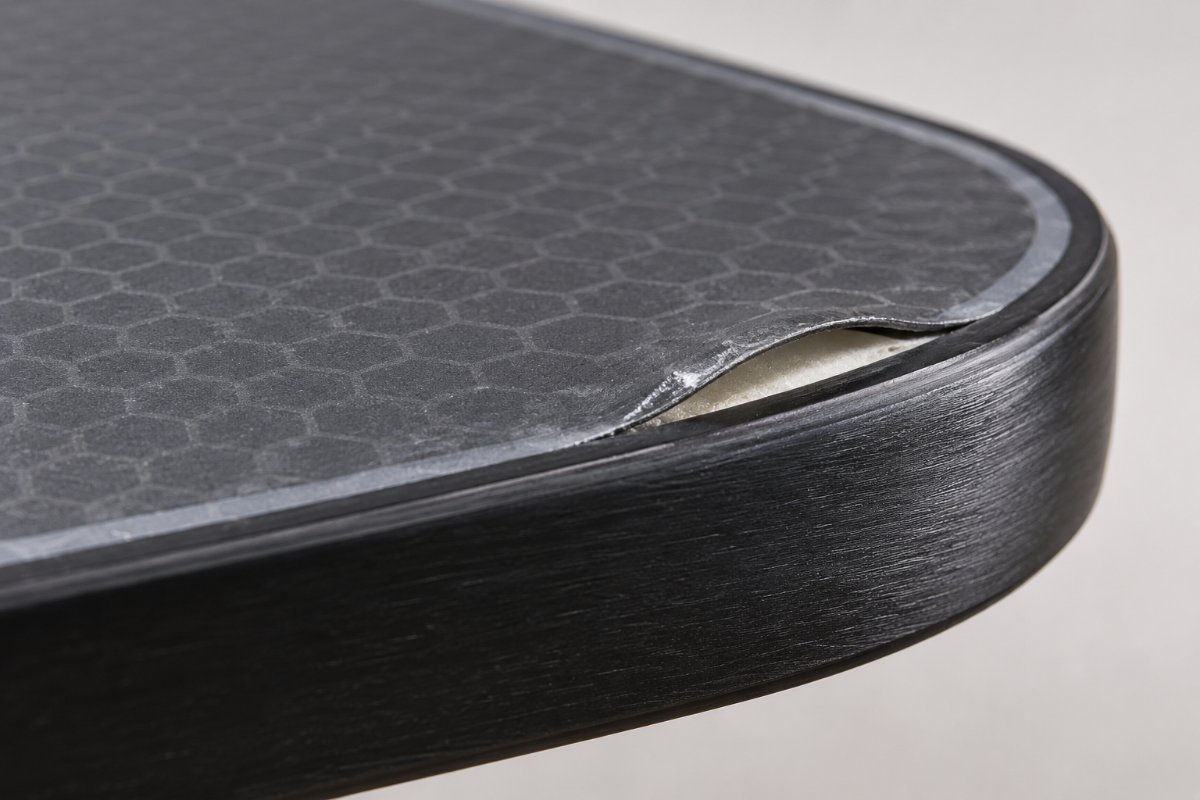
A pickleball paddle looks like a solid piece of gear, but it's a layered sandwich: a textured face material bonded to a foam or polymer core, wrapped in an edge guard (the protective strip around the paddle rim). Each layer can fail on its own, and each failure changes how the paddle plays.
Core crush happens when the honeycomb or foam cells inside the core get compressed from repeated ball impacts. Once enough cells collapse, that spot on the face goes soft and produces a duller sound and less pop, creating what players usually call a dead spot.
Delamination is when the face layer separates from the core underneath it. It usually shows up as a small bubble or ripple you can see or feel under bright light, and it's a structural failure rather than cosmetic damage. A delaminated section won't return to normal and generally keeps spreading with continued play.
Grit fade is the slow smoothing of the paddle's textured face. Every paddle's surface starts out slightly rough to help grab the ball and generate spin. Thousands of ball strikes gradually polish that texture down, and once it's noticeably smoother than a new paddle, spin generation drops off even if the core underneath is still fine.
Edge cracks form where the edge guard meets the face, often after the guard starts peeling or lifting away. Thermoformed paddles, which use heat and pressure to fuse the edge into a single molded piece, tend to show this failure more than paddles with a separately applied edge guard.
How long a paddle lasts, by construction and play frequency
How long does a pickleball paddle last if you're playing several times a week versus once a month? The gap is enormous, and construction type widens it further. Independent durability write-ups that track this by construction generally land in similar ranges for players hitting the court three to five times a week:
- Newer thermoformed honeycomb paddles: roughly 8 to 18 months, with the earliest thermoformed designs on the shorter end and later refinements stretching longer
- Foam-core and Kevlar-faced paddles: roughly 18 to 30 months
- Older cold-pressed paddles, which use a slower, lower-heat bonding process: 24 months and up, sometimes well beyond three years
Play frequency is the single biggest factor. Casual players who get on court once or twice a week can typically expect close to double those ranges, since the ball strikes that cause core crush and grit fade simply happen less often. On the other end, competitive and tournament players who play daily or hit thousands of balls a week in drilling sessions sometimes burn through a paddle in as little as two to four months, well before any warranty period runs out.
Playing surface matters too. A paddle used exclusively indoors on a smooth gym floor tends to outlast one that regularly gets dropped, dragged, or scraped on rough outdoor asphalt or concrete. Ground contact is a common source of edge damage that has nothing to do with normal ball-strike wear.
Three simple tests to tell if your paddle is already dead
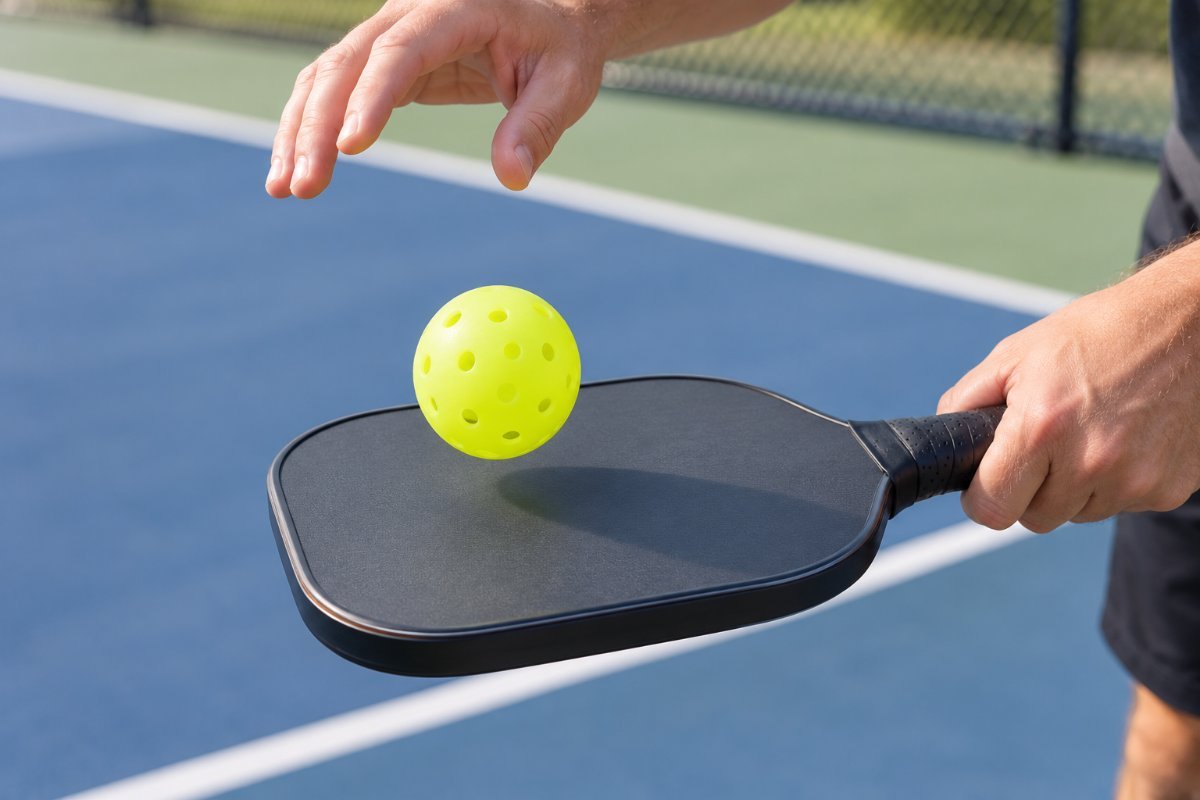
Rather than guessing off a calendar, there are a few quick physical checks that tell you more than how many months you've owned the paddle.
The bounce test. Drop a ball from the same height onto several different spots on the paddle face: the center, each corner, and near the throat. A healthy paddle rebounds the ball to roughly the same height across every zone. A noticeably lower, duller bounce in one area is a strong sign of core crush right there.
The tap test. Tap across the face with a knuckle while listening closely. A paddle in good shape produces a consistent, slightly higher-pitched sound across the sweet spot area. A dull, flat, or muted tone in one section usually lines up with the same dead spot the bounce test finds.
The visual and fingernail test. Hold the paddle face under bright light at an angle and look for bubbling, rippling, or warping, especially near the edges. Then run a fingernail across the surface. If the texture feels noticeably smoother than it did when the paddle was new, or if you feel any soft, spongy give under light pressure, that's grit fade and possible core softening showing up at the same time.
None of these three tests require any tools beyond a ball and a paddle you already own, and running all three takes less than a minute.
What speeds up paddle death
A few habits shorten a paddle's working life well beyond what normal ball-strike wear would cause on its own.
Heat is the biggest one. Leaving a paddle in a hot car, a sun-baked trunk, or direct sunlight courtside can push the core and adhesive layers well past the temperatures they were built to handle. That softens the bond between face and core faster than play alone ever would. Cold works against a paddle too: playing in near-freezing temperatures makes some core materials more brittle and more prone to cracking on impact rather than absorbing it.
Slamming the paddle down after a bad shot, using it to scoop a ball off the ground, or letting it bounce off the court surface all put stress on the edge and face in ways normal rallying doesn't. That damage comes on top of normal wear.
What extends a paddle's life
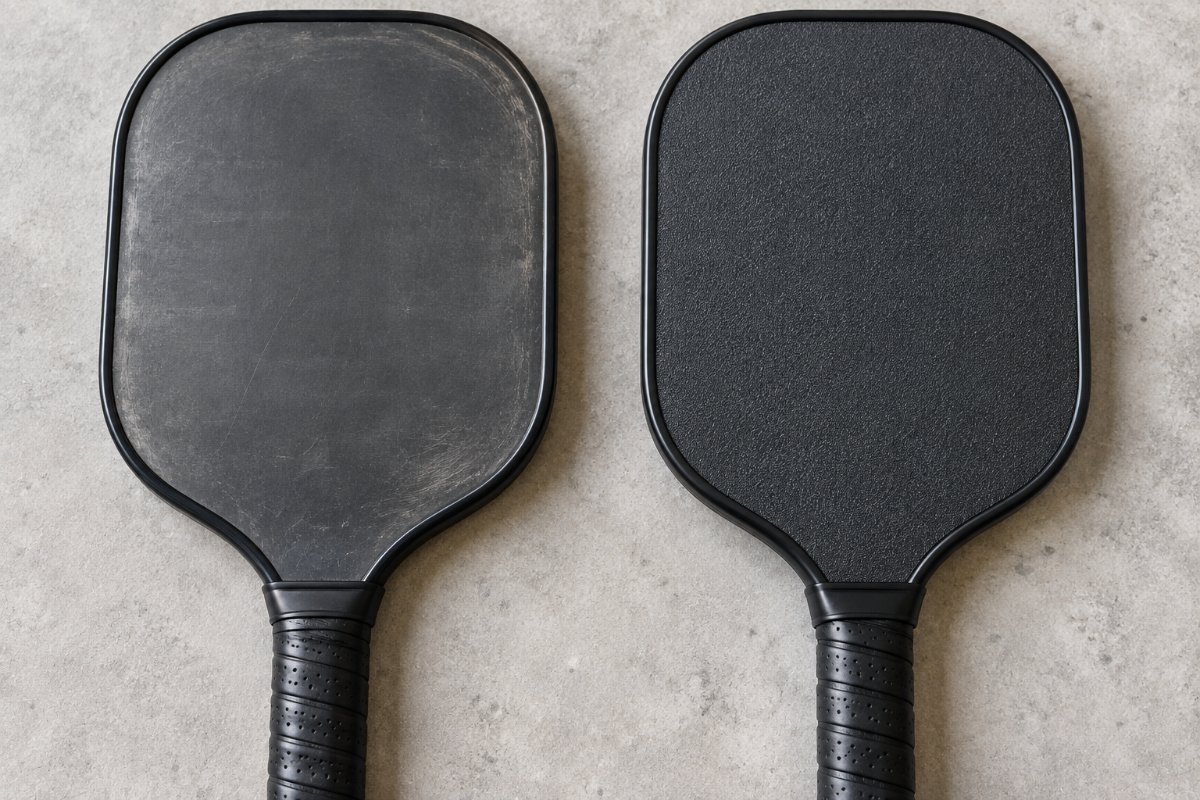
You can't make a paddle immortal, but a few habits can stretch how long it lasts before core crush, delamination, or grit fade become noticeable.
Store it somewhere temperature-stable, not in a hot car trunk or a freezing garage. Keep it in a padded cover when it's not in your hand, which protects the edge guard from the bag-jostling that eventually starts peeling it. And keep the face clean, since a dirty, film-covered surface is easier to mistake for grit fade when the texture is fine underneath (a proper cleaning routine, covered in how to clean a pickleball paddle, restores grip without touching the texture itself).
Core material plays a role here too, since foam and honeycomb cores respond to repeated impact differently (the EPP vs. MPP paddle core comparison covers how those two common core types differ under the hood).
Warranty coverage most players never check
Before assuming a dead paddle means an out-of-pocket replacement, check the manufacturer's warranty page. Many paddle brands cover delamination specifically, often for the first 6 to 12 months of ownership, since it's considered a manufacturing or bonding defect rather than expected wear. Core crush and grit fade are usually treated as normal wear and aren't covered the same way, so the distinction matters. Keeping the original receipt and registering the paddle when a brand offers it (some do, some don't) makes a warranty claim far faster if delamination shows up early.
USA Pickleball also periodically re-tests approved paddle models against its equipment standards, including the paddle-ball coefficient of restitution limit that caps how much bounce a paddle is allowed to add. A paddle that's heavily worn or has undergone unofficial modifications can, in theory, drift outside the specs it was originally approved under. That is one more reason a dead paddle belongs in the trash rather than back in a sanctioned match.
Thinking of replacing a worn paddle with a secondhand one? Run through our used pickleball paddles check first.
Frequently asked questions
Can a delaminated paddle be repaired?
No. Delamination and core crush are both structural failures in the bond between layers, not surface damage, and there's no reliable way to re-bond them at home. Once a paddle is delaminated, it's done.
Does a more expensive paddle automatically last longer?
Not necessarily. Price often reflects performance characteristics like weight, swing speed, or spin potential more than durability. Some of the longest-lasting construction types (older cold-pressed designs) are frequently cheaper than newer thermoformed paddles built for maximum pop.
How often should a competitive player replace their paddle?
Somewhere in the two-to-twelve-month range depending on how often they play and drill, though the bounce, tap, and fingernail tests are a better guide than a fixed calendar date for any individual paddle.
Does storing a paddle in a cover make a difference?
Yes, mainly for the edge guard. A cover reduces the bag-jostling and incidental knocks that start peeling an edge guard loose, which is often the first visible step toward edge cracking and eventual delamination.
Is it normal for one paddle to last years while a friend's identical paddle dies in months?
Yes. Play frequency, storage conditions, court surface, and even how hard someone hits the ball all change the number significantly, which is why there is no single answer.
The takeaway is that a paddle's lifespan depends far more on what happens to it between games than on the sticker it left the factory with. A paddle stored in a hot trunk and slammed on the court after every unforced error will die well ahead of schedule no matter how it's built. One that's kept out of extreme temperatures, covered when it travels, and cleaned instead of scrubbed can outlast its official warranty by years. Running the bounce, tap, and fingernail tests every few months is a better habit than guessing by the calendar, and it catches a dead paddle before a bad bounce in a real match gives it away.