
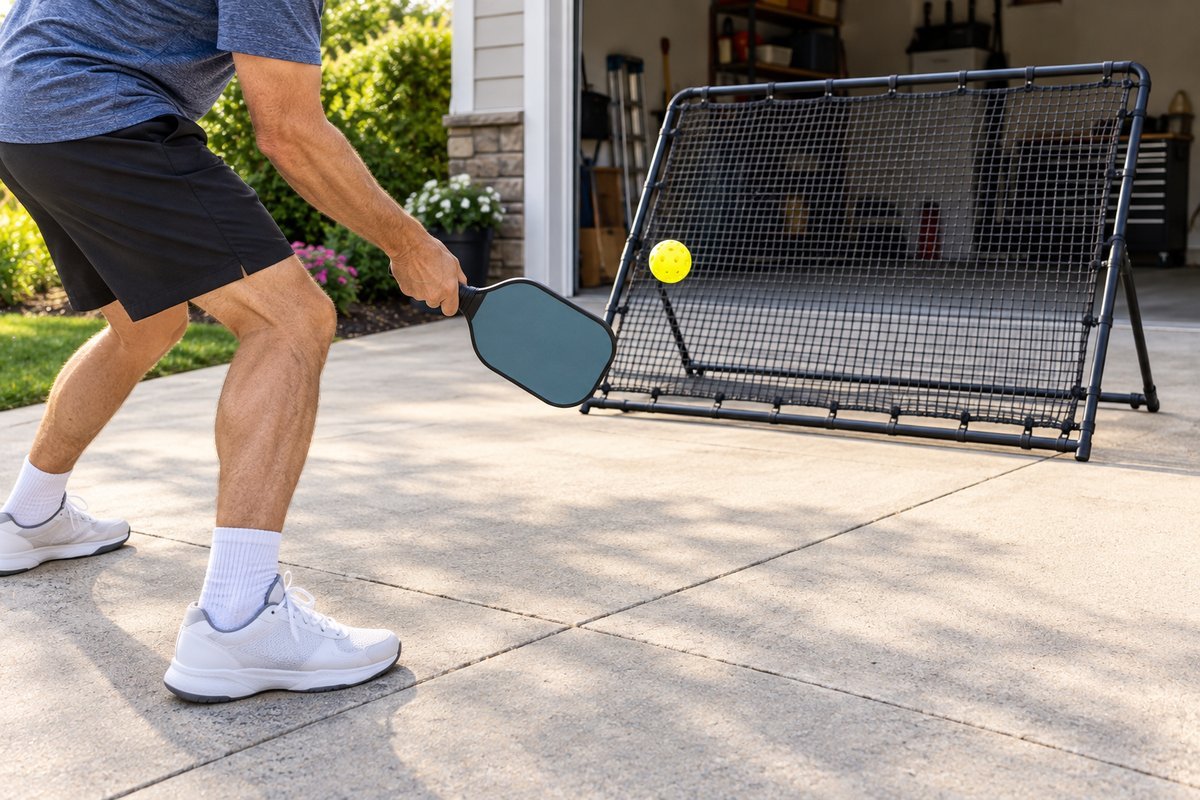
A pickleball rebounder is a framed net that sends the ball back to you, so you can hit dinks (a soft shot that drops just over the net into the kitchen), volleys, and drops with nobody on the other side. For players who only get court time a couple of nights a week, it is one of the cheaper ways to keep your hands sharp in a driveway or garage between sessions.
PaddleBrief is a participant in the Amazon Services LLC Associates Program, an affiliate advertising program designed to provide a means for sites to earn advertising fees by advertising and linking to Amazon.com. As an Amazon Associate, we earn from qualifying purchases.
This guide covers what a pickleball rebounder can and cannot train, the specs that separate a budget net from a premium one. It also covers five models currently sold on Amazon, from a lightweight 2-in-1 set to an 83-inch steel frame from Franklin Sports.
Table of Contents
How we picked these
PaddleBrief has not tested these rebounders in person. We chose every pick below based on the manufacturer's listed specs, a live Amazon listing that was in stock when we wrote this guide in September 2026, and owner feedback. Owner feedback in this category is thin, so lean harder on the specs. Prices move often, so check the listing before you buy.
What a pickleball rebounder is good for
Rebounders are built for the soft game. Dinks, resets, and blocked volleys (a shot hit before the ball bounces) all happen close to the net at modest pace, and a rebounder returns that kind of ball at a speed you can hit again. Most frames in this category have a bar, line, or target strip across the middle, so you are aiming at roughly the same window you would on a real court.
The limits show up with anything that depends on another player. A rebounder cannot serve to you. It will not change pace or spin based on what you hit, and hard drives come back too fast and too flat to be much use. If you want balls fed to you at a set speed and location, that is a ball machine's job, and our pickleball ball machine buying guide covers what those cost and what to check first.
A garage wall does some of the same work for free. The difference is the angle. A flat wall sends a lofted ball back high, while a pickleball rebounder with an adjustable frame can be tilted to send the ball back in a lower arc that looks more like a real dink.
What to look for in a pickleball rebounder
Start with the space you have. The full-size frames in this roundup are about 6 feet wide, and the Franklin net is listed at 83 inches. You also need room to stand at a realistic distance. The non-volley zone (the 7-foot area on each side of the net where you cannot hit the ball out of the air) on a regulation court is 7 feet deep. A spot with at least 7 feet of flat ground in front of the net lets you practice from where you would dink in a game.
Angle adjustment is the next thing to check. Tilting the net back gives softer, higher returns, and bringing it closer to vertical gives quicker, flatter ones. On a fixed-angle frame, you get one return path and change it by stepping closer or farther away.
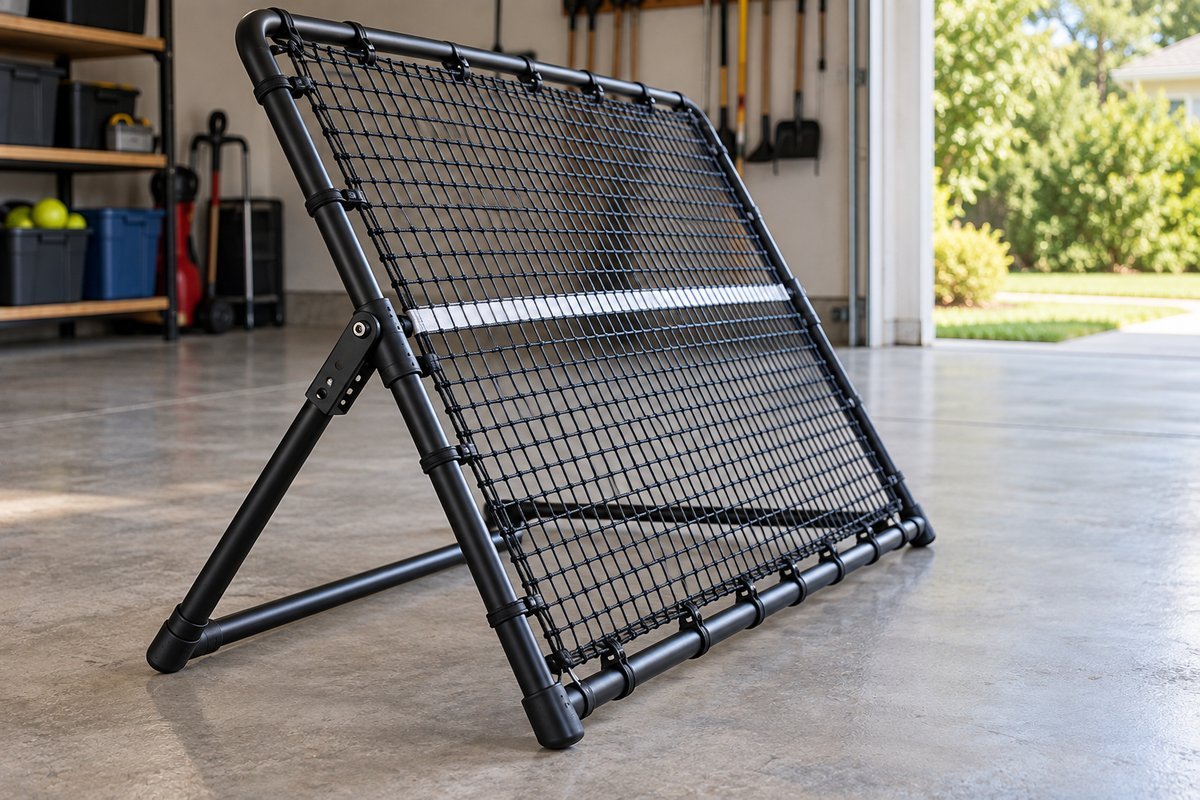
Then look for a net height reference. According to USA Pickleball's official rulebook, a regulation net is 36 inches high at the sidelines and 34 inches at the center. A rebounder with a marked bar or line near that height teaches you to clear the same window you face in a game.
Weight tells you how often you will realistically move it. The two steel-frame nets below weigh about 30 pounds, which keeps them planted in wind but makes carrying them out of the garage a chore. The lighter sets weigh roughly 10 to 15 pounds and are easier to take to a park.
Finally, decide whether you want a 2-in-1. Several budget models ship with a mini net for casual games. The mini nets here are 6 feet wide and 34 inches high, which matches center height, but a regulation court is 20 feet wide, so treat them as a backyard toy rather than match practice. If you want a full-width net for real games, our portable pickleball net guide covers what to check.
5 pickleball rebounders worth knowing about
Franklin Sports 83-Inch Pickleball Rebounder
The Franklin Sports Pickleball Rebounder is the largest net here at 83 inches, on a powder-coated steel frame with reinforced net edges. A white center bar marks the official net height, and two court markers are included so you can lay out a kitchen line in front of it. It weighs 30.3 pounds and folds flat for storage. It is the most expensive pick here and has few owner reviews so far, so the spec sheet says more than the reviews. This is the pick for a permanent garage or backyard setup where two people might hit into it at once.
Net Playz Pickleball Rebound Net
The Net Playz rebound net sits on a metal frame with adjustable angles, a net height indicator, an adjustable target line, and a marked kitchen zone. It weighs 29.8 pounds and carries a 90-day manufacturer warranty. Net Playz sells this frame under multiple Amazon listings, so compare size and color before you order. Pick it if you want angle adjustment on a heavy, stable frame without paying Franklin prices.
G-Squared 6x6 2-in-1 Rebounder and Game Net
The G-Squared 2-in-1 rebounder (the brand is spelled G-SQAURED on its Amazon listing) is a 6-by-6-foot alloy steel frame that works two ways. Tilt the upper panel, and it is an adjustable pickleball rebounder. Fold that panel down, and it becomes a game net that the listing describes as standard height. It weighs 15.49 pounds. It suits a family that wants solo drills during the week and backyard games on the weekend from one piece of equipment.
SwingIt Rebounder with Kitchen Lines
The SwingIt pickleball rebounder uses smooth metal poles, adjustable bungee cords for tension, a marked kitchen zone, and printed targets on a 72-inch-wide frame. A mini net 6 feet wide and 34 inches high comes in the box. At 10.58 pounds, it is the lightest pick here. It gives you the kitchen lines and targets of the pricier nets at about a third of their weight.
MerryMove 2-in-1 Rebounder and Mini Net
The MerryMove 2-in-1 set pairs a rebounder board on flexible fiberglass poles and adjustable bungees with a 6-foot mini net that stands 34 inches high. It weighs 13.17 pounds and is the least expensive pick here, and one of the most popular in this roundup. Start here if you are not sure how often you will use a pickleball rebounder and want to find out before paying for a heavier frame.
Where to set up a pickleball rebounder
A flat, hard surface matters more than most people expect. Pickleballs bounce low and true on smooth concrete, but a cracked driveway or a patch of lawn sends short balls off in odd directions before they reach your paddle. A garage floor or a smooth section of driveway is the usual answer.
Leave room behind and beside the frame too. Mishits go wide, and a ball that clears the top of a 6-foot net keeps going. A fence, garage door, or wall a few feet behind the rebounder saves a lot of walking.
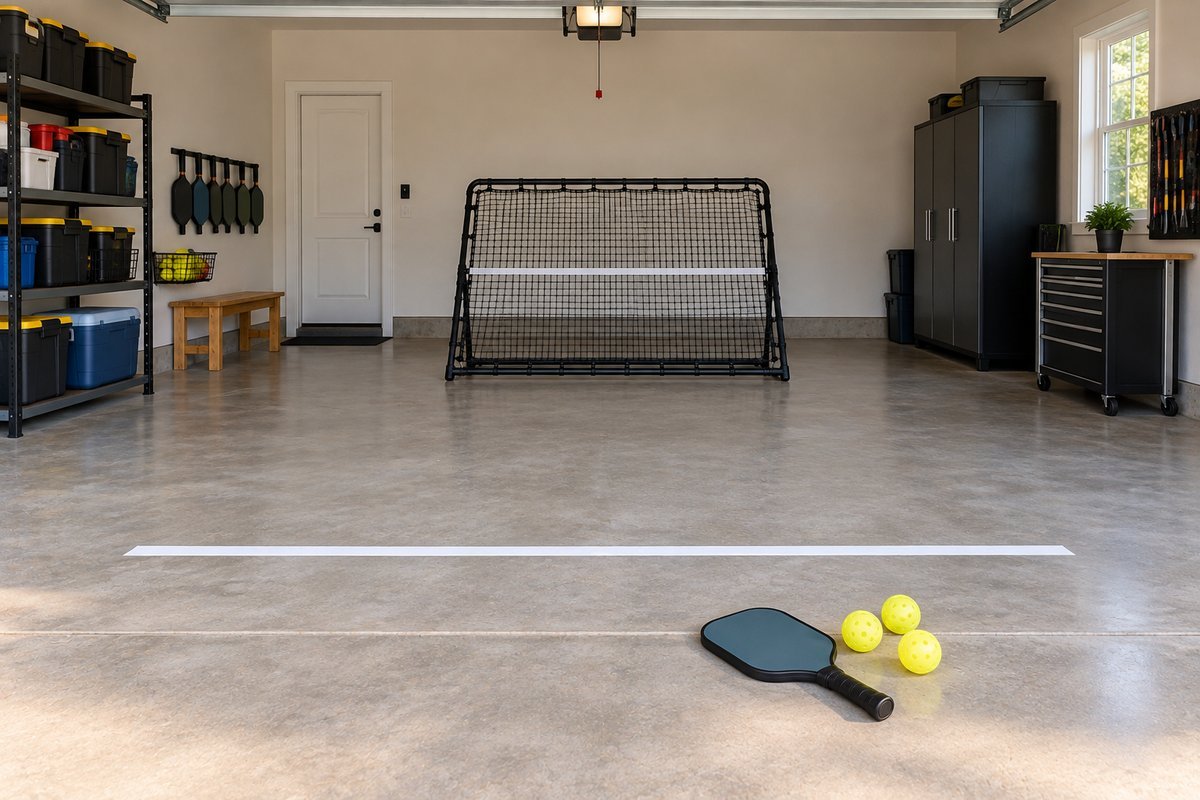
Then mark a line on the ground 7 feet in front of the net with chalk or tape. That matches the depth of the non-volley zone, and it gives you a fixed spot to hit from instead of drifting closer with every rally.
Solo drills to start with
For dinks, stand behind your 7-foot line and hit soft shots into the lower half of the net. Aim for 20 or 30 in a row at an easy pace before you try to speed anything up.
For volleys, move in to about 4 or 5 feet and block the return before it bounces. Keep the paddle out in front of your body and let the ball come to it.
Drops take more room. Back up as far as your space allows and hit soft, arcing shots that would land in the kitchen on a real court. The rebounder cannot tell you whether a drop was good, so use the target strip or kitchen marking on the net as your guide. For more drills, including ones for 2 to 4 players, see our guide to pickleball drills.
Alternating forehands and backhands is a simple way to practice resetting your grip between shots. If grip is the weak spot, our guide on how to hold a pickleball paddle covers the continental grip most players use at the kitchen line. A rebounder is one of several solo tools, and our roundup of the best pickleball training aids matches each one to the part of your game it fixes.
Frequently asked questions
Is a pickleball rebounder worth it?
For players who want more reps at the kitchen line than their court time allows, yes. A rebounder is most useful for dinks, resets, and volleys, and much less useful for serves, hard drives, or anything that depends on reading an opponent. If you want something that feeds balls to you like a practice partner, a ball machine is the better fit.
How much space do I need for a pickleball rebounder?
Plan on the width of the frame (about 6 to 7 feet for the models above) plus at least 7 feet of flat, hard ground in front of it, which matches the depth of the non-volley zone. A few feet of clearance behind the frame helps catch balls that go over the top.
Can I practice serves with a rebounder?
Not in any useful way. A serve needs a full court length to judge depth and placement, and a rebounder returns the ball from a few feet away. Serve practice works better on an open court with a bucket of balls.
Can I use a pickleball rebounder indoors?
Yes. Every model above is sold for garages and indoor spaces as well as driveways and backyards. Check the ceiling height and anything breakable behind the frame first, since balls that clear the top will keep going.