
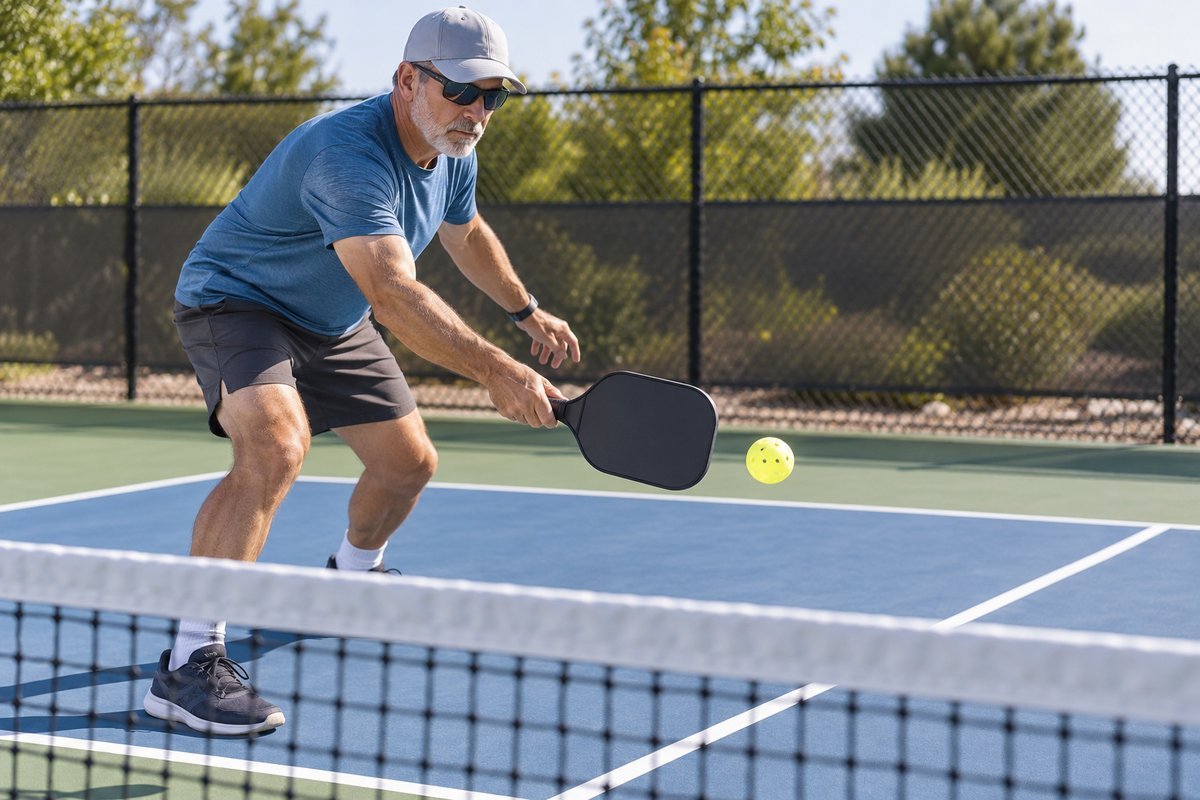
Most players do not decide to upgrade their pickleball paddle. They notice, one rec night at a time, that the paddle that felt perfect three months ago is now the reason a dink sits up instead of dying at the net, or the reason a ball off the frame sails long instead of staying in play. The best pickleball paddle for intermediate players is not a specific model. It is whatever paddle matches the game you have now, which is different from the game you had when you bought your first paddle.
PaddleBrief is a participant in the Amazon Services LLC Associates Program, an affiliate advertising program designed to provide a means for sites to earn advertising fees by advertising and linking to Amazon.com. As an Amazon Associate, we earn from qualifying purchases.
This guide covers the signs that a beginner paddle is holding you back, what changes in a paddle built for intermediate play, and how to test before you buy instead of guessing from a spec sheet.
Table of Contents
Signs You've Outgrown Your Beginner Paddle
A beginner paddle is built to forgive. A wide sweet spot (the area of the face that gives the cleanest hit) and a soft, muted feel cover up the mishits that happen constantly when you are new. That forgiveness is exactly what you need in your first months on the court. The signs below show up once that same forgiveness starts working against you instead of for you.
- Your dinks sit up instead of dying at the net. A soft beginner core absorbs pace well but does not give you the touch to control exactly how much a dink drops. So soft shots that should die in the kitchen (the 7-foot zone next to the net where you cannot volley) come out a few inches higher than you meant.
- You want spin the paddle can't give you. Once you start reading spin on your opponent's third-shot drop and want to answer with your own, a smooth or lightly textured beginner face loses grip fast.
- You feel the game in your arm by the third set. A paddle that is heavier or more head-heavy than your hand needs shows up as forearm and shoulder fatigue late in a session, not as an obvious problem on the first few points.
- You are winning points with power you didn't used to have, but losing the soft game. This is the clearest sign of all: your swing has changed faster than your paddle has kept up with it.
None of these signs mean your beginner paddle is bad. It did exactly what it was built to do. They mean your game is changing faster than your equipment.
What Changes in the Best Pickleball Paddle for Intermediate Players
The best pickleball paddle for intermediate players is not defined by a price tag or a brand name. It is defined by a small set of specs that trade away some of the forgiveness a beginner paddle gives you in exchange for control you are now good enough to use. Our list of the best pickleball paddles for spin and control has upgrade picks built around exactly that.
- Weight. Most intermediate players settle somewhere in the 7.8 to 8.3 ounce range, heavier than many beginner-marketed paddles, which favors control and drive power over the lightest possible swing weight (how heavy the paddle feels when you swing it).
- Grip size. This does not change just because your skill level did. Grip size is about your hand measurement, not your playing level. See our full breakdown on paddle weight and grip size by hand size if you haven't measured yours yet.
- Core thickness. A thinner core, often in the 13 to 14 millimeter range, trades some of a thicker core's forgiveness for a more direct, responsive feel that rewards a more consistent swing.
- Face texture. A more textured, higher-grit face gives you more spin potential on serves and third shot drops, which only matters once your contact is consistent enough to use it on purpose instead of by accident.
Core Thickness and Face Material
Core material is the single spec beginners hear about most and understand least. Our full EPP vs. MPP foam core guide covers this in depth, but the short version for an intermediate upgrade is this. EPP (expanded polypropylene) foam tends to feel softer and more forgiving, while MPP (microcellular polypropylene) foam tends to feel firmer and more responsive. Many intermediate players prefer that once their contact is consistent enough to control that extra feedback. Core thickness matters too, and our 14mm vs 16mm pickleball paddle comparison covers that trade-off.
Face material follows a similar pattern. Fiberglass faces are common on beginner and mid-range paddles and tend to favor power with a larger sweet spot. Carbon fiber faces, more common as you move up in price and skill level, tend to favor control and consistency, with a smaller but more predictable sweet spot. Neither is objectively better. The right one depends on whether your game needs more forgiveness or more precision right now.
Paddle Shape: Standard vs. Elongated
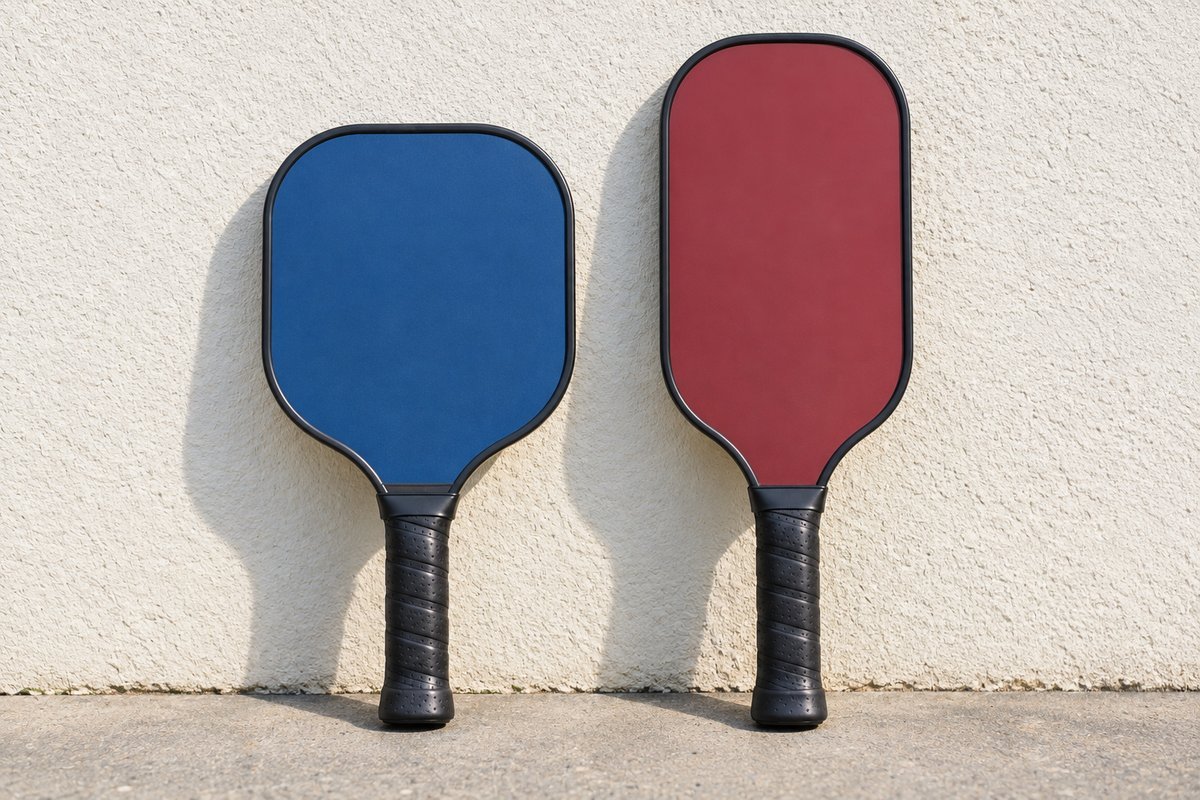
USA Pickleball's equipment rules cap combined length and width at 24 inches, with a maximum length of 17 inches, so every legal paddle is a tradeoff between a wider, more standard shape and a longer, more elongated one. A standard shape keeps the sweet spot wider and more forgiving off-center. An elongated shape trades some of that width for extra reach and a longer lever arm, which can add pop on drives but shrinks your margin for error on mishits. Most players moving past the beginner stage are better served staying with a standard or only mildly elongated shape until their contact is consistent, then experimenting from there.
How to Test Before You Buy
A spec sheet can narrow your options, but it cannot tell you how a paddle feels in your hand during a real point. Before you spend money, try to get time on a few different options:
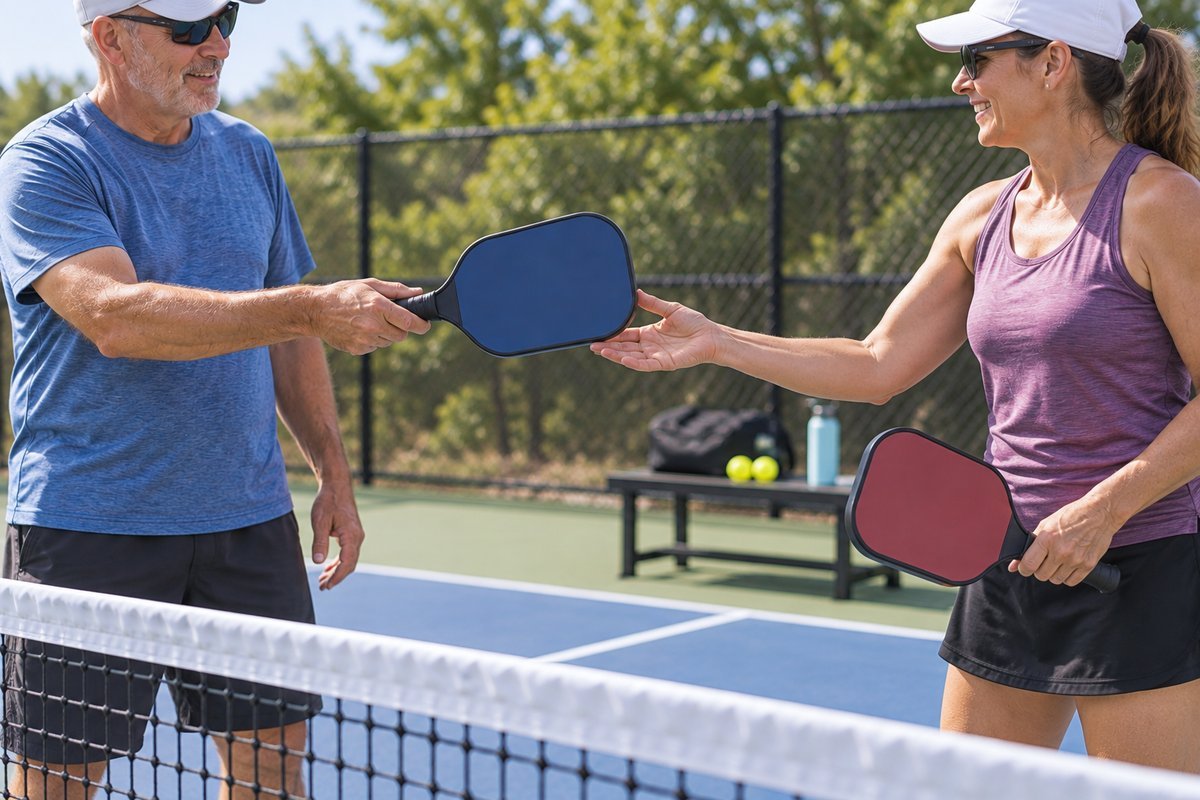
- Ask around at your local courts or rec league. Most intermediate and advanced players are happy to let you hit a few dinks and drives with their paddle between games.
- Check whether your local pickleball shop or club runs a demo program. Several paddle brands ship demo units to shops specifically so players can test before committing.
- If you order online, check the seller's return window before you buy, and play a full session with the paddle, not just a few warm-up swings, before deciding.
Common Mistakes When Upgrading
The most common mistake when upgrading is chasing the exact paddle a touring pro uses, without accounting for the fact that a pro's swing and a recreational intermediate player's swing put very different demands on a paddle. A paddle built for a fast, aggressive swing can feel harsh and unforgiving in a hand that is still building consistency. The second most common mistake is upgrading everything at once (weight, core, shape, and face material), so that if the new paddle feels wrong, there is no way to tell which single spec caused it. Change one or two specs at a time from your current paddle, not all four.
Intermediate Paddles Worth a Look
We have not tested these paddles. We chose them from the specs on each Amazon listing, checked on October 10, 2026, to match the upgrade signs described above. Each one fits a different reason for upgrading. If you play tournaments, search the exact model on the USA Pickleball approved paddle list before you buy.
1. Selkirk LUXX Control: for dinks that sit up
The Selkirk LUXX Control uses a 19mm X7 honeycomb core (a core made of small six-sided cells). That is thicker than the 13 to 14mm cores described above. It sits under a Florek carbon fiber face with what Selkirk calls its InfiniGrit surface, which it says adds spin and durability. A thicker core generally gives a softer, more muted feel at the kitchen line, which can help when your dinks come off the paddle too fast. The listing also describes an EVA foam handle and throat meant to absorb vibration. The listing defaults to the elongated Invikta shape, so choose a standard shape if you are following the shape advice above.
2. CRBN X Series Power: for a faster swing
The CRBN X Series Power Paddle has a 14mm core and a carbon fiber build with a square unibody design, according to the listing. It measures 15.75 inches long and 8 inches wide and has a listed weight of 7.8 to 8.1 ounces. A thinner core tends to feel livelier and more direct than a 16mm or thicker one, which suits a player whose swing has gotten faster and who wants feedback rather than cushioning.
3. Franklin Signature Series Pro: a fiberglass step up
The Franklin Signature Series Pro pairs a 13mm polypropylene core with a fiberglass face with Franklin's MaxGrit textured surface. The listing gives a weight of 7.5 to 8 ounces, a 4.25 inch grip and a 16.5 by 7.5 inch paddle size, and it also publishes swingweight and twistweight (how well the paddle resists twisting on off-center hits) figures. Fiberglass keeps some of the easy power of a beginner paddle while the textured face adds grip on the ball.
4. Vatic Pro V-Sol Pro 16mm: a full foam core
The Vatic Pro V-Sol Pro 16mm uses a full EPP foam core with an outer foam ring instead of a honeycomb. The listing gives carbon fiber as the material, a weight of 8.1 ounces and a 4.125 inch grip. It is a way to try the newer foam construction while staying at a 16mm thickness.
5. Paddletek Bantam TS-5: a lighter option for tired arms
The Paddletek Bantam TS-5 is a lighter version of the Paddletek EX-L, according to the listing, which gives its weight as 7 ounces, its core as polymer honeycomb, a listed thickness of 12.7 millimeters, and its face as a textured fiberglass epoxy hybrid. That is lighter than the range most intermediate players settle in, so it makes sense mainly if your arm or shoulder tires late in a session. A lighter paddle also puts less mass behind each drive.
Here is how the five compare on their listed specs:
| Paddle | Core | Face | Listed weight | Best for |
|---|---|---|---|---|
| Selkirk LUXX Control | 19mm X7 honeycomb | Florek carbon fiber (InfiniGrit) | Not listed | Soft game and control |
| CRBN X Series Power | 14mm | Carbon fiber | 7.8 to 8.1 oz | A faster swing |
| Franklin Signature Series Pro | 13mm polypropylene | Fiberglass (MaxGrit) | 7.5 to 8 oz | A textured fiberglass face |
| Vatic Pro V-Sol Pro 16mm | 16mm EPP foam | Carbon fiber | 8.1 oz | Trying a foam core |
| Paddletek Bantam TS-5 | Polymer honeycomb (12.7mm listed thickness) | Textured fiberglass epoxy hybrid | 7 oz | Arm or shoulder fatigue |
If you are still choosing a first paddle, start with our beginner paddle guide or our budget paddle guide. If your arm hurts after play, see our tennis elbow paddle guide, and our guide to pickleball paddle brands explains how to judge any maker.
Frequently Asked Questions
How do I know if I'm an intermediate player?
Skill level in pickleball is usually rated on a 2.5 to 5.0 scale, either self-rated or through a system like DUPR (Dynamic Universal Pickleball Rating). Most players who can sustain a dink rally, serve consistently deep, and place a third shot drop most of the time land somewhere in the 3.0 to 3.5 intermediate range. If you are unsure, the signs in this guide, especially wanting spin your current paddle can't produce, are a more reliable indicator than a specific rating number.
Can I just keep using my beginner paddle?
Yes, and plenty of players do for years without a problem. A paddle upgrade is worth it when the signs above are actively costing you points, not on a fixed timeline. If your current paddle still feels good and your results are still improving, no rule says you need to change anything.
Do I need a more expensive paddle to get better?
No. Price correlates loosely with build quality and materials, but the best pickleball paddle for intermediate players is the one whose weight, core, and face match your swing, not the one with the highest price tag. A mid-priced paddle with the right specs for your game will outperform an expensive paddle with the wrong ones.
How long should an intermediate paddle last?
With regular play, most paddles hold their feel for one to two years before the face starts to lose grip and the core starts to feel dead on contact. Players who play several times a week on the more aggressive end of that range often notice the drop-off sooner, closer to a year.
Which Paddle to Buy
The best pickleball paddle for intermediate players is not a single model. It is a match between your current swing and a paddle's weight, core thickness, and face material. If dinks are sitting up on you, if you want spin your paddle can't give you, or if your results are outpacing your equipment, that is your sign to test a few intermediate-spec paddles rather than force another season out of a beginner paddle that has already done its job.