
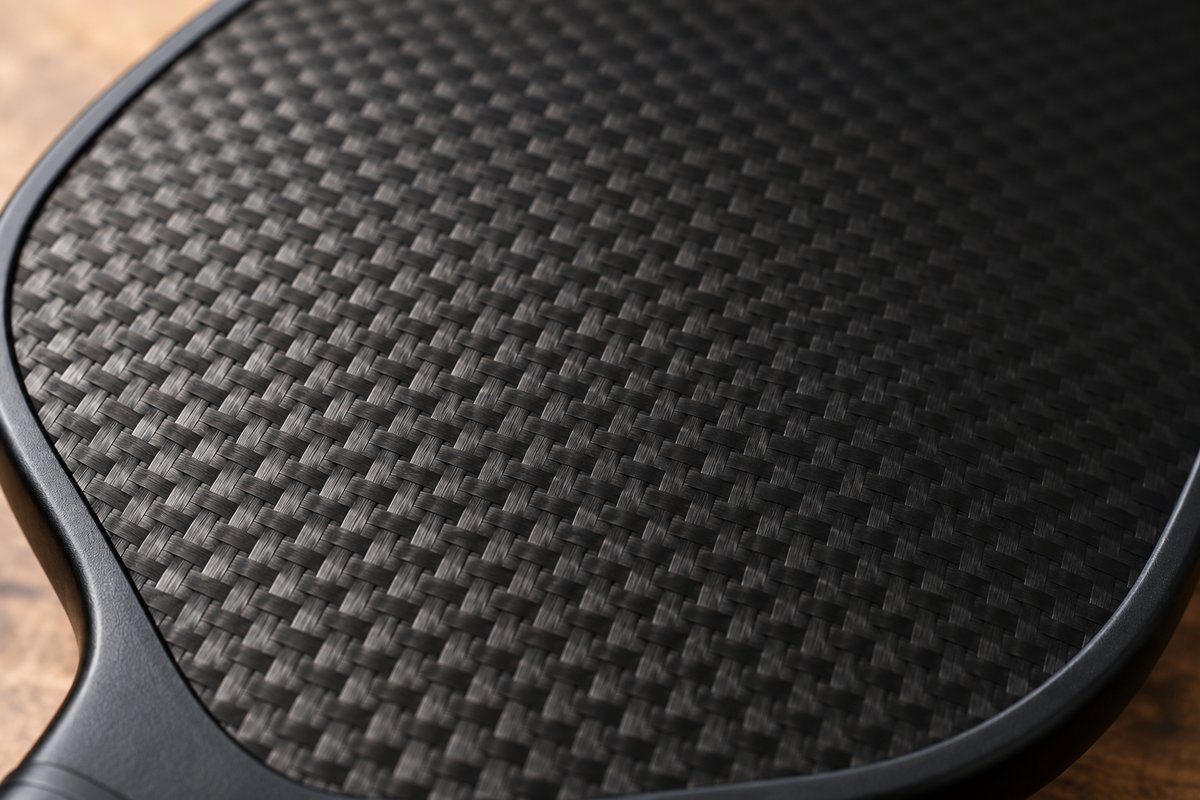
Picking between a carbon fiber vs. fiberglass pickleball paddle face comes down to one moment: contact. Two paddles can look almost the same on a shelf and hit like completely different pieces of equipment. Same shape, same weight class, same price bracket sometimes, and one sends the ball off the face fast while the other holds it a beat longer before letting go. The surface material is usually why, and the two you will see over and over on spec sheets are carbon fiber and fiberglass.
Neither one is objectively better. They trade power for control in opposite directions, and which side of that trade you want depends on how you play, not on which material sounds more advanced.
Table of Contents
Carbon fiber vs fiberglass pickleball paddle: what the materials are
Fiberglass is woven glass strands set in resin. It is the same basic composite family used in boat hulls and surfboards: strong for its weight, but flexible enough to bend slightly under load and spring back. On a paddle, that flex shows up as give at the moment of contact.
Carbon fiber is woven carbon strands set in resin the same way, but carbon strands are stiffer than glass ones. The paddle face barely deforms when the ball hits it. Some brands sell "graphite" paddles as a separate category from carbon fiber, but graphite is carbon in a different crystalline form, and most retailers use the two terms interchangeably.
Both are almost always layered over a foam or honeycomb core (a core made of small six-sided cells) rather than used as the whole paddle. The surface material and the core material are two separate specs doing two different jobs. This article is only about the surface.
Why fiberglass paddles feel more powerful
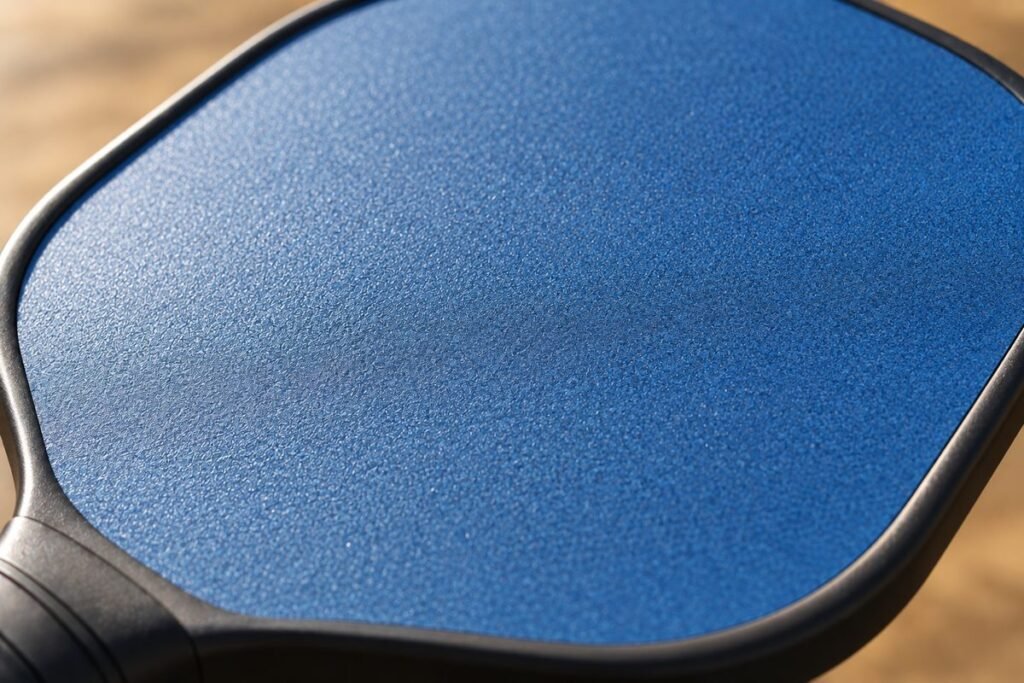
Flex is the whole story here. When a fiberglass face bends on contact and then snaps back, it returns more of the ball's energy than a stiffer surface would, the same way a trampoline sends you higher than a wood floor. Players describe it as pop, and it is the closest thing to a free power boost the material offers.
That extra rebound also means fiberglass paddles tend to have a bigger forgiving zone. Off-center hits still come off with decent pace, which is a real advantage for anyone still working on consistently finding the sweet spot (the area of the face that gives the cleanest hit).
Why carbon fiber feels different in your hand
Carbon fiber does the opposite. Because the face resists bending, the ball stays against it for a fraction of a second longer before leaving. That extra contact time is what players mean when they say a carbon paddle feels "controlled" instead of "poppy." You are not losing power outright. You are trading some of it for more say over where the ball goes.
The sweet spot on a carbon paddle also tends to be smaller and more precisely defined. Hit it dead center, and the feedback is sharp and specific. Miss it, and you will know immediately, in a way a more forgiving fiberglass face tends to mute.
The spin question, and why the surface matters more than you'd think
Spin comes from how well the paddle grips the ball for a moment before release, and that's more a texture question than a stiffness one. Carbon fiber's weave is naturally rough at a microscopic level, and that roughness is baked into the material itself, not sprayed or sanded on afterward. It holds up over years of play. For specific picks built around that, see our guide to the best pickleball paddles for spin and control. USA Pickleball also caps how rough any paddle face can be, with the limits set out in its equipment standards manual.
Fiberglass paddles get their spin-producing texture from a separate manufacturing step, usually a sandblasted or abrasive coating applied to the surface. It works well when new, sometimes very well, but it is a layer sitting on top of the base material rather than part of it, and it wears down with repeated ball contact faster than carbon's built-in grip does.
This is also where you will run into conflicting information online. Some sites frame carbon fiber as the power material and fiberglass as the control and spin option, which is close to backward from how the physics work and from what paddle manufacturers themselves publish. If you read three articles on this topic and they disagree with each other, that mismatch is real, not something you are misreading. It is one more reason to check more than one source.
Which one lasts longer
Carbon fiber wins this one clearly. The stiffness that gives it precise control also resists the microcracking and surface wear that eventually flattens a paddle's pop. A well-cared-for carbon paddle can hold most of its performance for a couple of years of regular play.
Fiberglass softens with use. The flex that makes it powerful when new also lets the material fatigue faster, and the textured spin coating is usually the first thing to wear visibly. Heavy players sometimes notice a real drop in both pop and spin within a single season.
What you're paying for
Carbon fiber costs more to manufacture, and that shows up on the price tag. Expect most carbon paddles to sit a clear price tier above comparable fiberglass ones. You are not just paying for a fancier-sounding material. You are paying for a face that keeps its spin and pop longer, at the cost of some of the beginner-friendly forgiveness fiberglass offers out of the box.
Which one fits your game
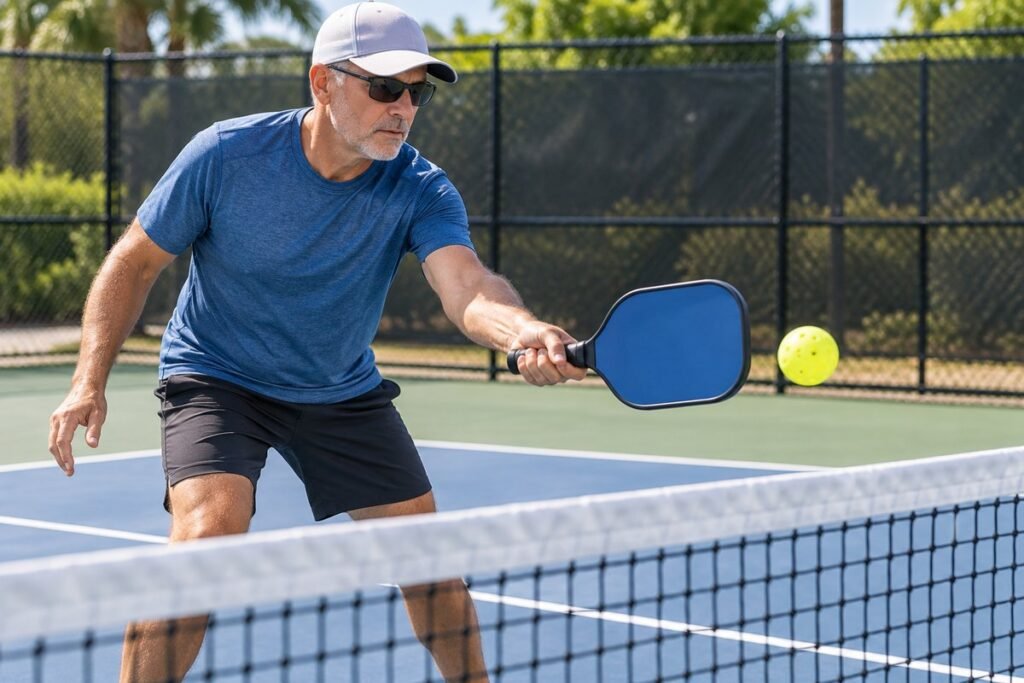
If you are new to the sport or still working on finding the center of the paddle consistently, fiberglass's bigger sweet spot and extra pop will likely make the learning curve less frustrating. You will also pay less while you figure out what you want long term. Our guide to paddles for beginners covers the rest of what matters at that stage.
If you already have some reps in and notice shots sailing long, or you want more say over placement on dinks (a soft shot that drops just over the net into the kitchen) and resets, carbon fiber's control and durability are usually worth the extra cost. Players chasing spin on serves and third-shot drives tend to prefer it for the same reason: the surface simply grips the ball better and keeps doing so for longer.
Weight and grip size still matter more than surface material for most players working on the fundamentals, covered in our paddle weight and grip size guide. Core construction is another variable, too. Our EPP vs. MPP core comparison covers how the material underneath the surface changes the feel again, independent of whatever is on top of it.
How we wrote this guide
We haven't run a season of matches with every carbon and fiberglass paddle on the market, and a spec comparison isn't a substitute for hitting with one. What is above is grounded in how these composites behave according to the material science, cross-checked against paddle manufacturers' own descriptions rather than a single source.
If you can, demo a carbon and a fiberglass paddle in the same weight class before buying. The difference described here is real enough that most players feel it within the first few swings, which makes it one of the easier specs to confirm for yourself before you spend the money.
Frequently asked questions
Is carbon fiber or fiberglass better for beginners?
Fiberglass is usually the easier start. Its face flexes on contact, which adds pop and gives you a bigger forgiving zone on off-center hits. Carbon fiber rewards players who already find the sweet spot consistently.
Does carbon fiber give more spin than fiberglass?
Usually, and it keeps that spin longer. Carbon fiber's rough texture is part of the material itself, while fiberglass paddles rely on a separate textured coating that wears down with repeated ball contact.
Which lasts longer, carbon fiber or fiberglass?
Carbon fiber. Its stiffness resists the surface wear and microcracking that flatten a paddle's pop over time. Fiberglass softens with use, and its spin coating is usually the first thing to wear.
Are graphite and carbon fiber the same thing?
Close enough for shopping purposes. Graphite is carbon in a different crystalline form, and most retailers use the two terms interchangeably. When comparing paddles, count graphite on the carbon side.