
Half an ounce doesn't sound like much until you are thirty minutes into a rec night and your forearm tells you otherwise. Pickleball paddle weight and grip size are the two specs beginners skip past fastest, mostly because neither one shows up in a flashy product photo. They are also the two specs most likely to leave you sore, or leave your shots short, if you get them wrong.
This guide covers both together, because they work together. A paddle that is the right weight but the wrong grip size still twists in your hand on off-center hits. A paddle with a perfect grip but too much weight still tires your arm by the third game. Get them right at the same time and most of the "which paddle should I buy" question answers itself.
Table of Contents
Why pickleball paddle weight matters more than people think
Pickleball paddle weight is not regulated by USA Pickleball at all. There is no minimum, no maximum, nothing in the rulebook that limits how light or heavy a legal paddle can be. Every weight figure you see on a listing is the manufacturer's own choice, not a rule anyone has to follow.
What pickleball paddle weight changes is how much effort your arm spends on every single shot. A heavier paddle carries more mass into the ball, so drives and put-away shots come with less swing effort behind them. That same mass has to be decelerated and redirected on every reset and dink, which is where a heavier paddle starts working against you instead of for you. A lighter paddle flips that trade: quicker at the net, easier on a tired arm late in a session, but it asks you to generate more of the power yourself on drives.
Neither direction is correct on its own. The right weight depends on how your specific arm and shoulder hold up over a full session, which is something a spec sheet cannot tell you and a paddle review cannot tell you either.
The three weight ranges, and what they feel like
Pickleball paddle weight generally clusters into three loose bands. Lightweight paddles run under about 7.5 ounces. Midweight paddles sit roughly between 7.5 and 8 ounces, which is where most paddles on the market land. Heavyweight paddles run above 8 ounces.
A lightweight paddle is easier to whip through fast net exchanges and puts less strain on a smaller or less conditioned arm. But you will feel the lack of mass on hard drives, where you have to supply more of the pace yourself. A heavyweight paddle does the opposite: drives carry more pop with less swing effort, but that same mass tires your wrist and elbow faster if you are not already used to holding weight out in front of you for an hour. Midweight paddles are the common starting point precisely because they do not force you into either tradeoff right away.
If you already know you deal with elbow or wrist soreness from other racket sports, that history is worth more than any spec sheet. Start lighter, not heavier, and let your arm tell you if you want more mass later. When you do, pickleball lead tape adds a few grams at a time without buying a new paddle.
A simple way to test weight without buying five paddles
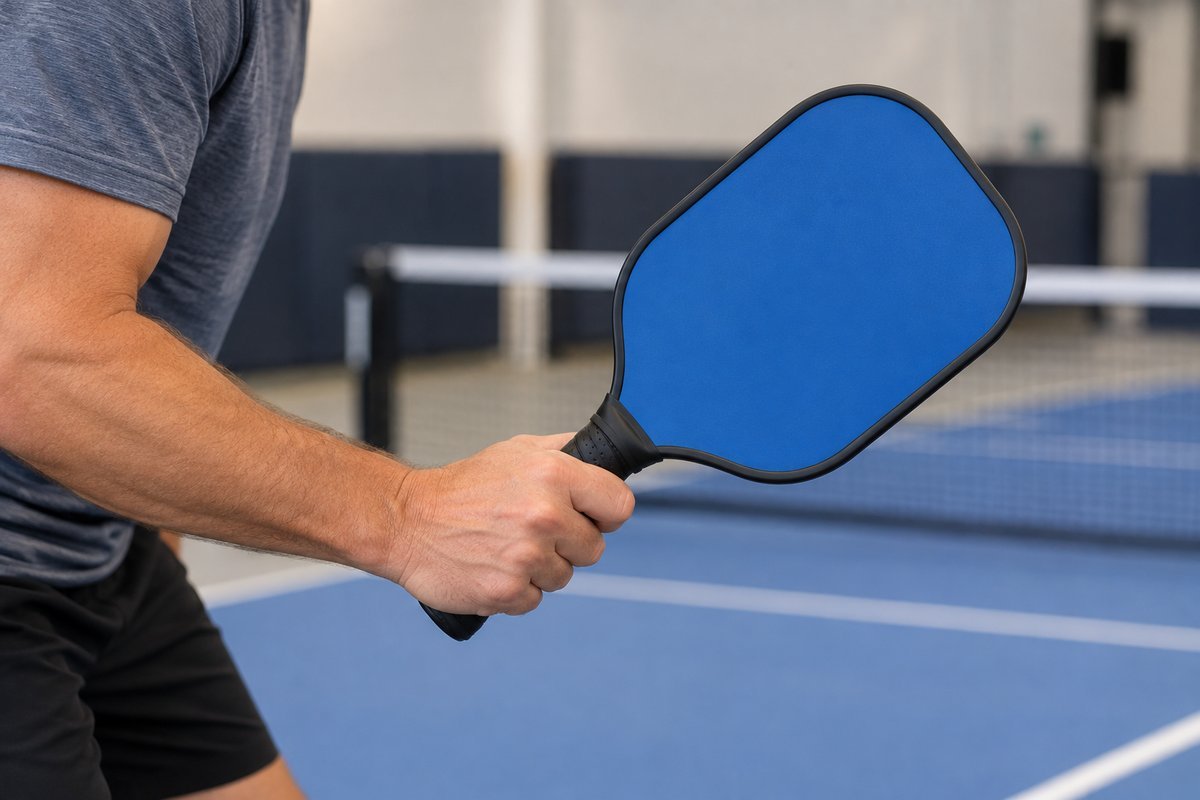
You do not need to own five paddles to figure out roughly where your pickleball paddle weight preference lands. If a friend, a demo day, or a local pro shop has even two or three paddles in different weight classes, hold each one out in a ready position for thirty seconds, then swing it through a few shadow strokes. The paddle that feels controlled rather than either flimsy or fatiguing after those thirty seconds is a reasonable starting point.
If no demo paddles are available, default to a midweight paddle for your first one. It is the safer bet because it doesn't commit you to either tradeoff, and it gives you a real baseline to compare against once you get to try something lighter or heavier.
Grip circumference: the spec that fits your hand
Grip circumference is the measurement around the handle, and it typically runs from about 4 inches to 4.5 inches depending on the paddle. Unlike weight, this isn't a stylistic choice. A grip that is too small forces your hand to squeeze harder just to keep the paddle from twisting on off-center contact, and that extra squeezing is a well-documented contributor to tennis elbow and other forearm strain. A grip that is too large limits the small wrist snap you need on dinks and resets, since your fingers cannot wrap far enough around the handle to move it quickly.
How to measure your hand for pickleball paddle grip size
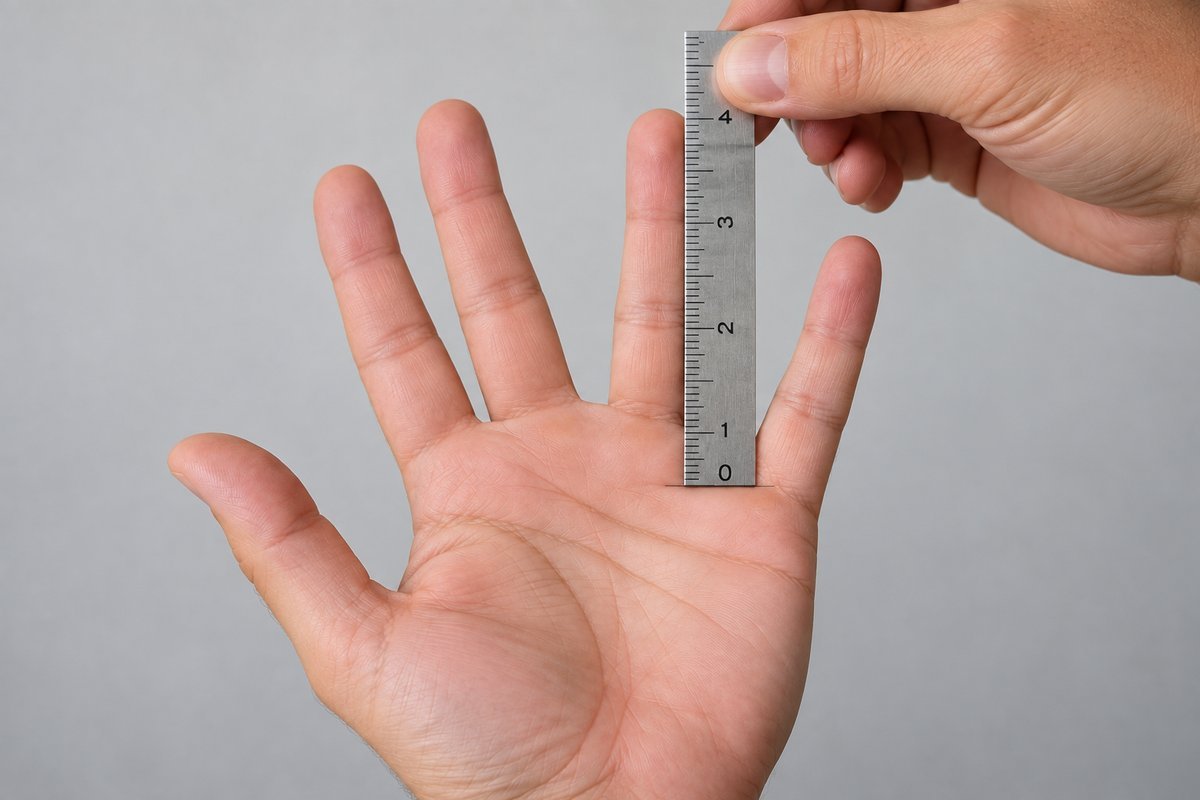
The most reliable way to find your size does not involve guessing or picking whatever the store happens to have in stock. Hold your hand open, palm up, and measure with a ruler from the tip of your ring finger straight down to the second horizontal crease of your palm, the one nearer the middle of your hand. That measurement in inches closely matches the grip circumference that will fit you, and it is the same method racket fitters have used for tennis grips for decades, adapted here to pickleball's slightly smaller range.
If your measurement lands between two standard sizes, size down rather than up. A grip that is slightly small can be built up with an overgrip in a couple of minutes. A grip that is too large cannot be made smaller without professional work, and most players never bother.
Grip length matters too, and it is easy to overlook
Circumference gets most of the attention, but grip length, meaning how much handle you have to hold, changes how a paddle handles two-handed backhands and reach shots. A shorter handle keeps more of the paddle's total length in the hitting surface, which some players prefer for control. A longer handle gives you room for a two-handed grip on defensive shots, which some players lean on heavily and others never use at all. There is no universally correct length here, only what matches shots you plan to hit.
Overgrips: the cheap fix most players do not know about
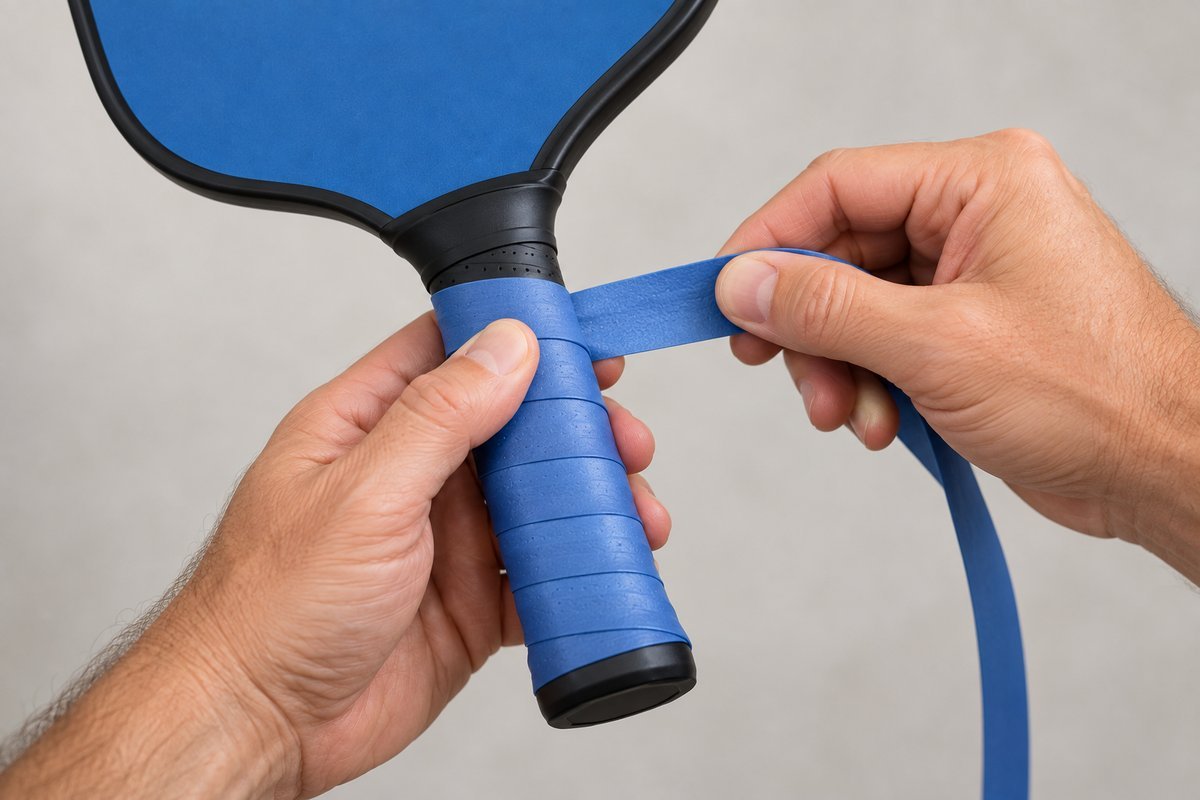
An overgrip is a thin layer of tacky material wrapped over the existing handle, and it is one of the least expensive ways to fine-tune a grip that is close but not quite right. A single wrap typically adds somewhere around one sixteenth of an inch to the circumference, so two wraps can bridge a half-size gap between what you measured and what a specific paddle ships with. Overgrips also wear out and get replaced regularly, since they absorb sweat and lose their tackiness well before the paddle underneath does.
This is worth knowing before you rule out a paddle entirely over a grip that is a little too small. It is a five-minute fix, not a reason to start over.
One spec you do not need to chase yet
You may come across the term twist weight while reading about paddles, which measures how much a paddle resists twisting in your hand on an off-center hit. It is a real and useful number for players who are already comparing specific paddle models closely, but it is not something a beginner needs to factor in when buying a first paddle. Get the overall weight range and the grip size right first. Twist weight is a refinement for later, once you already know what you like.
Putting it together: a five-minute fitting checklist
Measure your hand with a ruler, from ring fingertip to the second palm crease, and treat that number as your target grip circumference. Default to a midweight paddle unless you already know your arm prefers lighter or heavier, or you get the chance to test a couple of options side by side. If a paddle's grip measures slightly under your target, plan on an overgrip rather than walking away from an otherwise good paddle. If it measures over, look elsewhere, since you can't easily fix sizing down later.
If you have not settled on a paddle yet, our guide to the best pickleball paddles for beginners covers shape and price alongside these two specs. None of this requires spending real money to figure out your ideal pickleball paddle weight. A ruler and thirty seconds with a demo paddle will tell you more than any spec sheet, and getting these two numbers right keeps you comfortable enough to play long enough to improve. If price is the deciding factor, start with our best budget pickleball paddle picks.
If your forearm or elbow already hurts, see our picks for the best pickleball paddle for tennis elbow.
Frequently asked questions
How much should a pickleball paddle weigh?
Pickleball paddle weight isn't regulated, so there is no required number. Most paddles fall into three bands: lightweight under about 7.5 ounces, midweight between 7.5 and 8 ounces, and heavyweight above 8 ounces. Midweight is the common starting point for a first paddle.
Is a heavier pickleball paddle better?
Only for some players. A heavier paddle adds pop on drives with less swing effort, but it tires your wrist and elbow faster and feels slower on dinks and resets. If you've had elbow or wrist soreness from other racket sports, start lighter and add weight later if you want it.
How do I measure my pickleball grip size?
Hold your hand open, palm up, and measure with a ruler from the tip of your ring finger down to the second horizontal crease of your palm. That number in inches closely matches the grip circumference that will fit you.
Can an overgrip change my grip size?
Yes, but only upward. One wrap adds roughly one sixteenth of an inch to the circumference, so two wraps can close about a half-size gap. A grip that is too big can't easily be made smaller, so size down if you're between two sizes.