
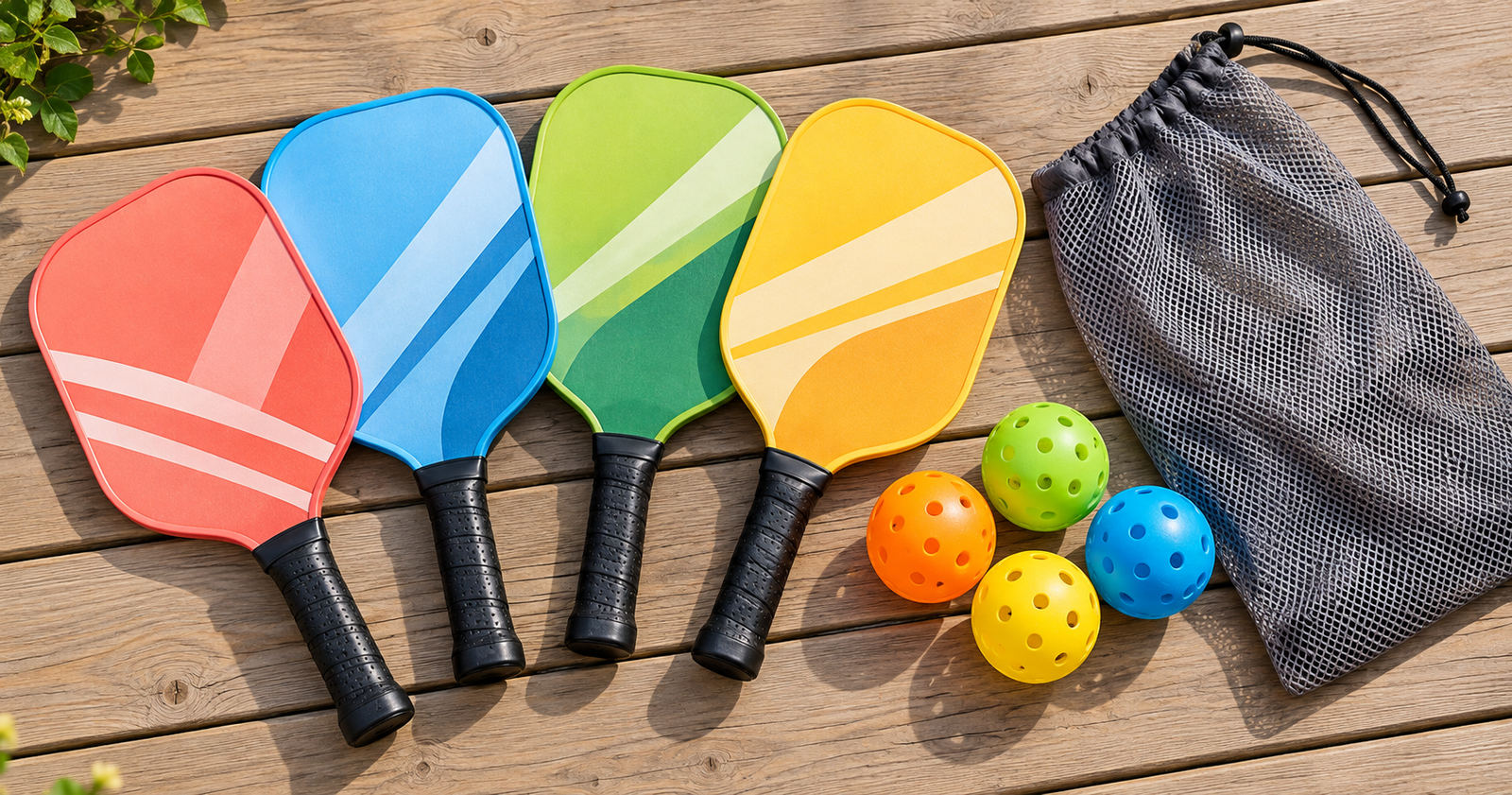
Search "pickleball paddle set," and you'll land on a wall of bundles: two paddles, four paddles, a mesh bag, a handful of balls, sometimes a portable net, all wrapped into one listing with one price. The pitch is convenience, and for many buyers, that's exactly what they need. But "set" hides a wide range of quality, and the things that make one set worth buying and another a waste of money rarely show up in the product photos.
This is our framework for buying a pickleball paddle set, not a ranked list of specific products. We haven't hands-on tested every set on the market, so instead of telling you which one to click "add to cart" on, we explain what changes between a good set and a bad one, who a set makes sense for, and the mistakes that cost people money twice.
Table of Contents
What's Inside a Pickleball Paddle Set
Most sets follow the same basic formula: two or four paddles, a small stack of balls (usually 4), and a carry bag. Some throw in a portable net or paddle covers to round out the box. The paddles are almost always matched, meaning everyone in the set gets the same model, weight, and grip size. That is fine for casual play but can be a problem the moment one player's hand is noticeably bigger or smaller than another's.
The listing photo doesn't tell you where the manufacturer spent the money. A set can have a decent paddle and cheap filler balls, or the reverse: unremarkable paddles paired with a nice-looking bag that inflates the price. Reading a set as one product instead of three or four separate ones is the first mistake worth avoiding.
Who a Paddle Set Makes Sense For
Sets make sense in a few specific situations. One is outfitting a household where two or more people are trying the sport for the first time, buying a one-time gift for a family that plays casually, or stocking a cabin, RV, or vacation rental where the paddles just need to survive occasional use. In all of these cases, nobody in the group has a strong preference yet, so matched, mid-grade paddles are a convenience, not a compromise.
Sets make less sense once a player has been on the court more than a handful of times. Grip size, weight, and paddle shape start to matter as soon as someone develops a swing style, and a set forces every player onto identical specs whether or not those specs fit their hand or their game. At that point, a single paddle picked for the individual player is worth more than a matched pair.
Paddle Quality in Sets: What Changes at Each Price Point
Budget sets, typically under $40, tend to use wood or basic aluminum paddles. Wood paddles are heavy and dead-feeling but nearly indestructible, which is a reasonable tradeoff for kids or infrequent players who are hard on equipment. Aluminum-core paddles in this range are lighter, but the face material is usually thin enough that it dents or delaminates faster than anything you'd want for regular play.
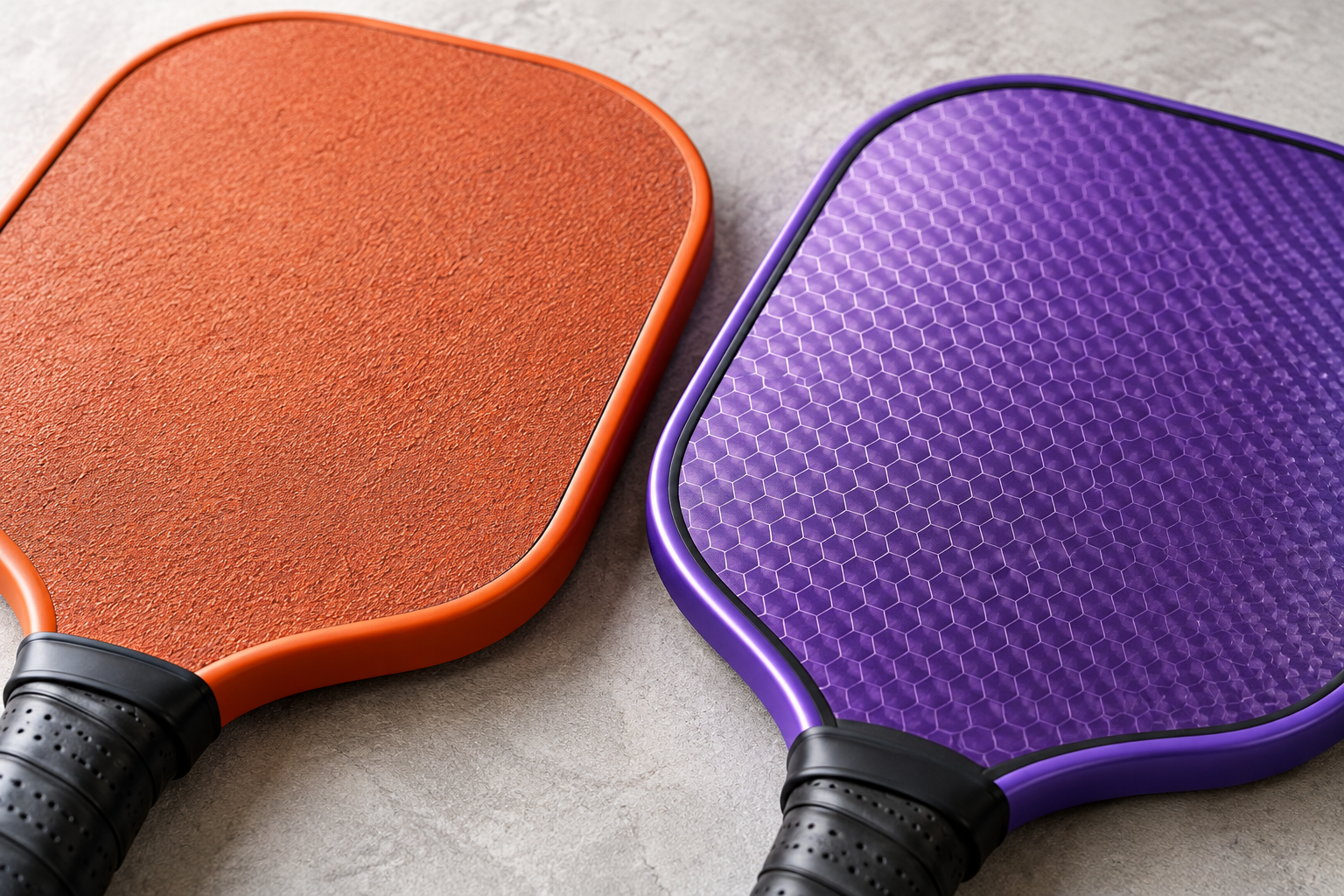
Mid-range sets, roughly $40 to $80, usually move to a polypropylene honeycomb core (a core made of small six-sided cells) with a fiberglass or entry-level carbon face, the same core technology used in far more expensive individual paddles. The gap shows up in manufacturing consistency and edge durability, not in how the paddle feels on day one. This is the range where a set competes with buying two individual budget paddles, and it's usually the better value if everyone in the group is still deciding whether they'll stick with the sport.
Above $80, you're less often paying for better paddles and more often paying for a nicer bag, a padded net system, or a recognizable brand name on the box. It's worth checking whether that premium set's paddles are a real step up in core and face material, or whether the price increase comes entirely from the extras.
The Balls Matter More Than People Think
The most overlooked detail in a paddle set is whether the included balls are rated for indoor or outdoor play, and most sets include only one type. Outdoor balls are harder, have smaller holes, and are built to resist wind and rougher court surfaces. Indoor balls are lighter, have larger holes, and fly differently in a way that can make a new player think the paddle is the problem when the ball is to blame.
If you know where you'll be playing, check the ball type before checking anything else about the set. A set with unremarkable paddles and the right balls for your court will feel better in someone's hands than a nicer set with the wrong balls included.
Extras Worth Having vs. Extras That Are Just Box Filler
A basic mesh or zippered carry bag is useful and costs the manufacturer very little to include, so it shouldn't move the price much. Paddle covers are a nice extra that protects the face during transport, worth a small premium if you plan to store the paddles in a bag rather than leave them in a garage. A portable net is the extra most worth scrutinizing. A flimsy, quick-fold net that won't hold tension is common in bundled sets. If the net is the reason you're buying the bundle, it's often better to buy a decent net separately.
Watch for sets that pad out the box count with items nobody asked for, like extra wristbands or a single low-quality ball hopper. These additions exist to make the listing photo look fuller, not to add real value.
2-Player, 4-Player, and Family Packs
A 2-player set is the right choice for a couple or two roommates who will always play together and don't need to loan out paddles. A 4-player set is the more practical default for most households, since pickleball is usually played as doubles and a 4-pack means you're never one paddle short when friends come over.
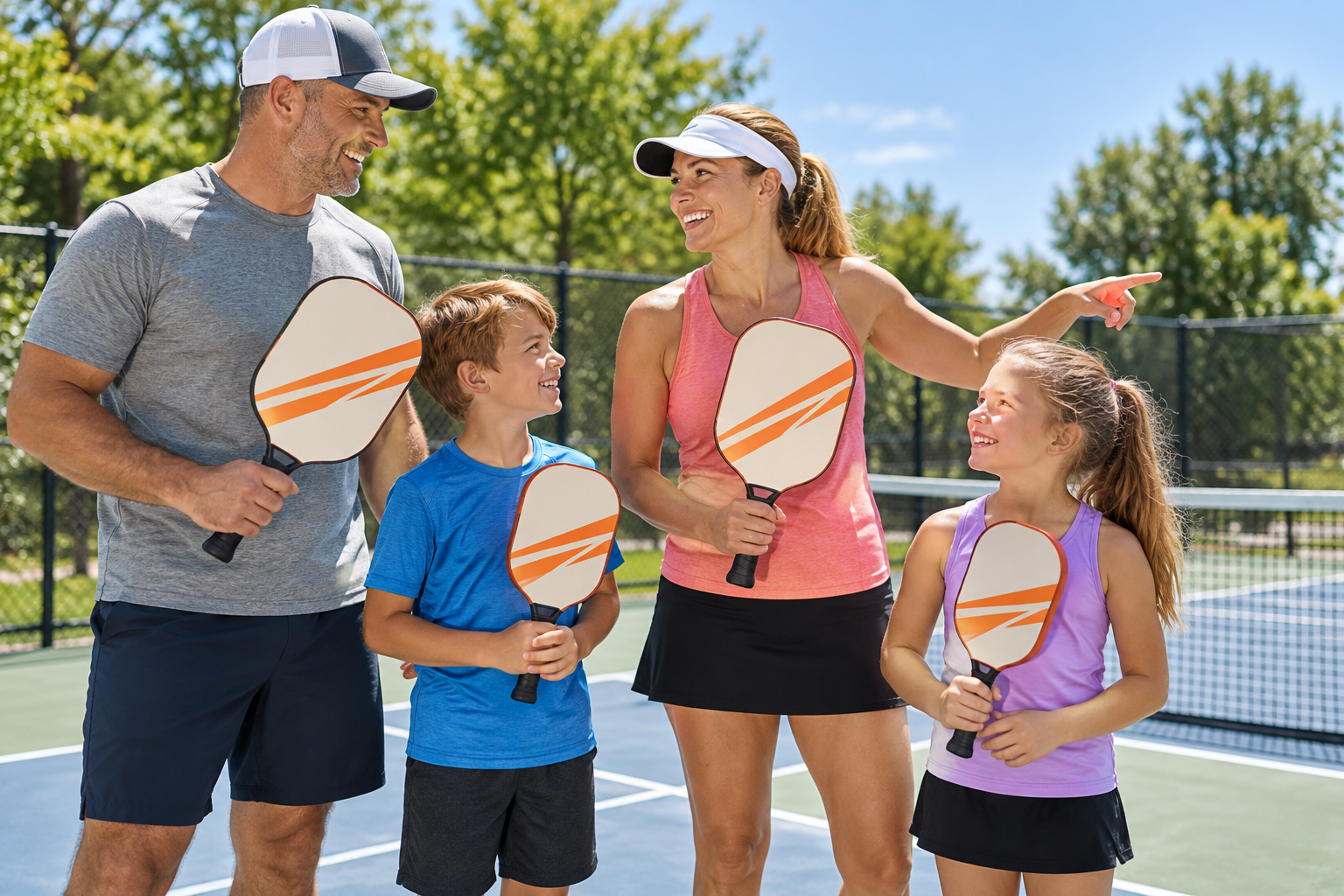
Family packs marketed toward kids typically drop paddle weight and sometimes shrink the grip, which matters more than it sounds. An adult-sized paddle in a kid's hand changes their swing mechanics and can make the sport feel harder than it needs to be while they're still learning. If a set is for a mixed-age group, check whether it includes a lighter, smaller-grip paddle or whether every paddle in the box is identical, regardless of who's supposed to use it.
Signs a Set Is Bad, Not Just Basic
There's a real difference between a basic set that is plainly entry-level and a bad set that's cutting corners. A few signs point to the second category. Watch for paddle faces that flex noticeably when you press on them with a thumb, a core that sounds hollow and rattly rather than solid when you tap it, balls that are visibly warped or oval instead of round straight out of the packaging, and a bag with stitching that's already fraying in the product photos.
Also worth checking: whether the listing mentions USA Pickleball approval. It isn't required for casual backyard play, but its absence often signals that the paddle wasn't built to any consistent spec, which tends to track with other quality shortcuts throughout the set.
Common Mistakes When Buying a Paddle Set
- Buying based on box count alone. A set with more items isn't automatically a better deal if the extra items are low quality.
- Ignoring grip size for a gift. Grip size that's too big for a smaller hand makes the paddle harder to control, not just less comfortable.
- Not checking whether indoor or outdoor balls match where the set will be used.
- Assuming a higher price always means a better paddle instead of a nicer bag or net.
- Buying a set for a player who's already committed to the sport instead of a single paddle sized to them.
Which to Buy
A pickleball paddle set is a good option for outfitting a household of new or casual players, especially as a gift, as long as you treat it as several products bundled together rather than one. Check the core and face material the way you would for an individual paddle, confirm the balls match where you'll play, and don't pay extra for a bag or net you don't need. Once someone in the group starts playing regularly, that's the signal to stop thinking in sets and start choosing a paddle for that specific player.
Is it better to buy a pickleball paddle set or individual paddles?
A set is usually the better value for outfitting two or more new players at once, since matched mid-range sets often use the same core technology as individual budget paddles at a lower combined price. Once a player has settled into the sport, an individual paddle sized to their hand and swing is worth more than a matched set.
How many balls come with a typical pickleball paddle set?
Most sets include four balls, though some budget sets include as few as two. Check whether the included balls are indoor- or outdoor-rated, since most sets include only one type and it may not match where you plan to play.
Are pickleball paddle sets good for beginners?
Yes, for beginners who haven't developed a grip or swing preference yet, a mid-range set is a practical, low-risk way to start. Wood or basic aluminum sets under $40 are durable enough for occasional or kids' play but feel noticeably heavier and less responsive than mid-range options.
What should I check before buying a paddle set as a gift?
Check grip size against the recipient's hand size, confirm whether the set includes indoor or outdoor balls that match where they'll play, and look at the core and face material rather than judging the set by how many items are in the box.
Do paddle sets include USA Pickleball approved paddles?
Not always. Approval isn't required for casual play, but many budget sets skip it entirely. If a listing doesn't mention approval status, take a closer look at the paddle's build quality before buying.
If you're buying for someone who's ready to move past a matched set, our beginner paddle buying guide and budget paddle guide break down how to pick a single paddle sized to the player, not the group.