
Pickleball shoes vs. tennis shoes may seem like a question you can skip if you already own a pair of court shoes. It isn't. The two sports load your feet differently enough that the wrong shoe changes how you move, and eventually, whether you get hurt. Tennis shoes are built around long rallies and baseline sprints. Pickleball asks for something else: short, sharp lateral cuts on a court roughly a third the size of a tennis court, repeated for hours.
If you already read our guide to the best pickleball shoes, this article goes one layer deeper. It covers what changes between a shoe built for tennis and one built for pickleball, and whether the tennis shoes already in your closet are good enough to start with.
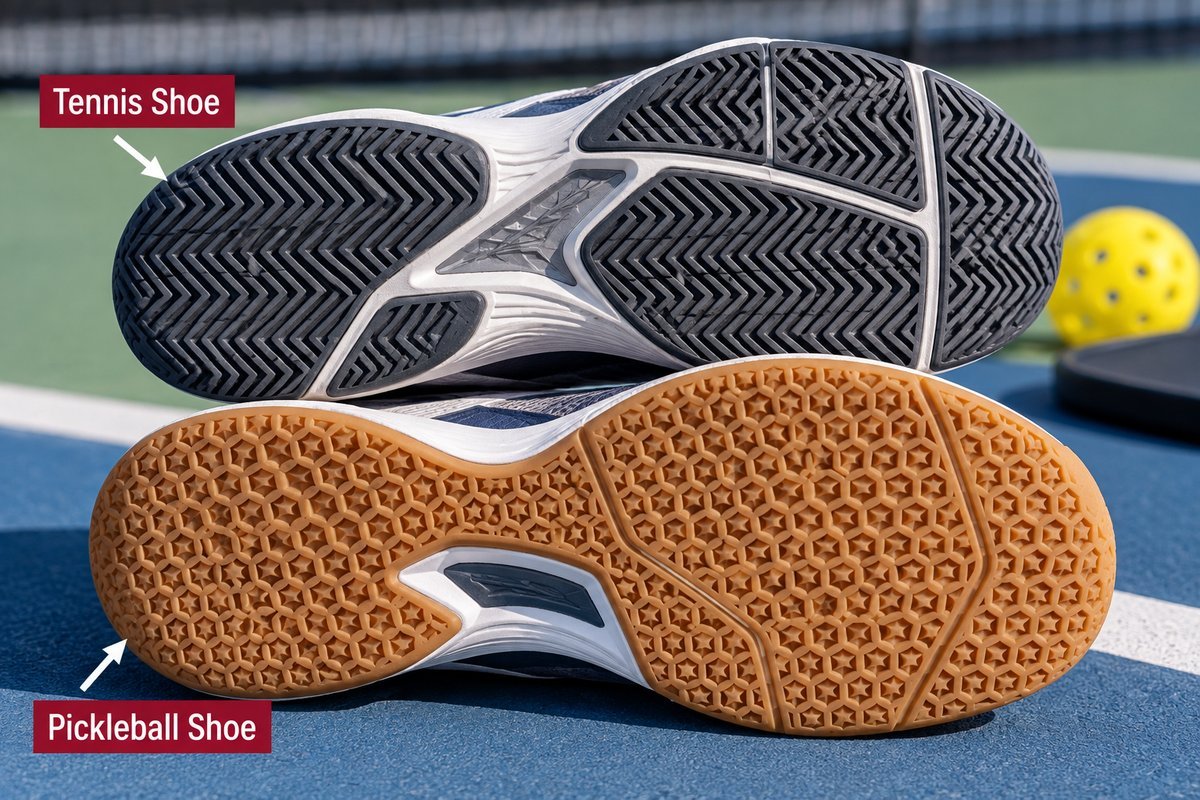
Table of Contents
Why the two sports load your feet differently
Tennis is a running sport with sprints attached. Players cover a court more than twice the size of a pickleball court, chase balls to the baseline and back, and spend long stretches moving mostly forward and backward. Tennis shoes are built around that pattern: enough cushioning to absorb repeated forward strides, and enough structure to survive a long match without breaking down.
Pickleball is closer to a shuffling sport. Points are short, the court is small, and most of the movement that matters happens sideways, in and out of the kitchen (the 7-foot zone next to the net where you cannot volley), one step at a time. That difference is why it's worth asking whether your tennis shoes are good enough.
Outsole tread: multi-directional vs. forward-built
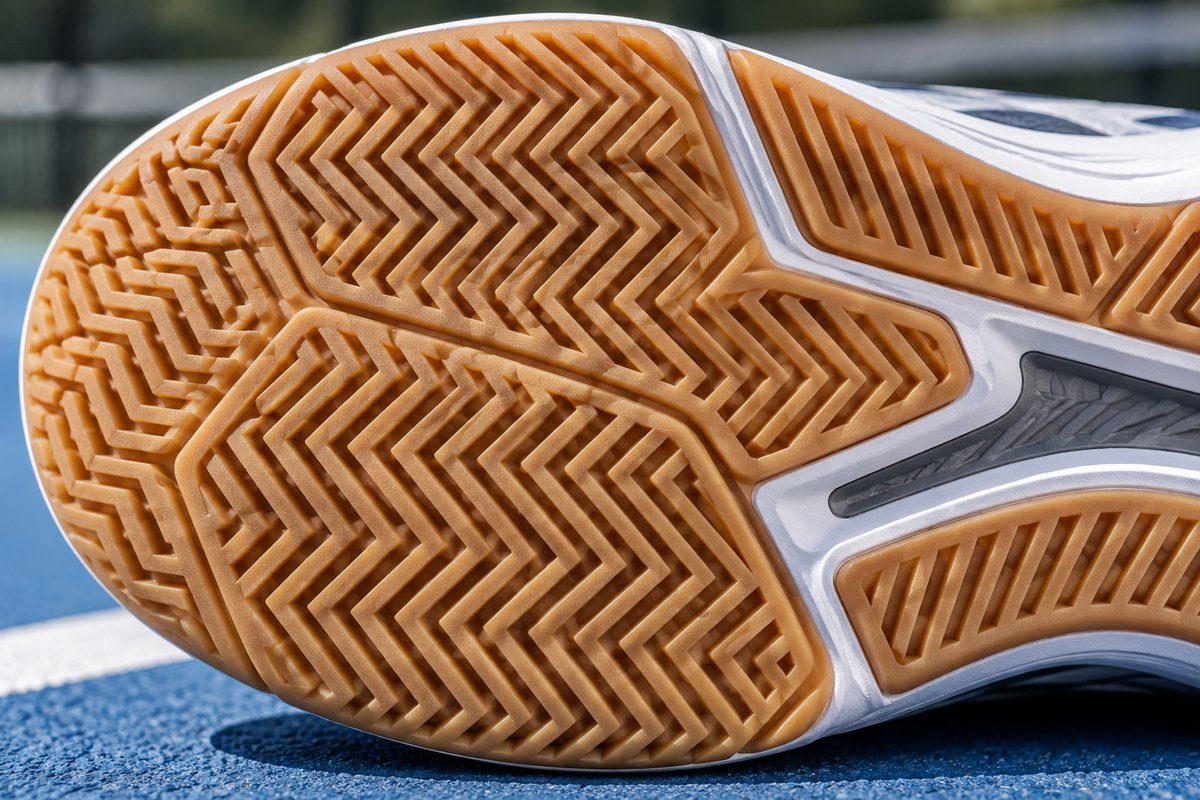
Look at the bottom of a tennis shoe and a pickleball shoe side by side, and the tread pattern is the first thing that gives them away. Tennis outsoles lean toward patterns built for forward sprinting and controlled sliding, useful on clay and hard courts where players sometimes slide into a shot. Pickleball outsoles use multi-directional patterns (herringbone and hexagonal shapes are common) designed to bite in every direction because the next step could go any way.
That matters more than it sounds. A tread built for forward motion can grip fine going toward the net and then let go slightly on a hard lateral cut, which is exactly the movement pickleball demands over and over.
Lateral support and stability
Tennis shoes build stability around a full-length shank and a taller midsole chassis, spread out to hold up over long matches full of running. Pickleball shoes put more of their stability budget into the sides of the shoe: reinforced sidewalls, wider platforms, and structure meant to resist the foot rolling outward during a hard side-step. Pickleball produces that movement constantly and tennis produces it rarely. That's why a shoe that feels perfectly stable on a tennis court can feel vague and unsupportive the first time you plant hard for a dink (a soft shot that drops just over the net into the kitchen).
Weight and cushioning
Tennis shoes tend to run heavier and a bit more rigid, which is a reasonable tradeoff for durability across a two- or three-hour match. Pickleball shoes generally aim lighter and more flexible, since matches are shorter and points are quick bursts rather than sustained running. Cushioning follows the same logic: tennis shoes are tuned for repeated forward strides over a long match, while pickleball shoes lean toward responsive cushioning that resets quickly between short, explosive movements rather than long-distance shock absorption.
Ankle support and injury risk
This is the part that sends new players to urgent care. Running shoes, and to a lesser extent some tennis shoes, are built with support systems optimized for forward motion. They don't do much for a foot that suddenly has to stop and change direction sideways. Ankle rolls and sprains, one of the most common lateral-movement injuries in racquet sports, show up constantly among players who started in running shoes, because the shoe wasn't built to resist that kind of lateral load.
Tennis shoes are a meaningful step up from running shoes for this reason, since tennis already involves some lateral movement. But they're still not built around pickleball's specific demand for constant, short, sharp side-to-side cuts the way a dedicated pickleball shoe is.
Indoor and outdoor sole compounds
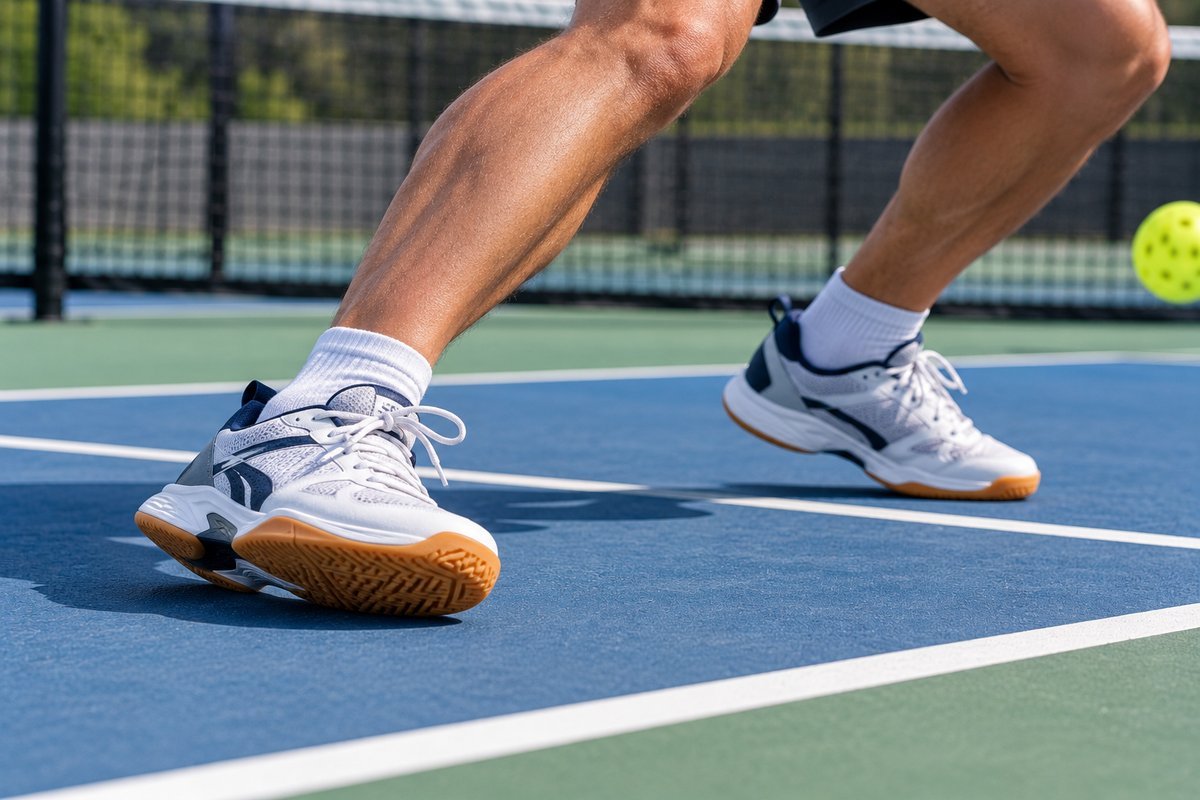
One difference that has nothing to do with tennis and everything to do with pickleball: where you're playing changes what sole compound you want. Indoor pickleball shoes typically use non-marking gum rubber soles suited to gym floors, the same logic behind indoor volleyball and basketball shoes. Outdoor pickleball shoes need a harder, more abrasion-resistant compound to survive asphalt and textured acrylic surfaces without wearing through in a few sessions. Tennis shoes deal with a similar indoor and outdoor rubber compound split, so that part of the decision isn't unique to pickleball. It's just another variable to check before buying, on top of the sport-specific differences above.
Pickleball shoes vs tennis shoes: can you just use what you already own
For your first few sessions, yes, reasonably. Tennis shoes are built with enough lateral support that they beat running shoes by a wide margin. If you're not sure pickleball is going to stick, spending on dedicated shoes before you've played more than a handful of times isn't necessary.
Once you're playing regularly, the case for switching gets stronger. The multi-directional tread, the lateral-specific support, and the lighter, more responsive cushioning all add up to a shoe that matches what your feet are doing on a pickleball court, rather than what a tennis shoe assumes they're doing. If you're at that point, our best pickleball shoes guide breaks down specific pairs worth considering.
Frequently asked questions
Can I wear tennis shoes for pickleball?
You can, especially early on. Tennis shoes have more lateral support than running shoes, so they're a reasonable starting point. They're just not built specifically around pickleball's constant side-to-side cuts the way dedicated pickleball shoes are.
Why not just wear running shoes?
Running shoes are built almost entirely around forward motion. They don't offer much resistance to the lateral loads pickleball puts on your feet, which is a big part of why ankle rolls and sprains are so common among new players who start out in running shoes.
What's the biggest single difference between tennis and pickleball shoes?
Tread pattern is the most visible difference. Tennis outsoles are built more around forward sprinting and controlled sliding, while pickleball outsoles use multi-directional patterns (herringbone and hexagonal shapes are common) designed to grip in every direction for constant lateral cuts.
Do indoor and outdoor pickleball courts need different shoes?
Generally yes. Indoor courts call for non-marking soles suited to gym floors, while outdoor courts need a harder, more abrasion-resistant compound that can handle asphalt or textured acrylic without wearing down quickly.
When should I switch to dedicated pickleball shoes?
Once you're playing regularly, not just trying the sport out. That's when the lateral support and multi-directional tread of a dedicated pickleball shoe start making a real difference in comfort and injury risk.