
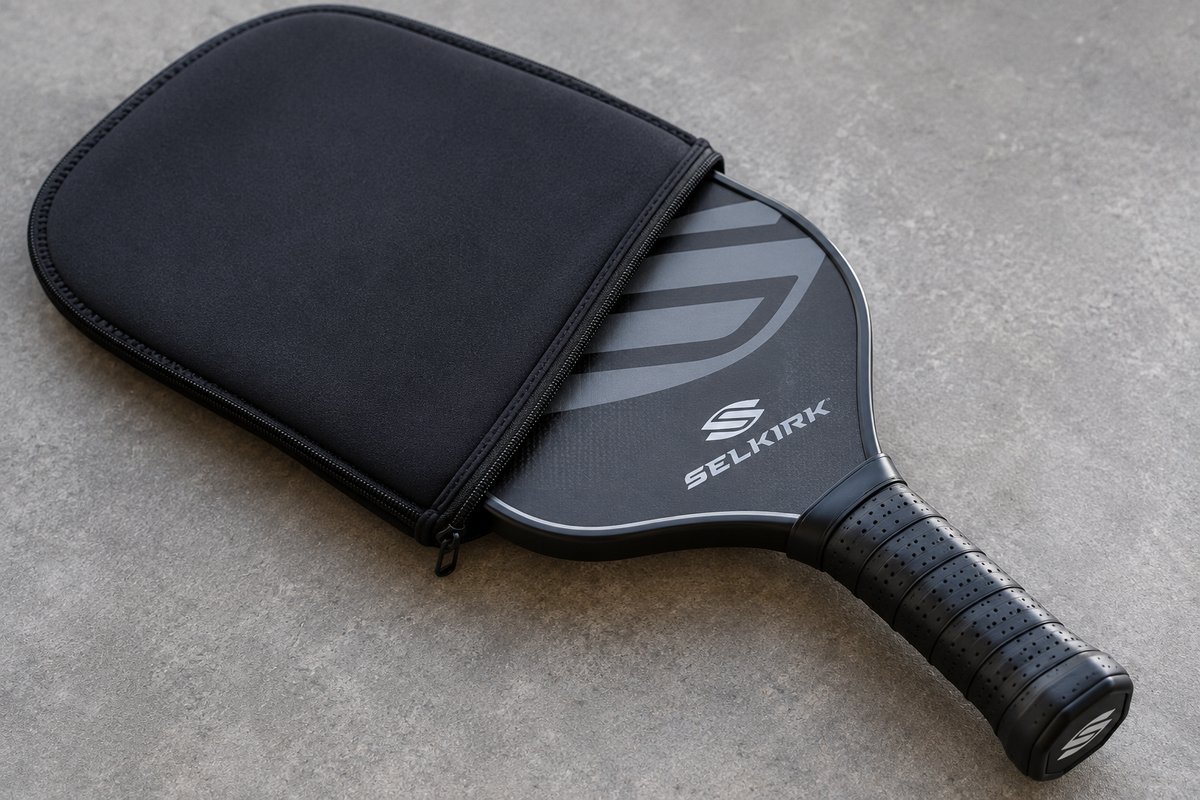
A good pickleball paddle cover is cheap protection for a paddle that spends more time getting knocked around than most players realize. It rides loose in a gym bag, bounces off a car floor mat, sits in a hot trunk between matches, and gets tossed on a bench between games at the rec center. None of that is dramatic on its own, but it adds up, and a cover is the cheapest insurance you can buy for a paddle that probably cost more than the shoes you played in.
This isn't a roundup of "the best" paddle covers. Casey hasn't tested a shelf of them side by side, and PaddleBrief doesn't publish rankings it can't back up with real testing. What follows is a buying framework. It covers what a cover protects against, the real differences between a sleeve, a rigid case, and a bag's built-in slot, and what to check before you buy one so you don't end up with padding that doesn't fit or a zipper that fails in a month.
Table of Contents
- What a paddle cover protects against
- Sleeve vs rigid case vs bag compartment
- What to look for in a paddle cover
- Sizing: the part people get wrong
- Who needs a dedicated cover
- Paddle cover or just a bag? How to decide
- FAQ
What a paddle cover protects against
Three things wreck paddles over time, and a pickleball paddle cover addresses two of them directly.
The first is edge and face impact. Drop a paddle on concrete, let it slide around in a car trunk next to a metal water bottle, or stack it under three other paddles in a duffel bag, and the edge guard (the protective strip around the paddle rim) takes the hit. Once the edge guard cracks or the face delaminates near an edge, the paddle's pop changes for good. A padded sleeve or case absorbs that shock instead of the paddle eating it directly.
The second is heat, and it gets overlooked all the time. A car interior on an 85-degree day climbs past 120 degrees within about an hour, and a paddle with a polymer core left in that heat can warp or soften the face adhesive with repeated exposure. A cover doesn't fully solve this. Nothing short of not leaving the paddle in a hot car does. But a case with some insulating padding slows the heat transfer more than a bare paddle sitting on a seat.
The third is grip degradation from moisture and grit, and a cover handles this one less well than people expect. Trap sweat against the grip without airflow, and you can make things worse, not better, speeding up how fast the grip tape breaks down compared to letting the paddle air-dry in the open. Ventilation matters as much as padding.
Sleeve vs rigid case vs bag compartment
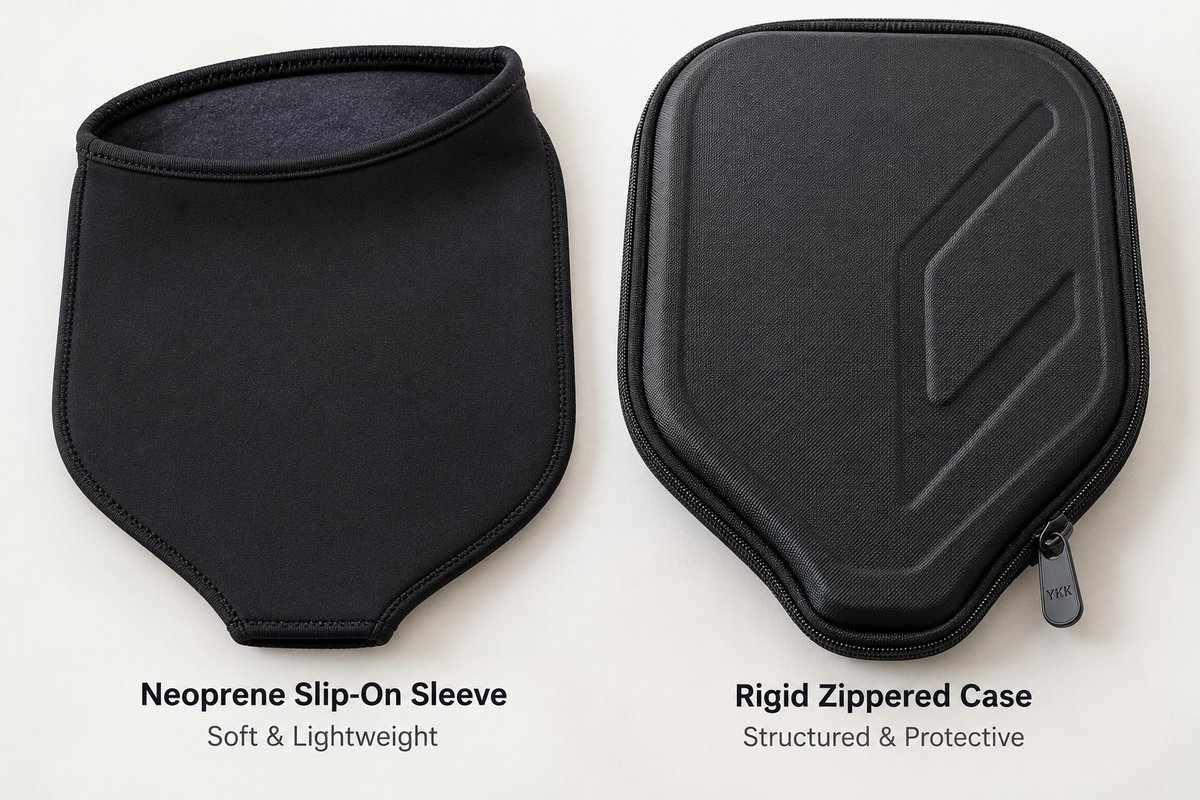
Three real product categories get lumped together under "pickleball paddle cover," and they're not interchangeable.
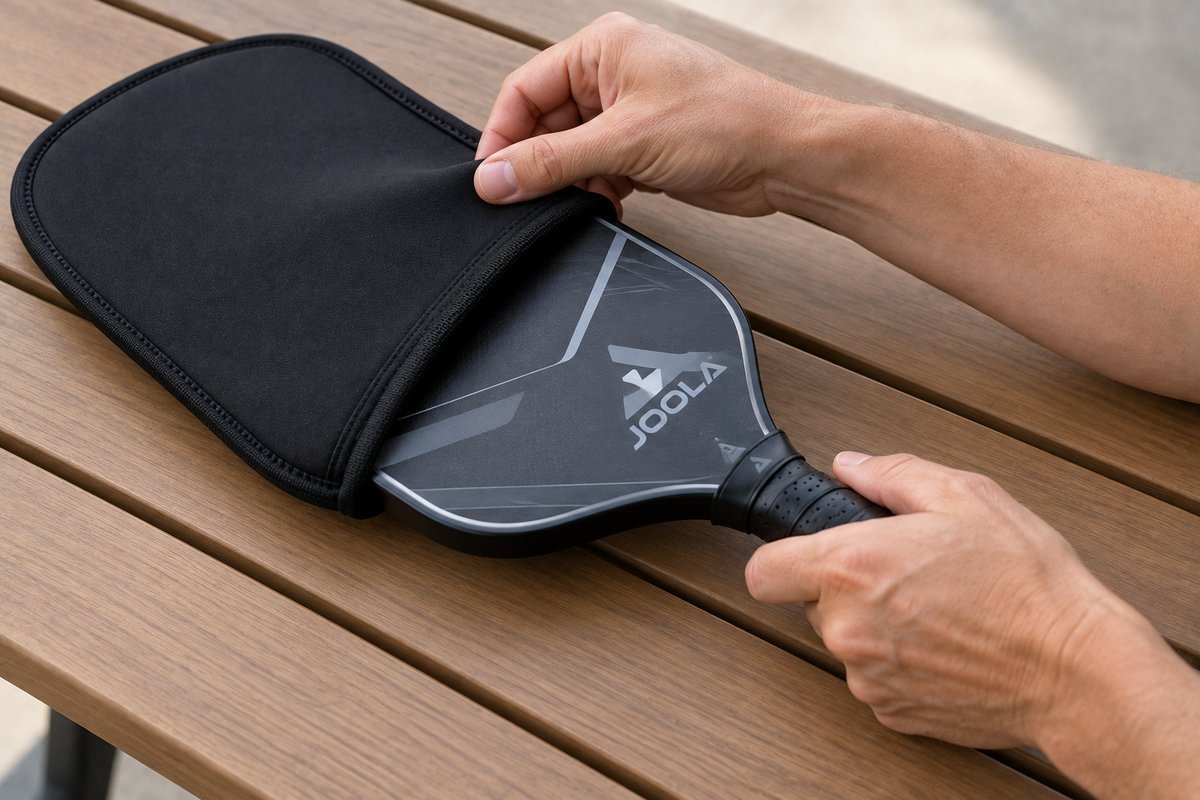
A slip-on sleeve is the simplest option: a soft fabric or neoprene pouch that slides over the paddle face, usually with a drawstring or Velcro closure at the open end. It stops surface scratches and light bumps, and it's the cheapest and lightest option by a wide margin. It does very little against a hard drop or a crushing weight on top of it, since there's no rigid structure underneath the fabric.
A rigid zippered case is a step up in protection and price. Think a hard or semi-rigid shell with a foam or padded interior lining, fully enclosing the paddle with a zipper rather than an open end. This is the closest thing to what a laptop sleeve does for a laptop. It handles drops, stacking weight, and travel far better than a sleeve, at the cost of extra bulk and a price that can run two to three times higher.
The third option isn't a standalone product: a padded compartment built into a multi-paddle bag. PaddleBrief's guide to picking a pickleball bag covers this in more detail, but the short version is that most mid-range sling bags and backpacks now include at least one padded paddle sleeve inside the main compartment. Some are divided so two paddles don't rub against each other.
What to look for in a paddle cover
Four things matter more than brand name or color.
Padding thickness and placement. A cover that's padded only on the flat faces but leaves the edge guard exposed protects against the wrong kind of impact, since edges take most real-world hits. Look for padding that wraps the perimeter, not just a padded envelope.
Material. Neoprene is the default for sleeves because it stretches slightly for a snug fit and resists light moisture. Nylon, often listed as 600D or 1000D (the number is the denier, the weight in grams of 9,000 meters of the yarn, so a higher number means a heavier, tougher weave), shows up more on rigid cases and holds up better to abrasion from being tossed in a bag with other gear. Whatever the shell material, check the lining separately. A scratchy interior lining can mar a paddle's graphics with repeated insertion and removal.
Ventilation. A sealed case with zero airflow is the most common complaint in paddle cover reviews online, and it's easy to check before buying: does the product listing mention a mesh panel, a vented pocket, or perforations anywhere on the case? If not, plan to pull the paddle out to air-dry after every session rather than leaving it zipped up.
Closure and carry method. A drawstring sleeve is fine for a paddle that lives in a bag anyway. A case you carry on its own needs a real strap, whether that's a wrist loop, a shoulder strap, or a clip that attaches to a larger bag. Cheap zippers are the most common failure point on rigid cases, so a YKK zipper or similar known brand is worth checking for on a case you plan to use for more than a season.
Sizing: the part people get wrong
Paddle dimensions vary more than they used to. Standard paddles run roughly 15.5 to 16.5 inches long and 7.5 to 8.25 inches wide, but elongated paddles (a longer, narrower paddle shape) from brands like Selkirk, CRBN, and JOOLA push past 17 inches to gain reach at the cost of a narrower face. A pickleball paddle cover sized for a standard paddle won't zip closed around an elongated one, and a cover that's too generous lets the paddle shift around inside, which defeats some of the impact protection either way.
Check the listed interior dimensions against your paddle's actual length and width, not just the "fits most paddles" claim many listings lead with. If your paddle is elongated, search specifically for a cover rated for elongated paddles instead of assuming a standard one will stretch to fit.
Who needs a dedicated cover
Climate is worth factoring in too. A pickleball paddle cover with a mesh or vented panel lets a sweaty grip and a damp face dry out between sessions instead of trapping moisture against the paddle. That matters more in humid climates or for players who store gear in a car trunk. A fully sealed, non-breathable case looks more protective but can work against you if the paddle goes in still damp.
Not everyone needs a pickleball paddle cover. If your paddle already lives inside a padded compartment in a pickleball bag every time it travels, a separate sleeve or case is redundant weight and cost. The bag is doing the same job.
A dedicated pickleball paddle cover is worth having when the paddle travels loose in a general gym bag with no padded slot, rides in a car trunk regularly, gets stored with two or more paddles and would otherwise scrape them, or when minor edge chips bother you enough to want an extra layer. New players trying out a borrowed or loaner paddle usually don't need one yet. Players who've settled on a paddle they intend to keep for a year or more usually decide it's worth the extra cost.
Paddle cover or just a bag? How to decide
Choosing between a cover and a full bag comes down to how many paddles you're carrying and how often. A single paddle that travels with you to one court a couple of times a week is well served by a simple slip-on sleeve, cheap and light. A rigid case makes more sense once you're driving to tournaments, checking a paddle as travel gear, or otherwise putting it through rougher handling than a casual pickup game.
Once you're carrying two or more paddles, plus balls, a water bottle, a change of shirt, and shoes, a dedicated pickleball bag with a built-in padded compartment usually beats buying a separate cover for each paddle. PaddleBrief's pickleball bag buying guide breaks down bag types, materials, and what matters in a full-sized bag if that's the category you need. Some players end up owning both: a rigid case for the primary paddle that never leaves it, tucked inside a bag alongside a backup paddle, balls, and shoes for everything else.
FAQ
Do I need a paddle cover if I already have a pickleball bag?
Only if your bag doesn't have a padded compartment specifically for the paddle. A dedicated pickleball paddle cover still makes sense if you want extra protection for one particular paddle beyond what the bag's general padding provides.
Can a paddle cover prevent heat damage in a hot car?
It slows heat transfer somewhat but doesn't prevent it. The only reliable fix for heat damage is not leaving the paddle in a hot car for extended periods, regardless of what it's wrapped in.
Are neoprene sleeves durable enough for daily use?
For a paddle that mostly travels inside a larger bag, yes. Neoprene handles daily insertion and removal well. For a paddle that gets tossed around loose in a trunk or checked as luggage, a rigid case holds up better over time.
Does a paddle cover affect how the paddle plays?
No. A cover is for storage and transport only. It has no effect on the paddle's weight, balance, or performance once you're on the court.
What size cover fits an elongated paddle?
Check the manufacturer's listed interior dimensions against your paddle's actual length, since elongated paddles from brands like Selkirk and CRBN can exceed 17 inches and won't fit a cover sized for a standard 15.5 to 16.5-inch paddle.