
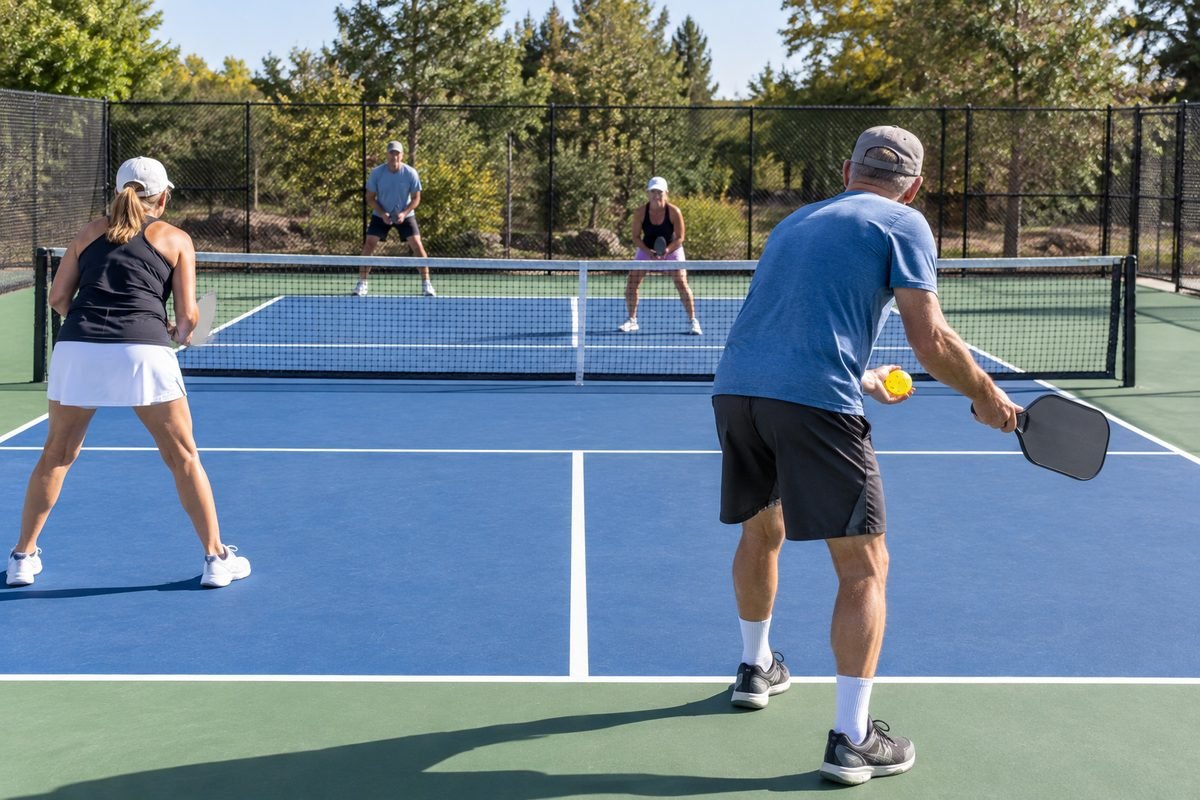
Pickleball scoring is simpler than it sounds once you know two things. In standard games, only the serving side can score, and a game goes to 11 points, won by 2. In doubles, the score is called as three numbers: the serving team's score, the receiving team's score, and whether the server is the first or second server on that team. Every game starts at "0-0-2" because the team that serves first gets only one server on its first turn.
Table of Contents
The Basics of Pickleball Scoring
Most recreational games use what players call side-out scoring. You win a point only when your side is serving and wins the rally. If the receiving side wins the rally, it doesn't get a point. Instead, the serving side loses its turn. In singles, that hands the serve straight to the receiver. In doubles, the serve passes to the other team only after both partners on the serving team have lost a rally, and that change is called a side out.
A game is usually played to 11, and you have to win by 2. If the score reaches 10-10, play continues until one side leads by two, so a game can end 12-10, 13-11, or even later. Tournaments sometimes play to 15 or 21 instead, still win by 2.
The score also tells players where to stand. In singles, you serve from the right when your score is even, including zero, and from the left when it is odd. In doubles, the first serve after every side out comes from the right, and the team score tells you where the player who served first in the game should stand. Keep that in mind, because it is the key to most scoring confusion.
What the Three Numbers Mean in Doubles
In doubles, the score call has three numbers, said in this order:
- The serving team's score
- The receiving team's score
- The server number, 1 or 2
A call of "7-5-2" means the serving team has 7, the other team has 5, and the person about to serve is that team's second server. The server always says their own team's score first, so the first two numbers flip back and forth during a game depending on who is serving.
The server number is what trips people up. Each team gets two serving turns before the serve passes to the other side, one for each partner, except on the first turn of the game. When a team gets the serve back after a side out, the player on the right side of the court is server 1, based on the team's score. Their partner is server 2. When server 1 loses a rally, server 2 takes over. When server 2 loses a rally, it's a side out, and the other team serves.

Why Every Game Starts at 0-0-2
The team that serves first could get a big head start if both partners served on the opening turn. To even things out, the rules give that team only one server at the start of each game. That player is counted as the second server, so the first call of the game is "0-0-2." When that first server loses a rally, it's a side out right away.
A Doubles Game, Step by Step
Here is how the first few rallies of a game might go. Team A serves first, and the server always makes the call just before serving.
| Rally | What happens | Next call |
|---|---|---|
| 1 | Team A's starting server, on the right, wins the rally. Team A scores, and the server and partner swap sides. | 1-0-2 |
| 2 | The same server wins again from the left. Team A scores, and the partners swap back. | 2-0-2 |
| 3 | Team A loses the rally. Because this was the second server, Team B gets the serve. | 0-2-1 (Team B serving) |
| 4 | Team B's right-side player, server 1, wins the rally. Team B scores, and the partners swap sides. | 1-2-1 |
| 5 | Team B loses the rally. Server 2 on Team B takes over and serves from their current spot. | 1-2-2 |
| 6 | Team B loses again. Side out, and Team A gets the serve back. | 2-1-1 (Team A serving) |
Notice that the serving partners swap sides only after winning a point. The receiving team doesn't switch, and nobody moves when a rally is lost.
The rules also include a handy check. The player who started the game serving on the right side should stand on the right when their team's score is even, and on the left when it is odd. If that isn't true, someone is in the wrong spot.
How Singles Scoring Is Different
Singles uses the same side-out idea, but with only one server per side, there is no server number. The call is just two numbers: the server's score, then the receiver's score. A game starts at "0-0."
Position follows the server's own score. With an even score, including zero, you serve from the right. With an odd score, you serve from the left. A quick look at your score tells you where to stand before every serve.
Rally Scoring and How It Changes the Game
Rally scoring works the way many people expect: whoever wins the rally scores a point, no matter who served. It makes game length more predictable, which is why some tournaments and leagues use it.
USA Pickleball, which writes the official rules for sanctioned U.S. play, includes rally scoring as a provisional option for 2026. Tournament directors can choose it, with games to 11, 15, or 21. Under the 2026 rules, either side can score the winning point, so there is no longer a special rule that only the serving team can win the game. USA Pickleball plans to decide in 2027 whether to keep it, make it permanent, or drop it.
Rally scoring also changes the doubles call. It drops to two numbers, the server's score and the receiver's score, and only one player on each team serves before the serve passes over. If you are joining a league or tournament, check which system it uses before you play, because the habits from one will trip you up in the other.
Calling the Score the Right Way
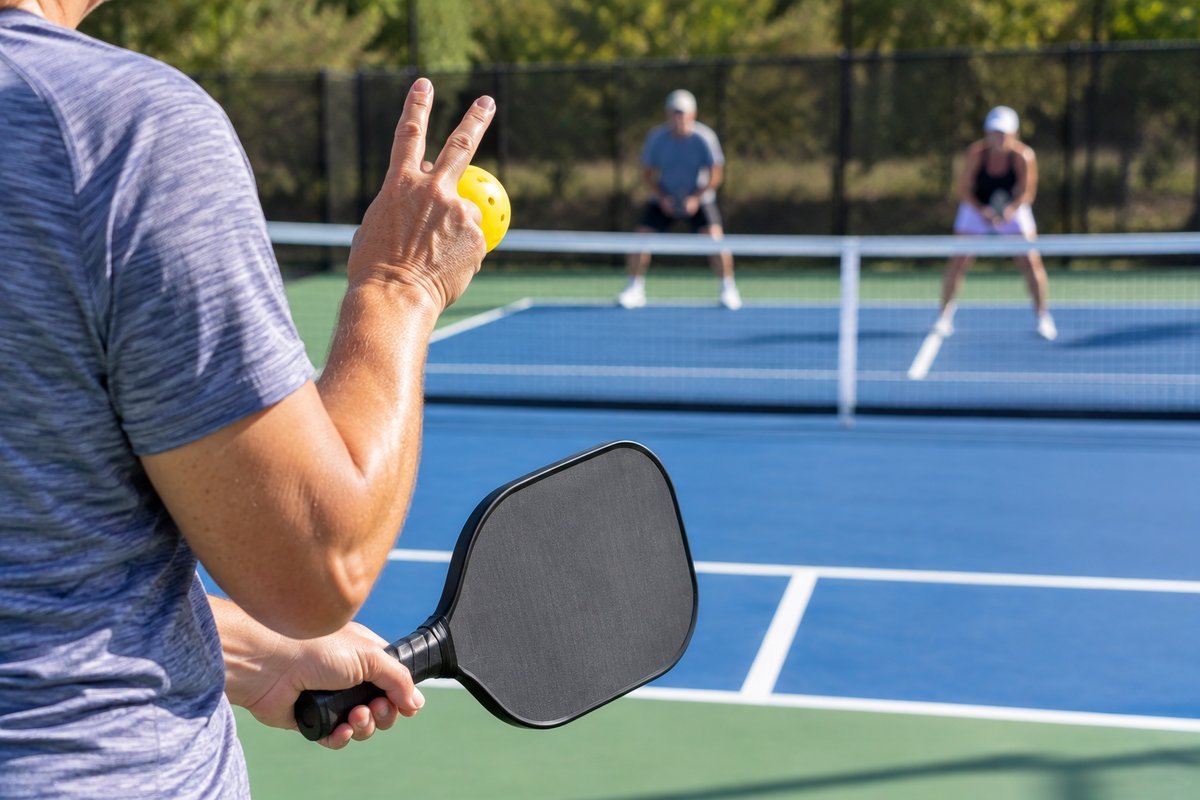
The server calls the full score out loud before every serve, once everyone is in position and ready. Serving before the call finishes is a fault, and the server has 10 seconds after the call to serve.
If someone hears the wrong score, the 2026 rules spell out what to do. A player can stop the rally to ask for a correction, but only before the return of serve is hit. If the score really was wrong, the rally is replayed. If the score was right, or the return had already been hit, stopping play is a fault against the player who stopped it. A mistake noticed after a rally ends doesn't undo the rally. Simply correct the score before the next serve.
In casual games, there is usually no referee, so the simplest habit is to call the score clearly every time and to say something right away if it sounds off, before anyone serves.
Common Scoring Mistakes
Mixing up the first two numbers is the most common slip. Remember that the server always says their own team's score first, even when they are behind.
Losing track of server 1 comes a close second. Don't try to remember who served last time. After a side out, look at your team's score and see who is standing on the right side. That player is server 1.
New players also tend to think the receiving team scored when it only ended the other side's serving turn. In side-out scoring, winning a rally while receiving ends the current server's turn, but it never earns a point.
If you are just learning, a few games of keeping score out loud with patient partners is the fastest way to make it automatic. Our guides to pickleball court dimensions and how to hold a pickleball paddle cover the other basics new players ask about most.
Pickleball Scoring: Common Questions
Can you score when you are not serving in pickleball?
Not in standard side-out scoring. Only the serving side can score, and winning a rally while receiving only ends the other side's serving turn. Under rally scoring, which some tournaments and leagues use, either side can score on any rally.
What does 0-0-2 mean in pickleball?
It is the score call at the start of a doubles game. Both teams have zero points, and the first server is counted as the second server, so the team that serves first gets only one serving turn before a side out.
How many points is a pickleball game?
Most games are played to 11, won by 2. Tournaments sometimes play to 15 or 21, also won by 2.
Which side do you serve from in pickleball?
In singles, serve from the right when your score is even, including zero, and from the left when it is odd. In doubles, the first serve after every side out comes from the right, and server 2 serves from wherever they are standing. The team's score shows where the player who started the game serving should stand: on the right when the score is even and on the left when it is odd.
Who is server 1 in doubles?
After a side out, whoever is standing on the right side of the court is server 1. Their partner is server 2.
What happens if the wrong score is called?
A player can stop play to correct it before the return of serve is hit, and the rally is replayed if the score was wrong. Stopping play when the score was right, or after the return, is a fault. Correct mistakes found after a rally before the next serve.
Keeping Score Without the Stress
Pickleball scoring comes down to a few habits. Know who is serving, say the server's score first, use the even and odd rule to check positions, and call the score clearly every time. After a handful of games, the three numbers stop feeling like a code and start telling you exactly where everyone should be. For the full official wording, the 2026 USA Pickleball rulebook covers scoring in sections 4 through 6, with rally scoring in section 14.
Once scoring makes sense, the next rules to learn are the pickleball serving rules and the kitchen rules.