

Pickleball court tape turns a driveway, parking lot, or gym floor into a playable court in an afternoon, and it peels back up when you are done. For anyone without a dedicated court nearby, it is the difference between waiting for open play and playing tonight.
PaddleBrief is a participant in the Amazon Services LLC Associates Program, an affiliate advertising program designed to provide a means for sites to earn advertising fees by advertising and linking to Amazon.com. As an Amazon Associate, we earn from qualifying purchases.
This guide covers how much pickleball court tape a full court takes, the line rules worth copying from USA Pickleball, how to lay the court out square. It also covers five tape and marker options currently sold on Amazon, from full-court tape rolls to reusable throw-down lines.
Table of Contents
How we picked these
PaddleBrief has not tested these products on a court in person. We chose every pick below based on its listed specs, a live Amazon listing that was in stock when this guide was written in September 2026, and owner feedback. Several of these listings have little owner feedback, so lean on the specs.
How much pickleball court tape you need
A regulation court is 20 feet wide and 44 feet long. Add up every line, and you get 198 feet: two 20-foot baselines, two 44-foot sidelines, two 20-foot non-volley zone lines, and two 15-foot centerlines running from each kitchen line back to the baseline.
That is why most full-court rolls run 230 to 263 feet. The extra 30 to 60 feet covers corner overlaps, a few crooked strips you pull up and redo, and trimming. One roll per court is the norm, but buy a second if you are taping a rough or dusty surface where some strips will not hold on the first try.
The line rules worth copying
You do not need tournament precision in a driveway, but a few rules from USA Pickleball's official rulebook make a taped court play like a real one. Lines should be 2 inches wide, all the same color, and clearly contrasting with the playing surface. That is why nearly every pickleball court tape on the market is 2 inches wide and comes in yellow, white, or orange.
Measure to the outside edge of the lines. The rulebook states that court measurements are made to the outside edge of the perimeter and non-volley zone lines, so the tape sits inside your 20-by-44 rectangle, not centered on it. The kitchen line goes 7 feet from the net on each side, and the lines around the kitchen (the 7-foot zone next to the net where you cannot volley) count as part of the kitchen.
Leave room to run. The rulebook sets a minimum playing surface of 30 by 60 feet around the court, and recommends 34 by 64 feet for new construction. A two-car driveway rarely gives you that, so expect a tighter court with less room to chase wide balls.
Tape, throw-down lines, or paint
Pickleball court tape is the best fit for most people. It stays put through a session or a weekend, and removes without paint or chalk. Cloth-reinforced tapes are sturdier underfoot on concrete and asphalt, while vinyl and PVC tapes are made for smooth gym floors.
Throw-down lines and corner markers need no adhesive. You lay them out, play, and pick them up. They work well for kids, school gyms, and anywhere you can't stick anything to the floor, but they mark the court rather than drawing continuous lines, so close calls get harder.
Paint is the permanent option. If you own the surface and plan to play there for years, painted lines outlast any tape, but that is a weekend project with surface prep, not something to try on a shared lot.
How to get pickleball court tape to stick
Almost every tape failure comes down to the surface. Sweep the area, then blow off the fine grit with a leaf blower. Dust between the tape and the pavement is what makes edges lift after the first rain.
Tape only on a dry surface, and avoid laying lines first thing on a dewy morning. Press each strip down firmly along its full length, and run a shoe or a roller over it before anyone plays. If a strip goes down crooked, cut a fresh piece instead of peeling and resticking the same one, since lifted adhesive rarely grips as well the second time.
5 pickleball court tape and marker options worth knowing about
Copatocacy Pickleball Court Tape (2 in x 262 ft)
The Copatocacy pickleball court tape is a yellow, cloth-reinforced polyethylene tape sold for both indoor and outdoor use on clean, dry concrete, asphalt, driveways, and compatible gym floors. One 262-foot roll marks a full court with roughly 64 feet left over for overlaps and trimming, according to the listing. The cloth backing makes it the pick here for outdoor courts that see real foot traffic.
SONICTOP Pickleball Court Marking Kit (2 in x 263 ft)
The SONICTOP court marking kit is a 263-foot roll of yellow polyethylene tape, enough for about 1.36 courts by the seller's own math, and it comes with court size cards to help with layout. The listing describes it as waterproof and residue-free on removal. It has little owner feedback so far, so weigh the length and layout cards more.
Quick Court Indoor Pickleball Court Marking Tape (2 in x 230 ft)
The Quick Court indoor marking tape is an orange PVC film tape made for smooth indoor surfaces such as hardwood, vinyl, and finished gym floors. One 230-foot roll lays out a full indoor court, and the listing says it peels up without leaving residue. It is the most popular of the tapes here. Choose it for church gyms, schools, and community centers, not for rough outdoor pavement.
Franklin Sports Pickleball Court Marker Kit
The Franklin Sports court marker kit skips tape entirely. It includes 4 L-shaped corner markers, 8 T-shaped markers for line intersections, and a tape measure for placement. The plastic pieces wipe clean and pack up for travel. It is the most popular pick in this roundup. It marks the corners and intersections rather than full lines, so it suits casual play and kids more than competitive games.
Eco Walker Throw-Down Court Line Markers
The Eco Walker court line marker kit includes ten flat 14.6-inch strips made from flexible TPE (a soft, rubber-like plastic) that lie flat, grip the surface, and leave no tape, chalk, or paint behind. Ten strips will not outline a full court on their own, so use them to fill in a kitchen line or a centerline alongside corner markers, or to mark target zones for drills.
How to lay out a court with pickleball court tape
Start with the baseline. Snap a straight 20-foot line along one edge of your space and mark both ends. From each end, measure 44 feet out for the sidelines and mark the far corners.
Check that the rectangle is square before you tape anything. Measure both diagonals, corner to corner. On a 20-by-44 court each diagonal should come out to about 48 feet 4 inches, and if the two diagonals match, the corners are square.
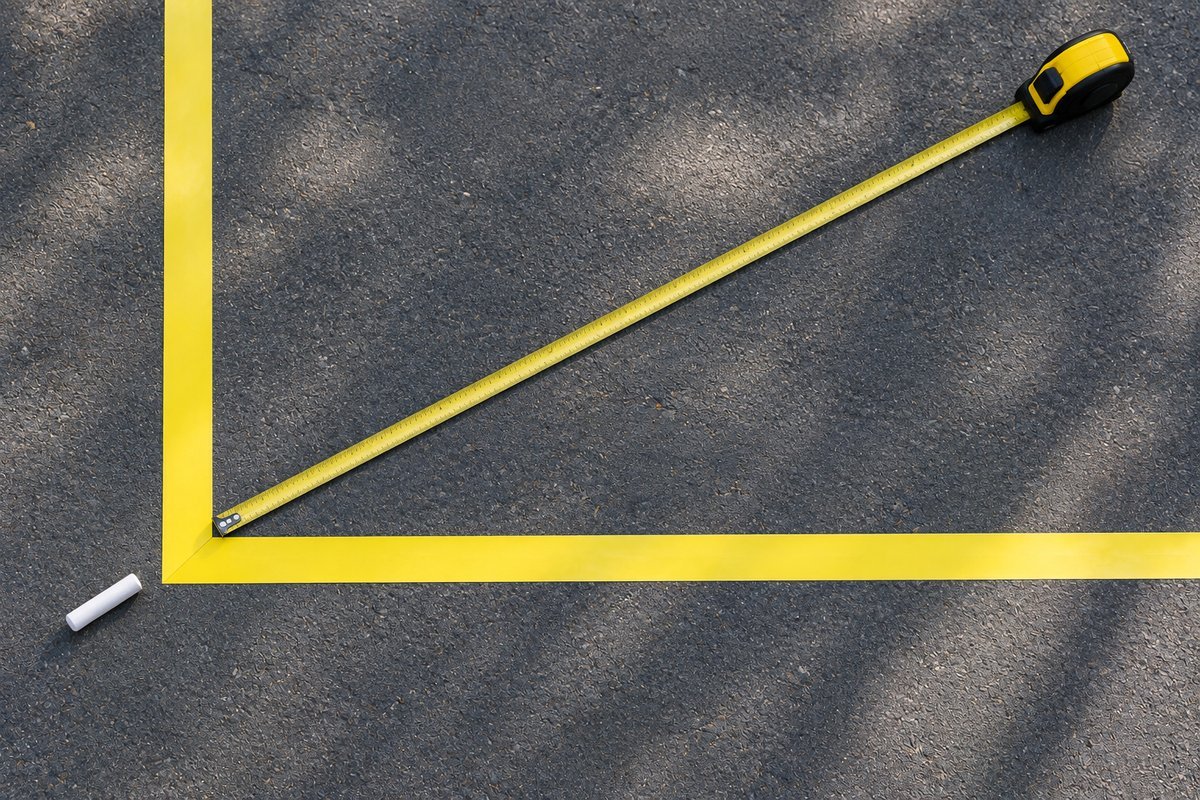
Find the net line at 22 feet from each baseline, then mark the kitchen lines 7 feet from it on both sides. Run the centerlines down the middle from each kitchen line back to its baseline. Tape the perimeter first, then the kitchen lines, then the centerlines, keeping the tape inside your measured marks.
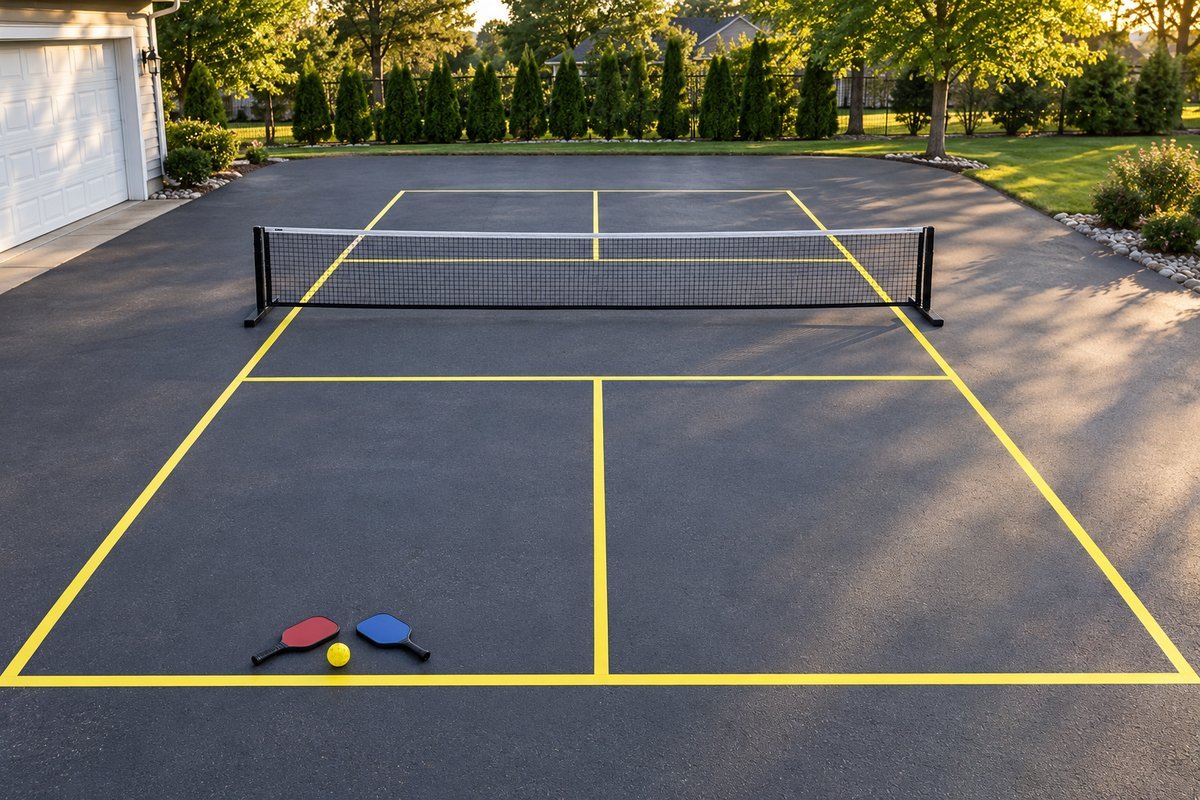
Once the lines are down, a portable net finishes the setup, and our portable pickleball net guide covers what to check. For solo practice on the same patch of driveway, a pickleball rebounder pairs well with a single taped kitchen line.
Frequently asked questions
How long does pickleball court tape last outdoors?
It depends mostly on the surface and the weather. On clean, dry concrete or asphalt, cloth-reinforced tape can last a weekend or longer, but heat, rain, and grit under the edges shorten its life. Plan on tape as a temporary solution and paint for anything you want to keep for a season.
Will pickleball court tape damage my driveway or gym floor?
Court tape is designed to peel up without leaving residue on the surfaces listed. Use an indoor tape on gym floors and an outdoor tape on pavement, and remove it slowly at a low angle rather than ripping it up.
What color should pickleball court lines be?
Any color that clearly contrasts with the surface. USA Pickleball's rules call for all lines to be the same color and clearly contrasting, which is why yellow and white are common choices on dark asphalt and orange shows up on light gym floors.
Can I use regular painter's tape for a pickleball court?
It can work indoors for a short session, but standard painter's tape is made for smooth walls, not pavement. On outdoor surfaces, it tends to lift quickly, so tape sold for court marking is the safer choice.