
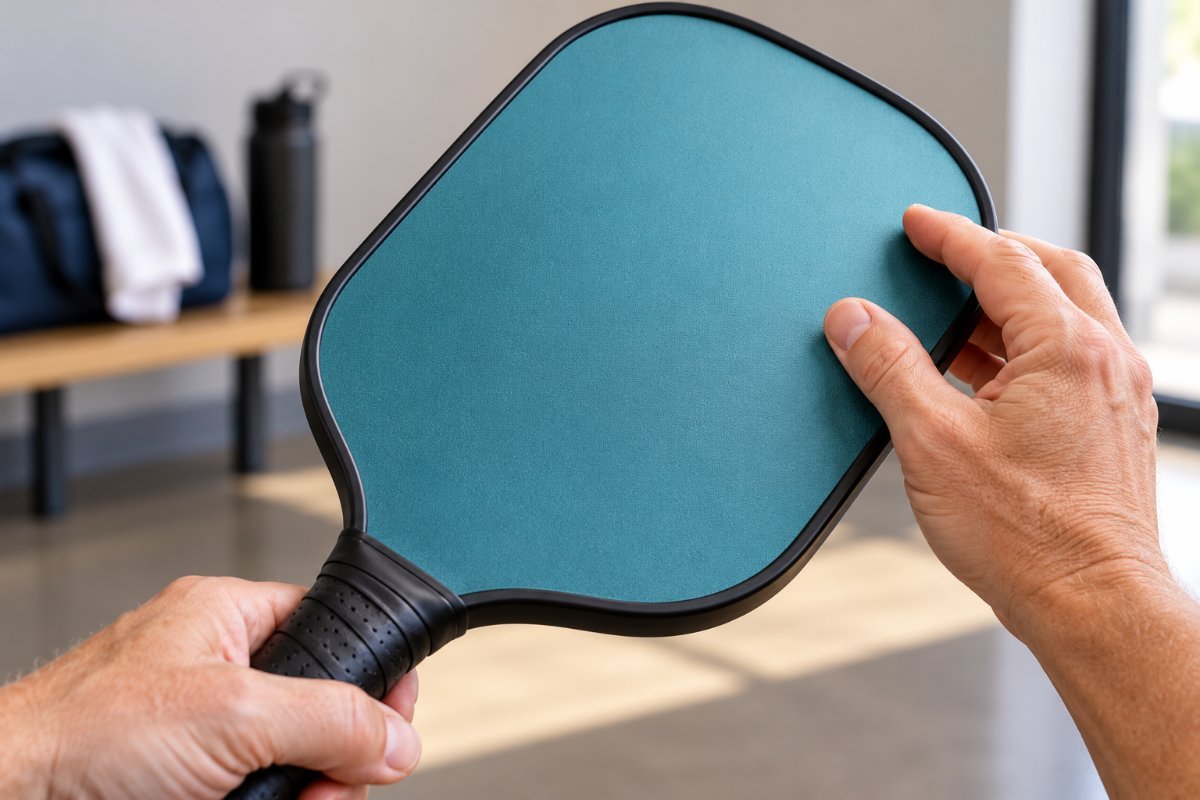
The USA Pickleball approved paddles list changed on October 1, 2026, and most of what's online is already out of date. A new spin rate test replaced the old surface roughness measurement. A rival certification body now runs its own separate list for professional play. And a paddle that was perfectly legal last season can still get pulled from the list without warning.
None of that means you need to panic about the paddle in your bag. It means the five-minute check most buying guides skip, looking your specific paddle up instead of trusting the box, matters more now than it ever has.
Quick Links
| USAP | UPA-A | |
|---|---|---|
| Who needs it | Rec, league, and USA Pickleball sanctioned tournament play | PPA and MLP professional tour play |
| Spin cap | 2,100 RPM for paddles certified after Oct 1, 2026 | 2,100 RPM |
| Cost to the brand | USA Pickleball's own certification fee | $10,000 per brand plus $3,000 per model |
| Where to check | equipment.usapickleball.org | upaa.unitedpickleball.com |
What "Approved" Means (and the Fake-Logo Problem)
The USA Pickleball approved paddles list isn't a design standard a manufacturer claims for itself. It's a pass-or-fail result for one specific paddle model, tested by USA Pickleball and published in its equipment database at equipment.usapickleball.org. A paddle that passes gets added to the list. A paddle that was never submitted, or that failed, has no business carrying USA Pickleball branding at all, though some do anyway.
That's worth checking separately from everything else in this guide. Some sellers print a USA Pickleball Approved seal on packaging or product photos that was never earned. The list itself, searched by brand and model, is the only source that confirms it, not the box, not the product listing, and not a seller's claim.
Why Spin Got Regulated in the First Place
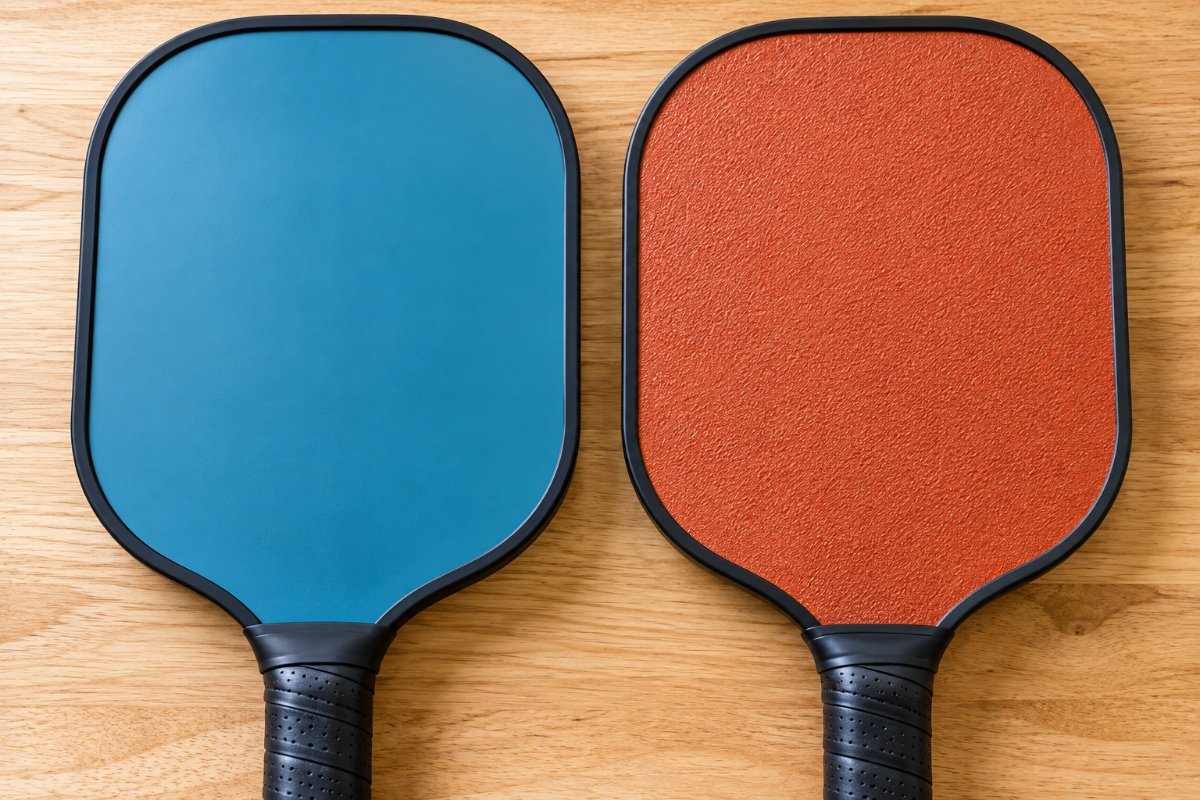
Pickleball paddles didn't always need an approved list. The surface texture that generates spin (a rougher, grittier face grabbing the ball on contact) became a real competitive edge as manufacturers pushed carbon fiber and raw, unpainted faces (our carbon vs fiberglass guide covers how face material affects a paddle's feel and spin beyond texture alone) further than anyone had tested for. A paddle that can impart heavy spin changes how a ball bounces and curves off the court, enough that USA Pickleball decided it needed a hard ceiling rather than letting equipment design the sport.
The original fix was indirect: measure how rough the face felt to a calibrated sensor, and assume rougher meant spinnier. That held up until foam cores and new surface treatments, the same core material choices our EPP vs MPP guide walks through. Those started generating real spin without tripping the roughness sensor. That is exactly the gap the October 2026 direct spin test was built to close.
What Changed for USA Pickleball Approved Paddles on October 1, 2026
Surface roughness was the original proxy for spin potential, measured by a calibrated sensor rather than ball rotation itself. Newer manufacturing, foam cores and textured surface treatments especially, could produce real spin without tripping that roughness threshold, which made the proxy measurement less and less useful. USA Pickleball replaced it with a direct spin test. It uses a dual high-speed camera system that measures actual ball rotation off the paddle face, capped at 2,100 RPM (revolutions per minute) for any paddle submitted for certification from October 1, 2026 onward.
The change is not retroactive. A paddle already on the approved list before that date stays approved under the rules it was tested against, it doesn't get pulled just because the test changed. What it does mean is that a paddle shopped for today, if it's new enough to have been certified under the new standard, was held to a real output measurement rather than a texture proxy. That is a meaningfully different bar.
That grandfathering is worth understanding on its own. Because the new spin test only applies to paddles certified after October 1, 2026. So the current approved list is effectively a mix of paddles tested under different standards at different times, some read for roughness years ago, some measured for actual spin output under the new camera system. Nothing on the list itself flags which standard a given paddle passed under, so two legal, currently approved paddles can have been held to different bars to get there.
For shopping purposes, that means a paddle's release date is a useful clue even though the list itself won't say so directly. A model first certified well before October 2026 almost certainly cleared the roughness test, not the camera-based spin test. A model launching now, especially from a brand actively marketing a new surface technology or foam core, is more likely to have undergone direct measurement. Neither path makes a paddle better or worse to play with, but it explains why two paddles on the same approved list can get there in different ways.
USAP or UPA-A: Which List You Need
A second certification body now runs alongside USA Pickleball. The United Pickleball Association of America, UPA-A, certifies paddles for professional tour play, the Professional Pickleball Association (PPA) and Major League Pickleball (MLP) specifically, under its own standard and its own separate list. Getting a paddle UPA-A certified costs a manufacturer $10,000 per brand plus $3,000 per model, which is part of why not every paddle on the USA Pickleball list also carries UPA-A certification.
For almost every recreational and amateur player, the USA Pickleball approved paddles list is the one that matters. League play, local tournaments, and USA Pickleball sanctioned events all run on that list. UPA-A certification only matters if you plan to play professional tour events. Checking the wrong list is an easy, avoidable mistake, and worth getting right before a tournament, not during check-in.
The JOOLA Gen 3 Story, and Why It Still Matters
The clearest example of why checking matters happened in 2024, not 2026, and it's still worth knowing. JOOLA's Gen 3 paddles, the Scorpeus 3, Hyperion 3, Perseus 3, and Magnus 3, were approved in September 2023. In May 2024, JOOLA told USA Pickleball it had submitted the wrong paddles during the original certification process the previous November. USA Pickleball's follow-up testing separately found that production Gen 3 paddles exceeded the surface-roughness limit the old test measured. USA Pickleball delisted all four models within days, by May 15, 2024.
JOOLA disputed the removal, calling the delisted paddles materially the same as the ones approved in 2023, and offered full refunds on paddles bought between April 16 and June 15, 2024. Whatever the actual cause, an administrative error, drift between production and the tested sample, or something else, the practical lesson holds either way. A paddle being approved when it was bought is not a permanent guarantee. A popular paddle from a major brand is not automatically safe from delisting. Our guide to pickleball paddle brands covers this and other brand disputes.
A second, separate case shows a different failure mode entirely. In December 2024, USA Pickleball introduced a new PBCoR test, measuring how much power a paddle's face returns to the ball on contact (often called the "trampoline effect"). The Gearbox Pro Power Elongated failed it. USA Pickleball announced the removal on December 27, 2024, with the delisting taking effect July 1, 2025, and Gearbox confirmed it would retire the paddle from tournament play and release a compliant replacement. JOOLA's case was about spin and roughness. Gearbox's was about raw power return. Two completely different properties, two completely separate ways to lose approval, which is the real argument for checking a specific model rather than trusting a brand's reputation.
When the Two Lists Disagree
USAP and UPA-A don't always reach the same verdict on the same paddle, which can confuse buyers. 11Six24's Power 2, built with a textured HexGrit surface, measured under the 2,100 RPM output cap and passed UPA-A's test. But USAP's own surface reading found the face too rough and kept it off the list. The same paddle is legal for one tour and not the other, for two different reasons measuring two different things.
A separate fairness question surfaced around the same time: one paddle reportedly kept an internal roughness exception from USA Pickleball for more than two years while smaller brands faced investigations over similar readings. Whether or not every detail of that account holds up, the broader point stands on its own. The approved list is a snapshot of one organization's current testing decisions, not a settled, permanent ruling. It's worth checking the specific list for the specific event rather than assuming consistency across bodies or over time.
How to Check Your Paddle
Go straight to equipment.usapickleball.org and search the USA Pickleball approved paddles list by brand and model, not a seller's listing or the box the paddle shipped in. Match the exact model name, including the generation number or thickness variant, since manufacturers often sell visually similar paddles under slightly different model names with different approval status. A model showing anything other than a clean status on the list, including flags like under investigation or removed, is worth treating as not currently legal for sanctioned play until proven otherwise.
If tournament play specifically through the PPA or MLP is the goal, repeat the same check on UPA-A's own list rather than assuming USAP approval covers it. The two lists are maintained separately and don't automatically mirror each other.
Sanctioned tournaments don't just take the list's word for it either. On-site testing at bigger events can include surface roughness checks, deflection testing, ultrasonic bond testing to catch delamination, and PBCoR testing, which measures how much power a paddle returns to the ball on contact, a separate property from spin. A paddle can be on the approved list and still get pulled from an event if it fails one of these checks on the day, which is another reason a paddle's listed approval is a starting point, not a guarantee.
If Your Paddle Gets Delisted After You Already Bought It
Falling off the approved list only removes a paddle's eligibility for sanctioned tournament play. It doesn't make the paddle illegal to own or use. Open play, drop-in games, most casual leagues, and friendly matches don't check approval status, so a delisted paddle is still perfectly fine for everything except sanctioned competition.
This risk is worth factoring in before buying, new or used, since a used paddle's approval status can change between when it was bought new and when it's resold (our used pickleball paddles guide covers the other condition checks worth running on a secondhand paddle). Buying from a brand with a track record of staying on the list, and checking the specific model before a tournament rather than assuming last season's approval still holds, is the real protection here. There's no refund guarantee if a paddle gets pulled. JOOLA's refund window after the Gen 3 delisting was a goodwill decision, not a requirement.
Approved Doesn't Mean Right for You
Every paddle on the approved list cleared USA Pickleball's spin and construction testing, which says nothing about whether it's the right paddle for a specific player. Weight and grip size (our weight and grip size guide covers that decision) still do most of the work in how a paddle plays. A legal paddle that's too heavy or too stiff for a given player's swing isn't a better choice than an equally legal paddle that fits them, and the approved list doesn't rank or recommend anything, it only confirms eligibility.
The same logic applies to buying a first paddle. Approval is a pass-or-fail filter, not a ranking. A beginner working through their first real paddle decision still needs to weigh core material, face material, and shape the way any buying guide covers. The approved list just narrows the field to options that are legal to use in competition, nothing more.
None of this is a reason to avoid buying a new paddle or to treat the approved list as unstable in some alarming way. Most paddles that pass stay on the list for years without incident.
It's a reason to spend a couple of minutes checking the exact model before a tournament, the same way a player already checks the weather or confirms a court reservation. It's the one step in the whole process that a seller's claim, a brand's reputation, or last season's approval can't substitute for. Bookmark the official USA Pickleball approved paddles list rather than a roundup article, including this one. A roundup is a snapshot from the day it was written and the list updates on its own schedule, sometimes as often as weekly.
How do I know if my paddle is on the USA Pickleball approved paddles list?
Search the exact brand and model in USA Pickleball's equipment database at equipment.usapickleball.org, not the packaging or a seller's claim, since some unapproved paddles carry a printed approval seal they never earned.
What's the difference between USAP approved and UPA-A certified?
USAP approval covers recreational, league, and USA Pickleball sanctioned tournament play. UPA-A certification is the separate standard required for PPA and MLP professional tour events, and the two lists aren't maintained together.
Can a paddle lose its approval after I buy it?
Yes. USA Pickleball runs follow-up testing on production paddles, and a model can be delisted after sale, as happened with JOOLA's Gen 3 lineup in 2024. Delisting affects sanctioned tournament eligibility, not casual play.
What is the new spin rate test?
Effective October 1, 2026, USA Pickleball replaced its surface roughness measurement with a direct spin test using dual high-speed cameras, capping new paddle certifications at 2,100 RPM. It applies to paddles submitted for certification from that date forward, not retroactively to already approved models.
Do I need an approved paddle for casual play?
No. Approval matters only for USA Pickleball-sanctioned
tournaments and similar competitive events. Open play, drop-in
games, and most leagues don't check paddle certification at all.
Can a delisted paddle become legal again?
Sometimes. A manufacturer can resubmit a corrected production run for retesting, and a paddle delisted for an administrative or manufacturing issue can regain approval if it passes. Check the current USA Pickleball approved paddles list rather than assuming a once-delisted model is permanently banned or permanently fine.