
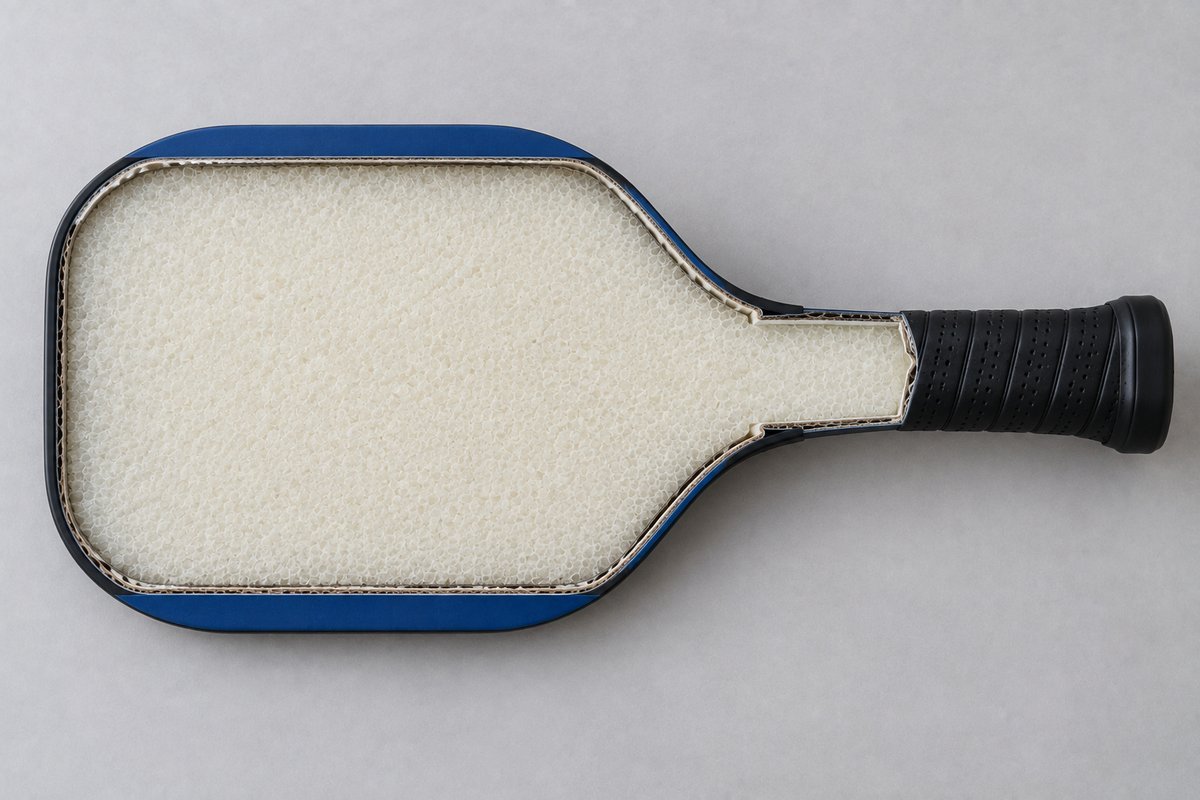
Pick up two paddles that look almost identical, one EPP and one MPP, and the difference hits you in the first swing. Same shape, same grip, same price range even, and they play like different sports. That gap comes down to two letters most shoppers skip over when reading a pickleball paddle core spec sheet.
Foam-core paddles are still newer than the honeycomb polypropylene cores that dominated pickleball for years, and the shorthand hasn't caught up with how many people are buying them now. EPP and MPP get thrown around in reviews and product pages like everyone already knows what they mean. Most people don't, and the paddle aisle isn't exactly generous with explanations.
Table of Contents
What EPP and MPP stand for in a pickleball paddle core
EPP is expanded polypropylene, a foam that's been around for decades outside of pickleball. It's the same material family used in bike helmets and protective packaging, prized for compressing under impact and springing back without breaking down. In a pickleball paddle core, that translates to a structure made of countless tiny fused foam beads instead of the honeycomb cells older paddles use.
MPP is microcellular polypropylene, a newer core material with a tighter, denser internal structure than EPP. It showed up in paddle lineups more recently, and it's built to feel stiffer and return more energy to the ball on contact.
Neither one is the honeycomb polypropylene core that's been standard for years. Both are full foam, poured or molded as one continuous piece rather than a grid of hollow cells. That's the bigger shift. EPP versus MPP is the finer-grained choice within it.
How foam cores compare to honeycomb paddles
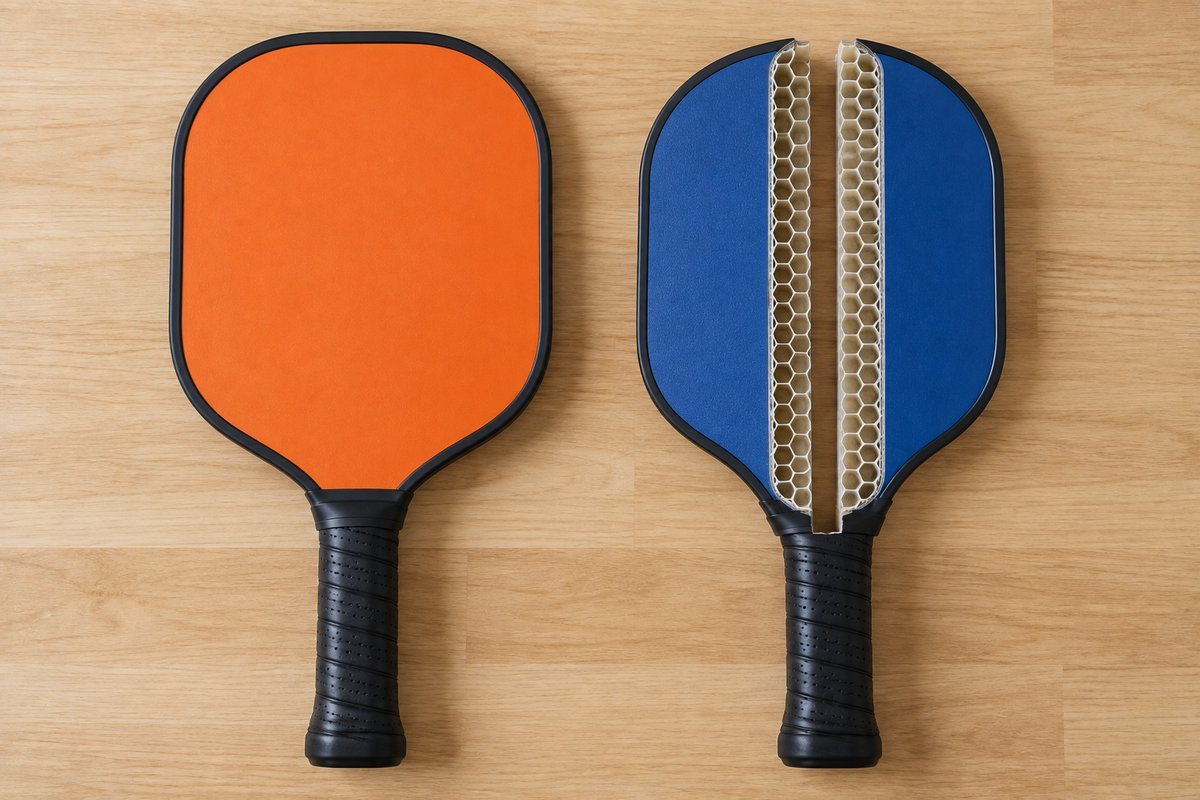
Most pickleball paddle core designs still sold today use honeycomb polypropylene, thin polymer walls arranged in a grid of hexagonal cells, sandwiched between two face layers. It's been the industry standard for years because it's cheap to produce, consistent, and well understood after a decade of real-world use. A full foam core, EPP or MPP, replaces that grid with one continuous piece of material, no hollow cells at all.
The practical difference shows up mostly in sound and feel. Honeycomb paddles tend to produce a sharper, louder pop on contact, since the hollow cells resonate more. Foam cores are noticeably quieter, which matters if you play somewhere with noise restrictions, and they generally feel a touch more solid and muted in the hand. Neither construction is objectively better across the board. Honeycomb has the longer track record and tends to cost less. Foam, EPP especially, is newer but has picked up a real following for how forgiving it feels on mishits.
How the feel differs on court
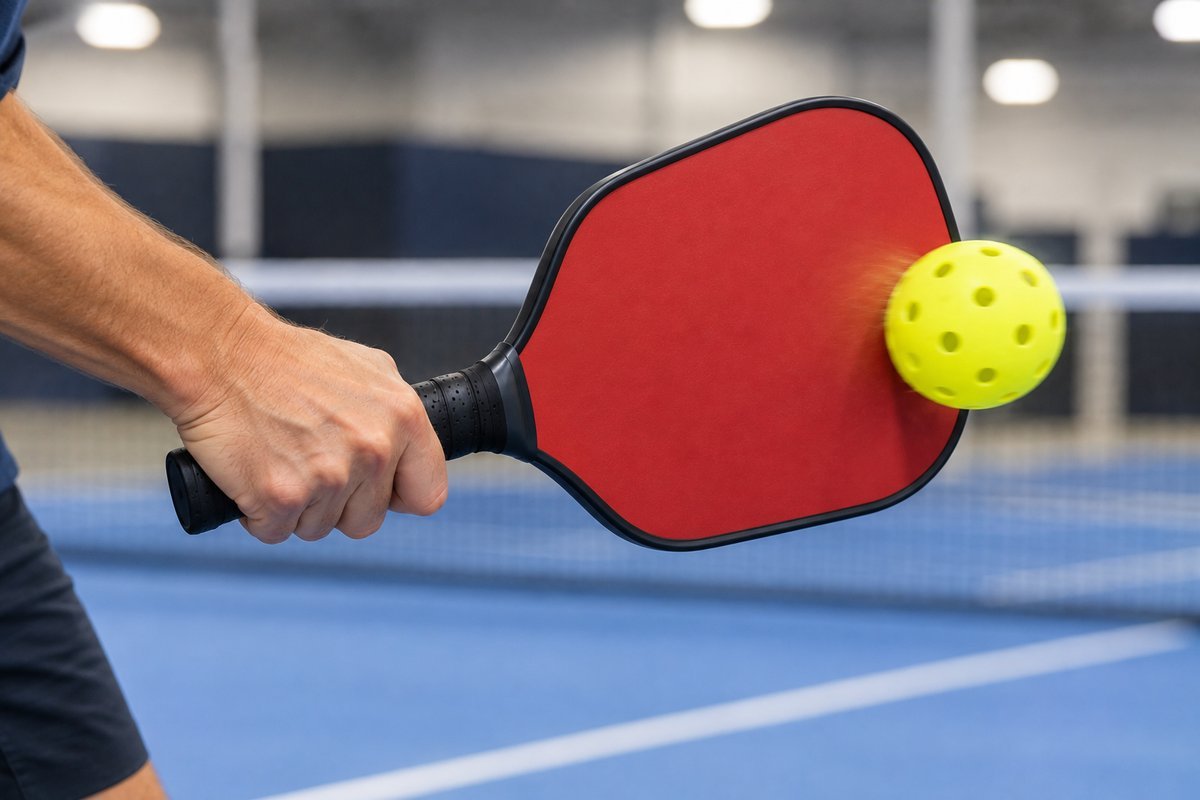
EPP tends to play soft and quiet. It absorbs more of the ball's energy on contact, which gives you a gentler pop and a more forgiving response when you're not hitting the sweet spot (the area of the face that gives the cleanest hit) dead center. Players who lean on touch shots, dinks, and resets usually gravitate toward it because it doesn't punish a slightly mistimed hit as harshly.
MPP plays firmer and louder. Less energy gets absorbed into the core, so more of it comes back out toward the ball, which is where the extra pop on drives comes from. The tradeoff is a smaller margin for error. Off-center contact on an MPP paddle tends to feel harsh, and some players describe it as overly stiff, especially coming from a softer setup.
Neither description is a guarantee. Foam density, core thickness, and the face material layered over it all shift the feel too, so two EPP paddles from different brands won't play identically. Think of EPP and MPP as a general direction, not a locked-in result.
The durability question nobody puts on the box
Any full-foam pickleball paddle core, EPP or MPP, can develop dead spots over time the same way older paddles do, sometimes called core crushing. Repeated hard contact in the same area of the face compresses the foam cells permanently, and that spot stops responding the way the rest of the paddle does. It's not unique to foam cores. Honeycomb paddles crush too. But foam is a newer material in this application, and it doesn't yet have the same multi-year track record honeycomb has for holding up after a full season of regular play.
If you're buying a foam-core paddle, don't assume durability is a solved problem just because the paddle feels premium out of the box. Ask what the warranty covers, and don't be surprised if reviews a year or two from now start separating good foam paddles from ones that faded fast.
Which one fits your game
If most of your points get decided at the net (dinks, resets, and soft exchanges where touch matters more than pace), EPP is the more forgiving starting point. It's also generally the easier core to adjust to if you're coming from a standard honeycomb paddle, since the feel shift is smaller.
If you're already generating your own power and want the paddle to add to it rather than soften it, MPP rewards that swing. It suits players who serve and drive hard and want the core keeping pace with them instead of absorbing effort they're already putting in.
If you can't tell which camp you're in yet, that's normal, and it usually means you haven't played enough games to have a strong preference either way. In that case, EPP is the safer default. It's more forgiving of the inconsistent contact that comes with still figuring out your swing, and a paddle that punishes every slightly off-center hit isn't a great teacher for a newer player.
Pickleball paddle core material is only one piece of how a paddle ends up feeling in your hand. Paddle weight and grip size matter just as much, and a light EPP paddle with the wrong grip size will still feel wrong no matter how forgiving the core is.
How we wrote this guide
We haven't put every EPP and MPP paddle on the market through a season of real matches, and we're not going to pretend a spec comparison replaces getting your hands on one. If you're still narrowing down your first paddle for beginners, core material is one factor worth weighing among several, not the only one.
What we can tell you is what the material is built to do, and how that lines up with how most players describe the feel once they've played with it. If you're between two paddles that are identical except for the core, use everything above to make an educated guess, then try to get real court time with both before you commit. A demo day or a friend's spare paddle will tell you more in twenty minutes than any spec sheet will.
The short version
EPP is expanded polypropylene: softer, quieter, more forgiving, a good default for control-focused play and for players still building consistency. MPP is microcellular polypropylene: firmer, louder, more responsive, built for players who already generate their own power and want the core to keep up. Both are full foam cores, a newer alternative to the honeycomb polypropylene cores that came before them, and both can develop dead spots with heavy use over time, the same way older paddles can. Neither letter combination guarantees a specific pickleball paddle core will feel a certain way on its own, so treat this as a starting point for narrowing your search, not the final word.
Frequently asked questions
What does EPP mean on a pickleball paddle?
EPP stands for expanded polypropylene, a foam made of many small fused beads. It's the same material family used in bike helmets and protective packaging, and in a paddle it tends to play soft, quiet, and forgiving.
Is EPP or MPP better?
Neither one wins across the board. EPP suits touch play and newer players because it absorbs more energy and forgives mishits. MPP plays firmer and livelier, which rewards players who already generate their own power. If you're unsure, EPP is the safer default.
Are foam cores better than honeycomb cores?
Not automatically. Honeycomb polypropylene is still the most common pickleball paddle core, costs less, and has the longer track record. Full foam cores are quieter, feel more solid in the hand, and many players find them more forgiving on mishits.
Can a foam core paddle go dead?
Yes. Repeated hard contact in the same area can permanently compress the foam and leave a dead spot, sometimes called core crushing. Honeycomb paddles can crush too, so check what the warranty covers before you buy.