
A portable pickleball net looks like the simplest thing to buy in the sport. It's a frame, some mesh, and a base. Then you set one up in a driveway for the first time and discover that "portable" covers everything from a net that holds regulation height through a windy afternoon to one that sags to 30 inches by the second game and needs re-tightening every few points. The difference between those two experiences comes down to a handful of specific features, not the price tag alone. A driveway setup is also the easiest way to get kids playing, and our kids pickleball paddle guide covers what they should swing.
Table of Contents
Height and tension are the whole point of the net
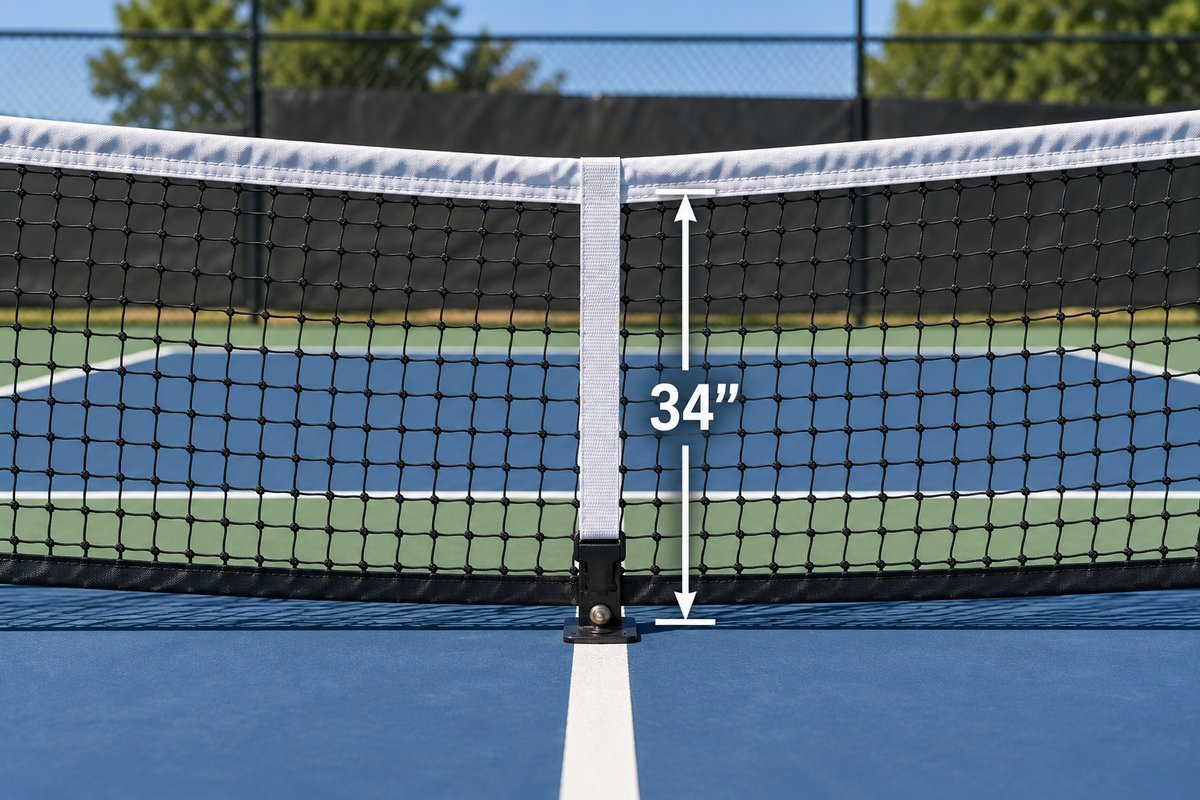
A regulation pickleball net sits 36 inches high at the sidelines and drops to 34 inches at the center, held down by a center strap. That two-inch dip in the middle is not a manufacturing quirk. It is part of the official rules, and a net that cannot hold that exact sag under tension is not regulation, no matter what the box says. If you are marking a temporary court to go with the net, our pickleball court tape guide covers which tapes work on which surfaces.
Cheaper portable nets often skip the center strap entirely or use a preset-hole height adjustment that only approximates the correct measurement. If you want practice that transfers to a real court, a center strap or a fine height adjustment is worth checking for before anything else on the spec sheet.
Frame material trades stability for portability
Steel frames hold their shape and resist wind far better than aluminum, which matters more than most buyers expect once a portable pickleball net is set up outdoors for a full afternoon. A gust that would barely nudge a steel frame can walk a lightweight aluminum one several feet or tip it over entirely.
Aluminum's advantage is weight. It is easier to carry, easier to store, and naturally resists corrosion, which makes it the better pick for anyone storing the net in a garage in a humid climate or hauling it to a court regularly. Steel is the better pick for a net that stays in one backyard or driveway spot and needs to survive real wind without a second thought.
The net material itself is easy to overlook
The mesh matters as much as the frame. A tightly woven polyethylene or nylon net keeps the ball from squeezing through gaps, which sounds obvious until you've played on a cheap net where a well-placed shot does exactly that. Reinforced edges with a vinyl headband along the top prevent the mesh from fraying where it takes the most repeated contact, and UV-resistant material keeps the net from degrading and going brittle after a season sitting in direct sun.
None of this shows up in a photo, so check the material specs before you buy rather than judging by a listing image.
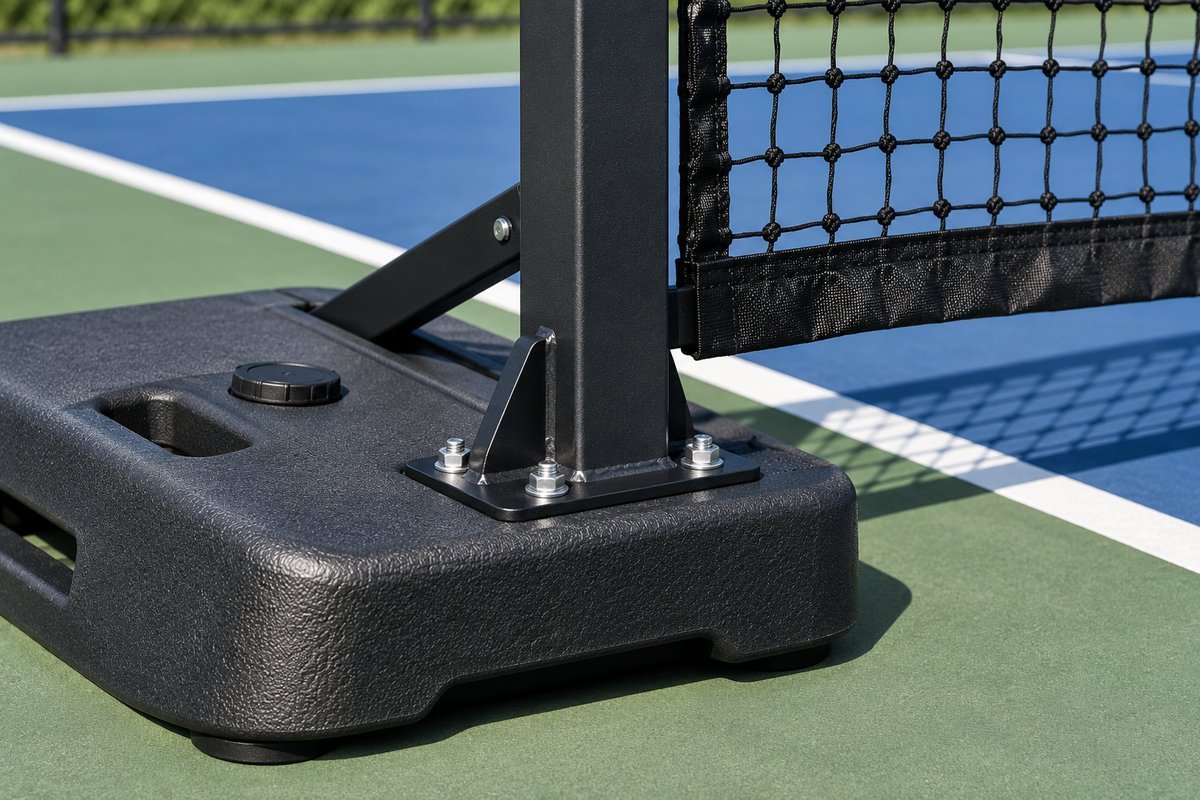
A stable base resists wind
Weighted base plates, sandbag attachment points, or water-fillable chambers all exist for the same reason: an empty plastic base is light enough that a moderate gust can move the whole net mid-game. A wide-stance frame spreads that weight out and resists tipping better than a narrow footprint carrying the same ballast. Guy lines or ground stakes are a real addition on a windy court, not an accessory, and a portable pickleball net that includes them is telling you the manufacturer tested it outdoors rather than only in a warehouse.
Setup time is a real feature, not a nice-to-have
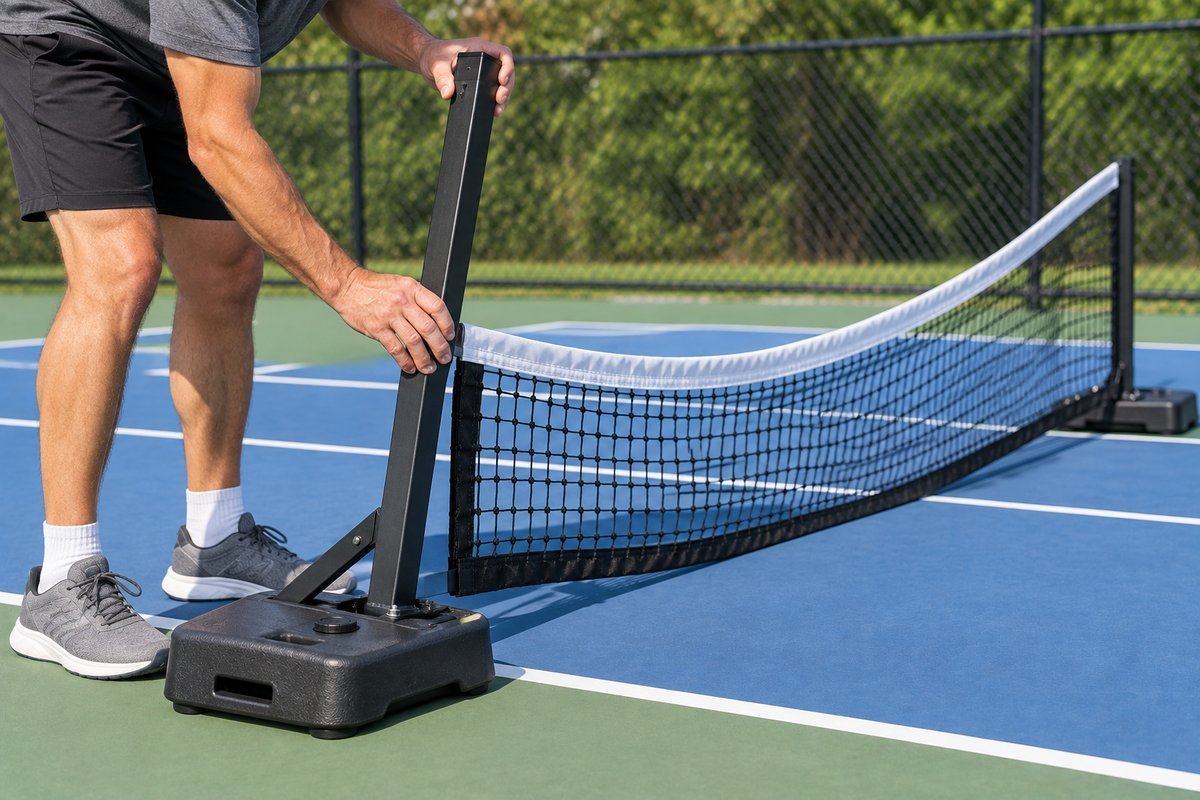
A portable net you dread setting up is a portable net that stays in the garage. The better systems assemble in 5 to 15 minutes without tools, using color-coded poles and push-button connections instead of wrenches or screwdrivers. If a listing doesn't mention setup time or shows a net that needs hardware to assemble, assume it's closer to 20 minutes than five, and decide whether that's a tradeoff you're willing to make for a lower price. If you're outfitting a full kit, our guide to the best pickleball bag covers what protects the rest of your gear.
What you're paying for
Budget portable nets get the basic job done but usually skip the center strap, use a lighter frame, and skimp on base weight. Mid-range nets add sturdier construction and better weather resistance. Premium nets add precision height adjustment and frame materials built to survive years of regular outdoor use, not a single season. The jump in price tracks almost exactly with the features above: tension accuracy, frame stability, and base weight, not branding or extra accessories.
How we wrote this guide
We haven't set up every portable net on the market side by side in the same wind conditions, and a buying guide can't replace unfolding one in your driveway and checking how it holds up over a season. What's above is built from the official height specifications and from how portable net systems are constructed, materials and mechanisms that are verifiable rather than subjective marketing language.
If you're choosing between two nets, prioritize a real center strap and a frame built for the wind conditions where you'll be playing. The best portable pickleball net is the one that holds regulation height through a full match, not the one that looks sturdier in a product photo.
Frequently asked questions
How tall is a pickleball net?
A regulation net is 36 inches high at the sidelines and 34 inches at the center, held down by a center strap. A portable pickleball net that can't hold that dip under tension isn't regulation height.
Is a steel or aluminum net frame better?
Steel is better for a net that stays in one spot outdoors, because it holds its shape and resists wind. Aluminum is lighter, easier to carry, and resists corrosion, which suits a net you move often or store in a humid garage.
How long does a portable pickleball net take to set up?
Good systems go together in about 5 to 15 minutes without tools, using color-coded poles and push-button connections. If a listing doesn't mention setup time, expect something closer to 20 minutes.
How do I keep a portable net from blowing over?
Add weight to the base with sandbags, weight plates, or water-fillable chambers, and use guy lines or ground stakes if the net comes with them. A wide-stance frame also resists tipping better than a narrow one.