
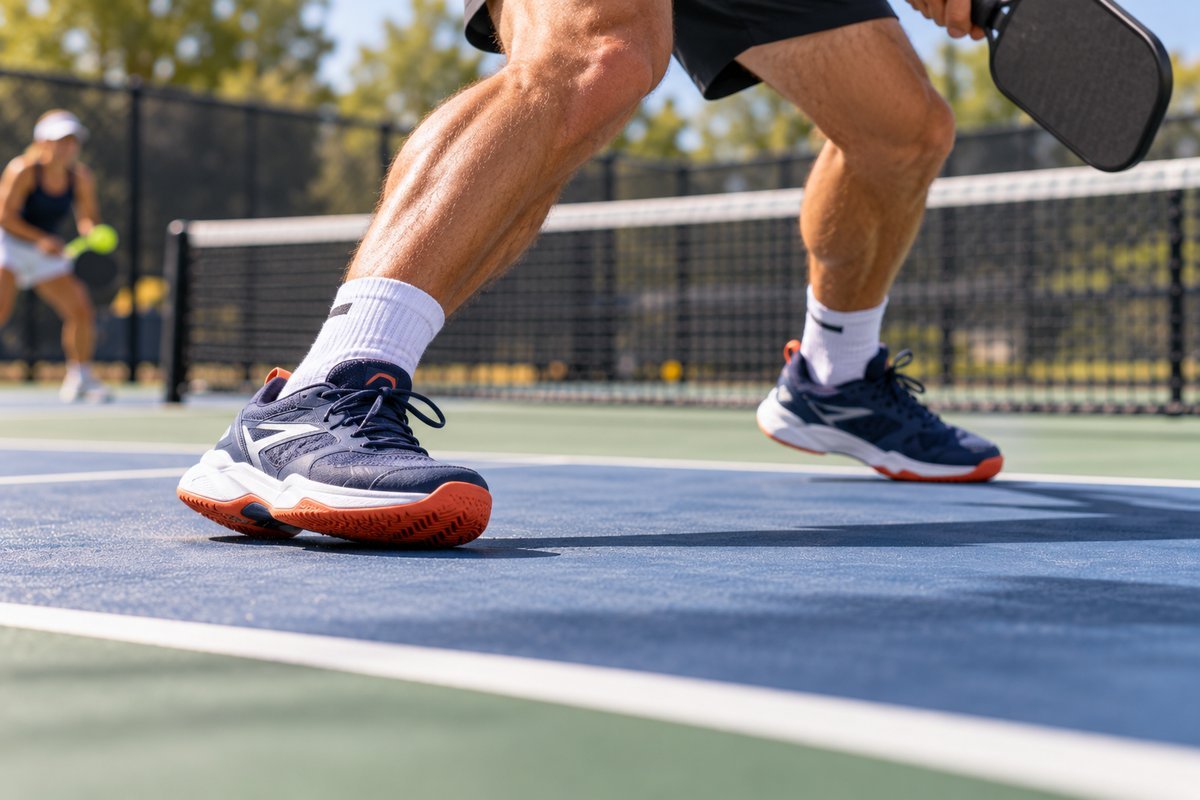
The best pickleball socks aren't the same as good running socks, and wearing the wrong pair is a common reason players end up with blisters or hot spots after a long session. Pickleball loads your feet differently: constant lateral shuffles, hard stops, and quick direction changes stress the sides and ball of the foot in ways straight-ahead running socks aren't built for.
PaddleBrief is a participant in the Amazon Services LLC Associates Program, an affiliate advertising program designed to provide a means for sites to earn advertising fees by advertising and linking to Amazon.com. As an Amazon Associate, we earn from qualifying purchases.
This guide covers what separates a good pickleball sock from a generic athletic sock, the height and cushioning tradeoffs that matter on a pickleball court specifically, how indoor and outdoor play change what you should wear, and four real picks worth buying based on verified ratings and features.
Table of Contents
Why pickleball is harder on your feet than running
Running is repetitive and mostly forward. Pickleball is the opposite: short sprints to the kitchen line, hard lateral shuffles to cover the court, and sudden stops to set up a shot, all packed into points that last seconds. That mix creates lateral shearing forces on the sides of your feet and sharp deceleration impact at the heel and forefoot, the two spots where most pickleball blisters start. A sock built for straight-ahead mileage has no reason to reinforce those zones, which is exactly why a dedicated pickleball or court sock performs differently than a generic running sock even when the price and fabric look similar on paper.
Sock height: no-show, quarter, or crew
Quarter-length is the most common choice among competitive pickleball players, since it sits just above most court shoe collars and keeps the shoe from rubbing directly on bare skin during lateral movement. No-show socks work for players who prioritize a low profile and are not prone to heel slippage, but they offer less protection if your shoe's collar is stiff or new. Crew-length socks add coverage up the shin, which some players like for added compression and warmth in cooler outdoor sessions, though they are a personal preference rather than a performance requirement.
- No-show. Lowest profile, best for players who want their shoe collar visible and do not fight heel slippage.
- Quarter-length. The default for most competitive players, sitting above the shoe collar without extra bulk.
- Crew-length. More coverage and compression, popular for cooler outdoor play or players who like a snugger calf fit.
Cushioning and blister protection
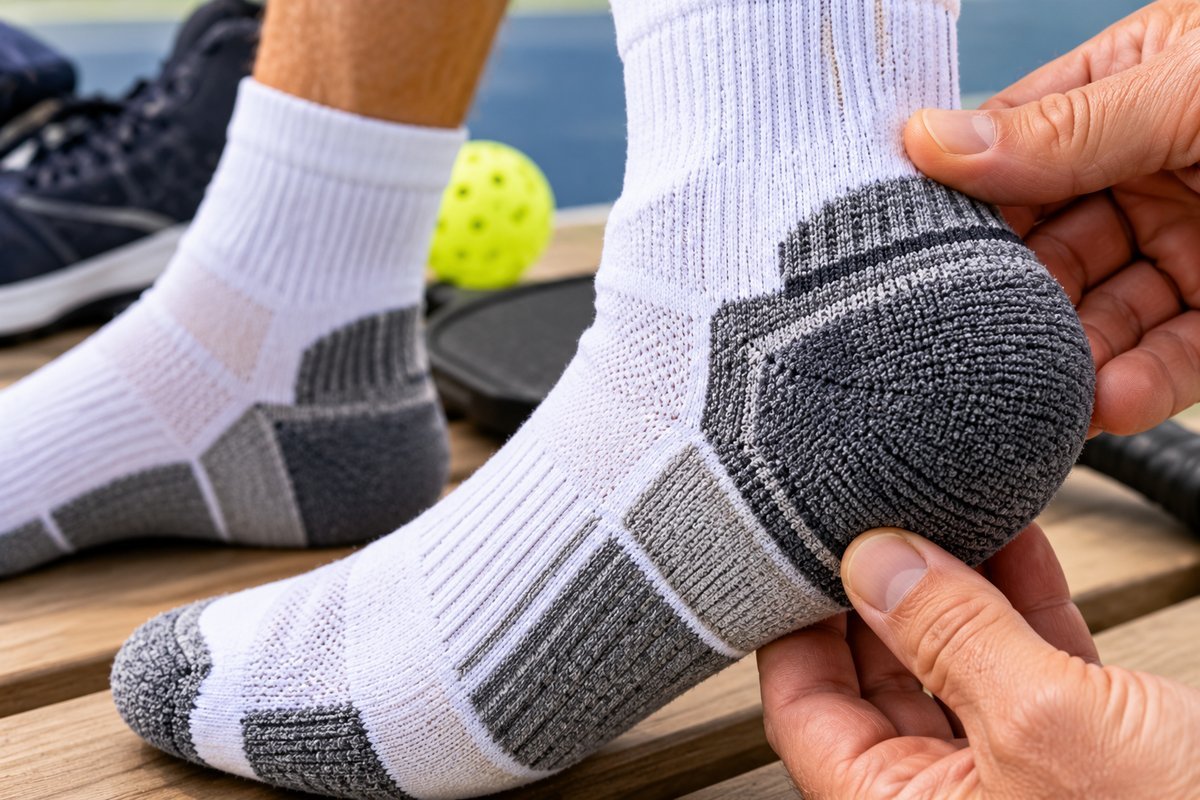
The best pickleball socks use zoned cushioning rather than uniform padding throughout. That means extra density built into the heel and ball of the foot, the two impact points from hard stops and push-offs, while the arch and top of the foot stay thinner for breathability and a closer shoe fit. A seamless toe closure matters more than most players expect, since a bulky toe seam rubbing inside a snug court shoe is one of the most common blister triggers on a pickleball court. Look for a sock that specifically advertises anti-blister or impact-zone cushioning rather than a generic "cushioned" label, since the zoned construction is what does the work.
Materials: what keeps your feet dry
Fiber choice determines how a sock handles sweat over a two-hour session more than any other label spec. Cotton holds moisture against the skin and is the fiber most associated with blisters once it gets wet, so avoid it for serious play even though it still shows up in budget multipacks. Merino wool and bamboo both pull moisture away from the skin and resist odor naturally, with independent fabric testing showing bamboo-blend knits manage moisture meaningfully better than cotton. This matters more on the court than it does for casual wear, since a two-hour match generates far more sweat than a normal day.
Performance polyester blends split the difference: less naturally odor-resistant than wool or bamboo, but typically cheaper and faster-drying between sessions.
| Material | Moisture handling | Odor resistance | Typical cost |
|---|---|---|---|
| Cotton | Poor, holds moisture | Low | $ |
| Performance polyester | Good, wicks and dries fast | Moderate | $$ |
| Merino wool | Very good | High, naturally antimicrobial | $$$ |
| Bamboo blend | Very good | High | $$ |
Indoor vs. outdoor courts change what you need
Smooth indoor gym floors let you get away with a thinner, lower-cushion sock since the surface itself absorbs some impact and lateral grip is less of an issue. Outdoor courts are rougher and hotter, which means more sweat, more heat buildup inside the shoe, and more wear on the sock itself over a season. Players who split time between both surfaces are usually better off keeping separate pairs rather than using the same socks everywhere, since a sock broken in on a smooth indoor floor wears unevenly fast on textured outdoor concrete.
If you play only one surface, build around it: indoor players can lean toward thinner, no-show options since airflow and heat are less of a concern. Outdoor players should prioritize moisture-wicking fiber and a slightly higher cut for sun and court-debris protection. Either way, the right sock for you depends more on surface and climate than on brand name.
The best pickleball socks: 4 picks
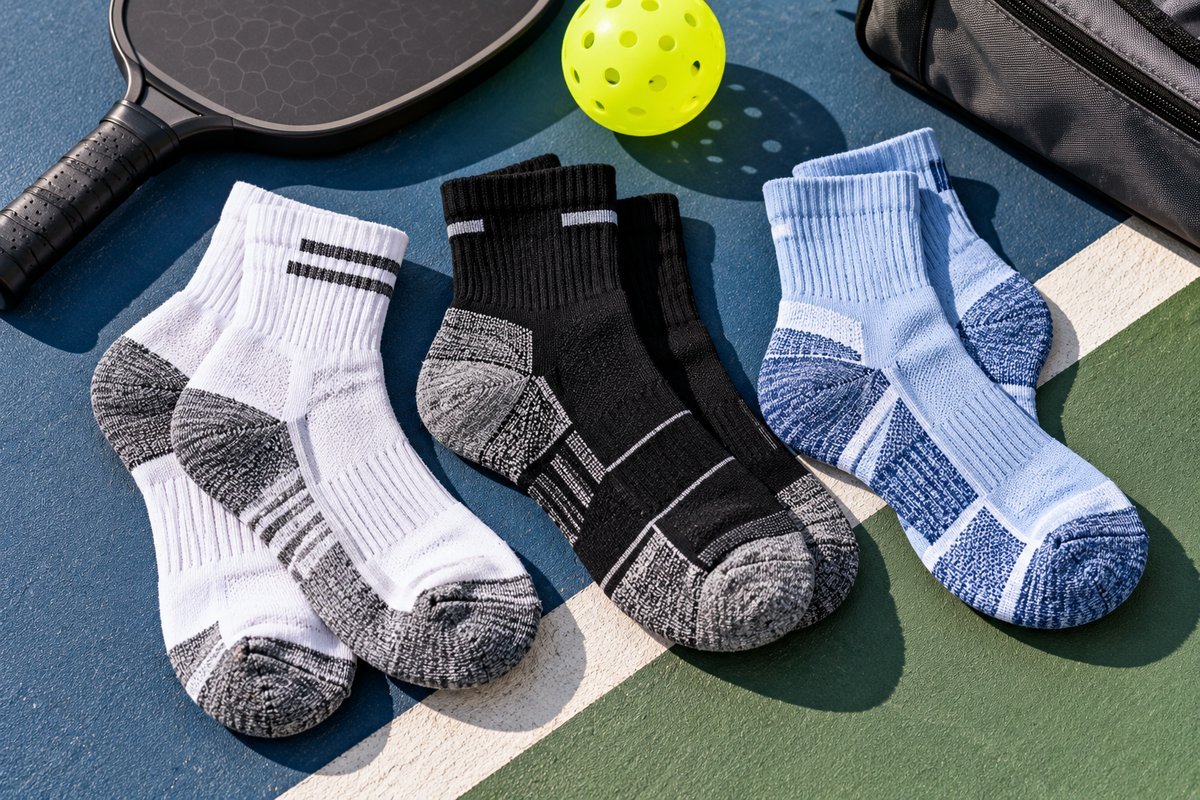
Picks are based on stated features and owner feedback as of this writing. We haven't hands-on tested these ourselves, and these picks are based on specs and patterns across real buyer reviews.
1. Best overall: OS1st The Pickleball Sock
OS1st built this sock specifically for pickleball, not adapted from a running sock. It shows in the details: 360-degree blister protection built into the construction, moisture-wicking fabric, and a lightweight feel that does not bulk up inside a court shoe. It is one of the most popular dedicated pickleball socks we found, which gives real confidence in its consistency across different foot shapes.
See the OS1st Pickleball Sock on Amazon
2. Best cushioning: Thorlos Pickleball Light Cushion Low Cut
Thorlos has decades of experience building sport-specific cushioned socks, and its pickleball-specific low-cut model is one of the softest options on this list. It uses light cushioning concentrated at the impact zones rather than a uniformly thick sock, which keeps it from feeling bulky in a snug-fitting court shoe while still protecting the heel and forefoot on hard stops. Fit the socks and shoes together, and if you wear women's sizes, our guide to pickleball shoes for women covers width options.
See the Thorlos Pickleball Light Cushion Low Cut on Amazon
3. Best for brand consistency: Selkirk CourtLock Athletic Pickleball Socks
Selkirk is one of the most recognized paddle brands in the sport, and its CourtLock sock line keeps the sock locked in place during lateral movement and comes in both quarter and crew heights. If you already play Selkirk paddles or shoes and want matching gear from a brand with real pickleball R&D behind it, this is the pick.
See the Selkirk CourtLock Pickleball Socks on Amazon
4. Best value multipack: Skechers Performance Pickleball Crew Socks (3-pack)
Skechers' 3-pack has odor-control treatment and built-in mesh ventilation panels. Buying three pairs at once also solves the rotation problem directly: a serious player needs more than one pair in circulation anyway, and this pack covers that at a lower per-pair cost than most single-pair dedicated pickleball socks.
See the Skechers Pickleball Socks 3-Pack on Amazon
Frequently asked questions
Are pickleball socks different from tennis or running socks?
Pickleball-specific socks are built around the sport's lateral, stop-start movement pattern rather than the forward repetitive motion running socks are designed for. Tennis socks are closer in design intent since tennis also involves lateral movement, but pickleball court shoes tend to fit tighter, and the points are shorter and more explosive, so zoned cushioning at the heel and forefoot matters even more.
What sock height is best for pickleball?
Quarter-length is the most common choice among competitive players because it sits just above most court shoe collars without adding bulk. No-show works if you do not fight heel slippage, and crew-length is mostly a personal preference for extra coverage and compression rather than a performance requirement.
Should I avoid cotton socks for pickleball?
Yes, for serious or frequent play. Cotton holds moisture against the skin once it gets wet, and wet fabric rubbing against skin is one of the most reliable ways to develop a blister. Performance polyester, merino wool, or bamboo blends all wick moisture away from the skin far more effectively.
How often should I replace pickleball socks?
Most players get a season or two of regular play out of a quality pair before the cushioning compresses and stops protecting impact zones the way it did when new. Keeping 2 to 3 pairs in rotation, rather than wearing one pair repeatedly, also extends each pair's usable life since the cushioning has time to recover between sessions.
Do compression socks help with pickleball?
Some players use light compression for extra arch support and reduced foot fatigue during long sessions, particularly those managing plantar fasciitis or general foot soreness. Compression is not required for most players, but it is a reasonable addition if you already deal with foot or calf fatigue during longer matches.
Which socks to buy
Socks deserve more thought than most players give them. The best pickleball socks share a few traits: zoned cushioning, a moisture-wicking fiber, and a build around the sport's lateral, stop-start movement, and they solve blister problems that no paddle, shoe, or court change ever will. OS1st's dedicated pickleball sock is the safest overall pick. Thorlos wins on pure cushioning, Selkirk fits players already invested in that brand's ecosystem, and the Skechers 3-pack is the best choice if price per pair and rotation matter most.
Pair the right socks with the right pickleball shoes, and you have solved the two most common sources of foot discomfort on the court before you ever step onto it.